Best Reads of 2013

Here it is at last! My “best reads” of 2013. These are not necessarily, or even in most cases, books published in 2013 but rather the books I read in 2013 that I gave a 5 star rating to on GoodReads. These only reflect my own reading tastes of course, which might seem eclectic or eccentric to some. But what can I say? Each title is linked to my review of the book. Enjoy, and I hope you find something good here.

good man

summer of '49Desiring the Kingdompursuit of God

1. A Good Man: Rediscovering My Father, Sargent Shriver, by Mark Shriver . This is a moving memoir of the life, character, and faith of Sargent Shriver, adviser to Presidents Kennedy and Johnson and first director of the Peace Corps, written by his son.

2. Summer of ’49 by David Halberstam. Always love a good baseball book, and this chronicles the pennant race between the ’49 Yankees and Red Sox that came down to the last game of the season between these two teams.

3. Desiring the Kingdom by James K. A. Smith. Smith explores the important role liturgical practices have in shaping our desires toward kingdom ends. A clarifying book for me.

4. The Pursuit of God by A. W. Tozer. Tozer writes in plain language about our relationship with God in this little gem.

Paddingtonhandbookworld not oursTrinity

5. 4:50 From Paddington by Agatha Christie. Christie at her best, complete with Mrs. McGillicuddy!

6. The Bible Study Handbook: A Comprehensive Guide to an Essential Practice by Lindsay Olesberg. The title says it all and this is a very helpful resource for anyone who wants to learn how to study the Bible on their own or with others.

7. The World is Not Ours to Save by Tyler Wigg-Stevenson. A “save the world” complex is why most activists burn out. This author writes well about the change in his own perspective that sustains his activism.

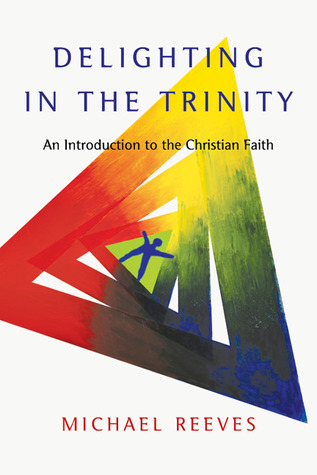
8. Delighting in the Trinity by Michael Reeves. This is a clearly, and if I may say, delightfully written book about the doctrine of the Trinity, a stumbling block to belief for some, a conundrum for many believers, but indeed a source of delight for Christians.

Weight of GloryFirst ThanksgivingUnger_JQA_mech.indd

9. The Weight of Glory by C. S. Lewis. Nine messages by Lewis that are absolute gems, including “Learning in War-time”.

10. The First Thanksgiving by Robert Tracy McKenzie. A wonderful new book about what we can know historically about the first Thanksgiving and how this challenges us in our contemporary setting.

11. John Quincy Adams by Harlow Giles Unger. This one just made this list. Unger brings John Quincy out from under the shadow of his father as statesman, president, and an early abolition leader.

I’d love to hear about your “best reads” for the year.

Review: John Quincy Adams

John Quincy Adams
John Quincy Adams by Harlow Giles Unger
My rating: 5 of 5 stars

William Wilberforce has always been a “hero” in politics for me. His determined and principled opposition to slavery over forty years led to its abolition in the British Empire. In reading this biography of John Quincy Adams, I discovered that he (along with Lincoln and some others) is a candidate for America’s Wilberforce.

In recent years, he has often been overshadowed by his father, but it can be argued that his contribution to the early history of our country might rival that of his father, even though both were ineffective Presidents (perhaps for some of the same reasons).

As a boy, he watched the Battle of Bunker Hill from across the bay in Quincy. He sailed to France with his father who served as our first ambassador to France, pursued by British warships, who if successful would have hanged the father and impressed the son. Associating with Franklin, Jefferson, and leading figures from many European countries, he quickly learned the ways of diplomacy.

After Harvard, and his defense of the Washington administration against the likes of Citizen Genet, he was named to a post in Holland, a crossroads “listening post” for Europe. Subsequently, he was named to a post in St Petersburg as America’s first ambassador to Russia. He made key trade deals that greatly facilitated America’s economic future. Under Madison, he was instrumental in negotiating an end of hostilities in the War of 1812. Then under James Monroe, he served as Secretary of State, the stepping stone to the Presidency in those days. He formulated the policy that became known as the Monroe Doctrine, asserting US opposition to any further colonization of the Americas.

Daguerrotype of John Quincy Adams, first former president to be photographed.

Daguerrotype of John Quincy Adams, first former president to be photographed.

He did not run for President. He allowed his name to be put forward, but not at the head of any party (a practice he adhered to for the rest of his life). Nor did he campaign for office, opposed as he was by the likes of Andrew Jackson and Henry Clay. Jackson actually won a plurality of both the popular and electoral votes but not a sufficient number, setting the stage for the “Corrupt Bargain”, a conversation between Adams and Clay where no quid pro quo was stated but the result of which was that Clay directed his electors to Adams and Adams made him Secretary of State. Much like our current situation, Adams was able to do little, a victim of Congressional gridlock as Jackson mobilized opposition to all of Adams policies. Adams didn’t help matters by refusing to respond in kind and by elevated language in speeches that alienated him from all but the elite. It seems that he inherited qualities from his father that rendered him ineffective in this regard. Needless to say, Jackson soundly defeated him in the next election.

He was perhaps the first ex-President to distinquish himself for his post-Presidential work. He was elected to the House of Representatives where he served until the day of his death, collapsing in the House chambers and expiring on the premises. He fought vociferously to abolish the Gag Rule that prevented debate or even citizen petitions to introduce the topic of the limitation or abolition of slavery. He resisted efforts at expulsion and was the first congressional voice to speak against this practice, working with a young Abraham Lincoln. Indeed, one of his speeches clearly anticipates Lincoln’s Emancipation Proclamation.

Unger covers all this history in a readable style free of dense academic prose and of reasonable length (364 pages with notes, bibliography, and indexes). I would highly recommend this if you would like to discover this lesser known but important figure in American history.

View all my reviews