Review: The Murder of Roger Ackroyd

The Murder of Roger Ackroyd

The Murder of Roger AckroydAgatha Christie. New York: HarperCollins, 2002 (originally published 1926).

Summary: Poirot comes out of retirement to solve the murder of Roger Ackroyd, who is killed after learning that the woman he loved, who has taken her life, had poisoned her first husband and was being blackmailed to cover up the fact.

There are some who consider this among the very best of Agatha Christie’s mysteries. It is the only one appearing in the list of 1001 Books You Must Read Before You Die. I am inclined to agree that it is one of the best I have read, particularly for the unusual surprise at the end.

Mrs. Ferrars has committed suicide. Her husband had died the previous year under somewhat suspicious circumstances. Dr. James Settles is the physician consulted on the case and it turns out that he is with wealthy Roger Ackroyd when Ackroyd, who had fallen in love with Ferrars, receives a suicide note confessing she had poisoned her husband and was being blackmailed by someone she named in the letter who knew the fact. Ackroyd refuses to reveal the contents of the letter. Later that evening Settles receives a call informing him that Ackroyd has been murdered in his study. He goes to the house and discovers it is so, in the neck with a knife from a collection of curios.

Flora Ackroyd, a niece who stands to inherit a tidy fortune, having agreed to marry Roger Ackroyd’s choice of spouse, Ralph Paton, enlists the help of Hercule Poirot, who has retired and lives nearby. Dr. Settles, who saw the crime scene, becomes Poirot’s aid in the investigation and is the narrating voice in the story. Flora is particularly concerned because Ralph has gone missing and is the prime suspect, because of his financial straits. But others in the household are also suspicious. Parker the butler appears to have been listening at the door of Ackroyd’s study during the meeting between Ackroyd and Settles, and then again later in the evening as well. Others seems to be hiding things as well: Flora’s mother Mrs. Ackroyd, Hector Blunt, a friend staying with the family, Geoffrey Raymond, the secretary, Mrs. Russell and Ursula Bourne on the staff. There is a strange American-sounding figure who gets directions from Settles to the house shortly before the murder took place.

Working alongside Inspector Raglan, Poirot with the help of Settles and his sister Caroline seek to get to the truth these different characters are hiding. There is also the puzzle of who it was Ackroyd was speaking with shortly before his death and why one of the chairs in the study was moved out of place.  Eventually there is the traditional “gathering of suspects” at which Poirot reveals the killer. I can say no more because this is where the plot takes a surprising turn.

What I enjoyed was the character of Poirot. One sees why he is one of the most celebrated figures in detective mysteries. He is thorough, thoughtful, relentless in the pursuit of truth, intolerant of deception, and gentle when people confess the truth. He takes truth seriously but himself not at all. He can be both droll, and infinitely sad as he ponders the evil people do. I’ve read or watched other Poirot stories but found his character especially well drawn here.

Likewise, the plot seems to move at just the right pace, unraveling each thread of the mystery until all is prepared for the final revelation of the murder. The perfect book for a summer read, or any time you need a few hours of rich diversion.

Repost: After The Funeral (An Agatha Christie Mystery)

I recently reviewed Agatha Christie’s At Bertram’s Hotel. Agatha Christie mysteries are a favorite summer read for me. Here is a review of another novel that I wrote last summer.

After the funeralThis was a wonderful diversion during a very full schedule of meetings in this past week. Agatha Christie always seems good for that and why I chose her for a break from serious reading during some serious discussions.

Leaving aside the personal stuff, the relatives of deceased estate owner Richard Abernethy are gathered for the reading of his will following his funeral. He had been ill but nevertheless had died rather suddenly in his sleep. Entwhistle, the family lawyer has just announced that the proceeds will be divided in six equal shares among the family when Cora Lansquenet, a daffy niece known for saying what she thinks, pipes up and asks, “But he was murdered, wasn’t he?” The fuss dies down until the next day when Cora is brutally hatcheted to death, in what appears to be a break-in. At this point, Entwhistle’s suspicions are aroused and his informal discussions with family members only deepen the impression that any of them could be involved in this murder, and presumably Richard’s. And so he calls in Poirot, an old friend.

Tension deepens when Mrs. Gilchrist, Cora’s housekeeper and companion, suffers a serious poisoning incident with an arsenic-laced piece of wedding cake. It appears there is a desperate killer set on wiping out anyone who might have a notion of who committed the murder. When Helen Abernethy realizes who is responsible, she is struck on the head and knocked out, just on the point of revealing the truth to Entwhistle.

Poirot deduces the true killer from what she did say and reveals the killer in one of those typical library scenes where the whole family is gathered. Of course, I will leave the fun of discovering the murderer to your reading. Having read some Christie, I would say that it was a bit of a surprise, and yet not a surprise at all. Have fun with that!

I came by this book as a free giveaway as part of World Book Night, which has suspended operations for lack of funding. Even if you have to buy this, I think you will find it a diverting and worthwhile read.

First posted here on July 29, 2014.

Review: At Bertram’s Hotel

At Bertram's HotelAt Bertram’s HotelAgatha Christie. New York: William Morrow Paperbacks, 2011 (reprint).

Summary: Bertram’s is a quietly elegant hotel from the Edwardian era that seems utterly respectable from the outside and yet is the center of a nefarious crime syndicate and a murder late in the story that Miss Marple and Chief Inspector (Scotland Yard) Davy attempt to unravel.

As I noted, this is an unusual Agatha Christie story. The murder occurs late and actually is not at the heart of the plot. This change of pace alone caught my attention, just to see what Christie was up to.

The center of the action is Bertram’s Hotel, a throwback to an Edwardian past. There one receives refined, understated service from the helpful attentions of the commissionaire, former military Michael Gorman, to the tea service with exquisite muffins, to Miss Gorringe’s front desk and Mr. Humfries’ efficient management, to the kitchen which serves a proper English breakfast. It has done so since Miss Marple’s childhood and to it she returns for a holiday. It is a place that the well-to-do visiting London come for good service out of the public spotlight.

Yet things are not as reputable as they seem as Miss Marple soon becomes aware. She runs into old friend Selina Hazy who speaks of all the people she sees who appear to be old acquaintances only to turn out to just look like them. She observes the reckless race car driver Ladislaus Malinowski in a public encounter with his love interest, the adventuress Lady Bess Sedgewick. Then there is the heiress Elvira Blake, in fact the estranged daughter of Lady Sedgewick, eluding her guardians to make an overnight trip to Ireland to make enquiries related to her estate and to make rendezvous with love interests including race car driver Malinowski. She becomes the object of Miss Marple’s grave concern.

While all this is occurring there have been a string of jewel heists, bank robberies and a daring robbery of the Irish Mail train that all seem to be the efforts of a mysterious crime syndicate. Chief Inspector Davy has been charged to discover who is behind this. When absent-minded Canon Pennyfather, a guest at Bertram’sm does not return from a trip to Lucerne for a conference, Davy becomes involved in the investigation, and, as he interviews Miss Marple, who witnessed Canon Pennyfather leaving the hotel the night he was supposed to be in Lucerne, he begins to share Miss Marple’s suspicion that things are not as they seem at Bertram’s and that there is a connection between the rash of crimes and this respectable hotel.

The one murder in this story occurs late as Elvira Blake, who has mentioned fears for her life, is apparently shot at and narrowly missed, only to have Michael Gorman come to her aid, and take a bullet in the chest protecting her. Yet all is not as it seems, neither in this instance nor with the cast of characters at Bertram’s and much of the enjoyment of this story comes from seeing how Miss Marple and Chief Inspector Davy team up to piece together this mystery.

Not all of the reviews I’ve seen of this have been favorable, suggesting a plot that is a bit far-fetched. Be that as it may, I enjoyed the change of pace of a story where a murder was not the center of the plot. Like all Christies, it is a page-turner with interesting characters, a memorable place (Bertram’s), and of course, the inimitable Miss Marple! Great for a summer vacation read.

July 2014: The Month in Reviews

It’s happened again! I’ve read my way through another month and it’s time for my “Month in Reviews” post. This month included biographies of a baseball player and a World War 1 flying ace. I read a contemporary legal thriller and a classic Agatha Christie mystery. It included sermons from the Nineteenth Century and Dallas Willard’s last conference from just a couple years back. There was Joseph Conrad’s classic exploration of betrayal and some good contemporary theology on multifaith conversation, politics, and the influence of the Majority World church on Western Christianity. So here’s the list from July, with links to the full review post:

1. Under Western Eyes by Joseph Conrad. Conrad does for the crime of betrayal what Doestoevsky does for murder as he follows the wrestlings of a young student who betrays a comrade to save his own future in pre-revolutionary Russia.

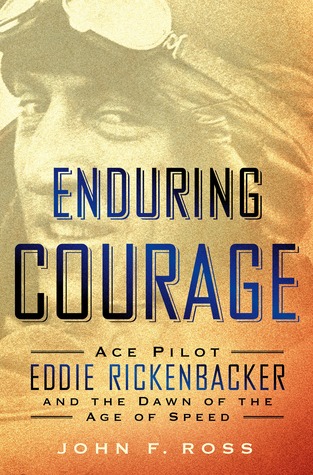
2. Enduring Courage by John F. Ross. Ross tells the life story of a Columbus hometown hero, Eddie Rickenbacker. We trace his hardscrabble youth in the Brewery district of Columbus to his involvements in early auto-racing, and then flight, tracing his journey to becoming a World War 1 flying ace. The climax of the book is how he contributed to the survival for three weeks of an air crew on a secret World War 2 mission to MacArthur, that crashed in the Pacific.

Under Western EyesEnduring CourageNext EvangelicalismSupreme justice 2

3. The Next Evangelicalism by Soong-chan Rah. This is a challenging account of the growing influence of Majority World Christians not only in their own countries but in the West and how critical it will be to listen to and welcome that influence for the Western Church to break free of its cultural captivities.

4. Supreme Justice by Max Allan Collins. This legal thriller begins with the murder of a Supreme Court justice in a DC restaurant. But it doesn’t end there. A second justice is killed and it becomes clear there is an assassination plot afoot to change the makeup of the court. Joe Reeder, a retired Secret Service agent who took a bullet for an unpopular president, is called into an investigation where it becomes quickly apparent that this was an inside job and that he can trust no one.

5. Long Shot by Mike Piazza. This is an “as told to” autobiography by Mike Piazza, who describes the challenges he had to overcome to make the Major Leagues and become the player with the most  home runs for a catcher and a .308 lifetime batting average.

6. The First and the Last by George R. Sumner. Summer focuses on how Christians might constructively engage a pluralistic context without becoming religious relativists through a strategy of holding to “the final primacy” of Christ.

People PleasingLiving in Christ's PresenceFirst and LastMike Piazza story 7. Living in Christ’s Presence by Dallas Willard. This is essentially the transcript of a conference in which Dallas Willard and John Ortberg give alternating talks that explore what might be called “the essential Dallas Willard”.  A highlight comes with the interaction between these two thoughtful Christian leaders at the end of nearly every presentation.

8. People-Pleasing Pastors by Charles Stone. People-pleasing is especially a peril of pastoral ministry but Stone helps any of us recognize these tendencies in our lives and proposes a seven step strategy summarized by the acronym PRESENT to counteract these tendencies.

9. After the Funeral by Agatha Christie.  Richard Abernethy has been ill and died, rather sooner than expected, in his sleep. When the family gathers for the reading of the will after the funeral, oddball niece Cora questions, “but he was murdered, wasn’t he?” only to be murdered herself the next day with a hatchet. Hercule Poirot is called in to investigate whether the murders are connected only to discover a family where all are suspects.

10. The Good of Politics by James W. Skillen. In an age where people question whether any good can come of politics, Skillen surveys the Bible, church history, and the contemporary scene and articulates the conviction that we are political creatures from creation, not simply post-fall, and that believing people can participate in the process and have a redemptive influence.

After the funeralgood of politicsgreatest sermons

11. The World’s Great Sermons, Vol. 4 by various.  This is part of a digitized ten volume collection that a reading group I’m in chose to get a sample of Nineteenth Century preaching in both the U.S. and the U.K. This volume included examples of Lyman Beecher, William Ellery Channing (an early Unitarian), Horace Bushnell, Alexander Campbell and others that typify the preaching landscape of this era.

What’s coming in August? Look for reviews of Rich Nathan and Insoo Kim’s Both-And and Thomas Piketty’s, Capital, along with reviews of a Wallace Stegner novel, a book on the Israeli-Palestinian conflict, and a treatment on the theme of the preaching of the doctrine of hell in antebellum America. Don’t want to miss these reviews? Sign up to follow the blog! And let me know what some of your favorite summer reads are for this summer.

Review: After the Funeral

After the Funeral
After the Funeral by Agatha Christie
My rating: 4 of 5 stars

This was a wonderful diversion during a very full schedule of meetings in this past week. Agatha Christie always seems good for that and why I chose her for a break from serious reading during some serious discussions.

Leaving aside the personal stuff, the relatives of deceased estate owner Richard Abernethy are gathered for the reading of his will following his funeral. He had been ill but nevertheless had died rather suddenly in his sleep. Entwhistle, the family lawyer has just announced that the proceeds will be divided in six equal shares among the family when Cora Lansquenet, a daffy niece known for saying what she thinks, pipes up and asks, “But he was murdered, wasn’t he?” The fuss dies down until the next day when Cora is brutally hatcheted to death, in what appears to be a break-in. At this point, Entwhistle’s suspicions are aroused and his informal discussions with family members only deepen the impression that any of them could be involved in this murder, and presumably Richard’s. And so he calls in Poirot, an old friend.

Tension deepens when Mrs. Gilchrist, Cora’s housekeeper and companion, suffers a serious poisoning incident with an arsenic-laced piece of wedding cake. It appears there is a desperate killer set on wiping out anyone who might have a notion of who committed the murder. When Helen Abernethy realizes who is responsible, she is struck on the head and knocked out, just on the point of revealing the truth to Entwhistle.

Poirot deduces the true killer from what she did say and reveals the killer in one of those typical library scenes where the whole family is gathered. Of course, I will leave the fun of discovering the murderer to your reading. Having read some Christie, I would say that it was a bit of a surprise, and yet not a surprise at all. Have fun with that!

View all my reviews

Review: Five Little Pigs

Five Little Pigs
Five Little Pigs by Agatha Christie
My rating: 4 of 5 stars

An attractive young women walks into Poirot’s office seeking to hire him for a case. How many mystery or crime novels begin that way? This one has some unexpected twists. Carla Lemarchant believes her mother innocent of murdering her father. The murder took place sixteen years earlier, when Carla was a young girl. Her mother was convicted of poisoning her father with a hemlock derivative, coniine, which her mother had stolen from the home laboratory of a family friend, ostensibly to kill herself because her husband, famous artist Amyas Crale, was having an affair with a young model, one in a series and was planning to divorce her. The mother, Caroline Crale, died in prison shortly after, but before dying had written a letter, to be given her daughter when she reached adulthood, stating her innocence.

Agatha Christie

Agatha Christie

What makes this more compelling for Poirot is that Carla is engaged but the couple is apprehensive of having a husband poisoner in their background. So Poirot takes the case. His initial investigations turn up two basic facts, the case was open and shut, the poison being in a glass brought by the wife with a cold beer, and the lack of any real defense on her part during the trial apart from the claim that her husband must have committed suicide.

The plot then moves forward with interviews with the five people present at the time of the murder–the five little pigs! This is followed by five written accounts from each of these people, then the denouement, in the room where the poison was compounded. In all this, Poirot is not only looking for the discrepancies in accounts but also to understand the character of Caroline, as well as the others present. In this, he believes, the real answer lies.

From all accounts, it looks as if the wife is guilty, but Poirot thinks otherwise and the fun is seeing how he reaches that conclusion and exposes the real killer!

View all my reviews