Review: Mere Christian Hermeneutics

Cover image of "Mere Christian Hermeneutics" by Kevin Vanhoozer

Mere Christian Hermeneutics, Kevin J. Vanhoozer. Zondervan Academic (ISBN: 9780310234388) 2024.

Summary: Amid a variety of interpretations and reading cultures, articulates essential principles for reading scripture.

One of the stinging critiques many of my friends who are skeptics make is of the plethora of biblical interpretations. They argue that it comes down to making the Bible say whatever you want it to say. Kevin J. Vanhoozer, whose life has been dedicated to the teaching and practice of biblical interpretation, is cognizant of that critique. In Mere Christian Hermeneutics, Vanhoozer attempts what C.S. Lewis attempted in Mere Christianity. That is, he seeks to articulate “those basic principles espoused by all Christians, everywhere, and at all times for reading the Bible as the church’s scripture” (p. 17).

The book is organized around the idea of ascending two mountains: Sinai (where the law was revealed to Moses) and Tabor (the mount of Transfiguration). Before beginning the ascents, Vanhoozer surveys the terrains of each ascent. Specifically, he considers the various reading cultures that have shaped biblical interpretation. For example, in the medieval period, he contrasts the scholastic and monastic approaches. Likewise, in modernity, he considers the schools of exegesis versus systematic theology. He also reflects on ways this mirrors humanistic and scientific cultures in the wider academy. He argues for an approach to interpretation that overcomes the polarization.

In the second part of the book, Vanhoozer leads us in an ascent of Mount Sinai. This concerns what we mean in speaking about the literal sense of scripture. Vanhoozer shows how this has always moved beyond the exegesis of the words to some larger sense of what the text is about. He argues for the practice of not only grammatical-historical interpretation but also grammatical eschatological interpretation. In essence, this means reading “trans-figurally.” That is, we read scripture across times and testaments in ways that link persons, events, places, and ideas.

But this form of “trans-figural” reading anticipates the ascent of Mount Tabor. Part Three focuses on the light of Christ, anticipated in the light revealed at the beginning of creation in Genesis 1:3. Then Vanhoozer engages in an extensive study of the transfiguration which he sees as a guide for our reading, in which the “matter” of scripture is transformed in the light of Christ such that scripture reveals to us the knowledge of God. Then, as we engage in this “trans-figural” reading and wrestle with the text, we ourselves are “transfigured.”

Finally, Vanhoozer makes concluding comments on how this may transfigure our reading cultures and our life of worship.

This is a very brief summary of an extended treatment. What I appreciate in this book is an approach to interpretation that focuses on Christ. He moves beyond our exegesis, even our biblical theology, to acknowledge our dependence upon Christ in the interpretive process. Christ is both the focus of scripture and the one who reveals its full meaning to his people. While Vanhoozer acknowledges the importance of careful exegesis, he reminds us of the reading cultures, the interpretive communities we all inhabit. What he offers is a way for us both to hear each other, but more importantly, to hear the one Lord over all our communities.

This won’t magically eliminate all our interpretive differences. But a common rubric of essentials may help us move toward a common mind, the mind of Christ. And that is no small thing.

____________________

Disclosure of Material Connection: I received a complimentary copy of this book from the publisher for review.
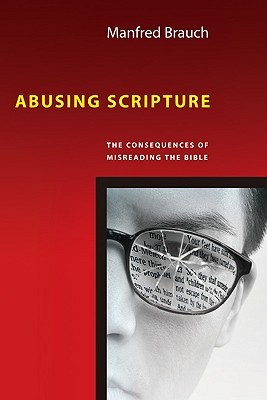
Review: Abusing Scripture

Abusing ScriptureAbusing ScriptureManfred T. Brauch. Downers Grove: InterVarsity Press, 2009.

Summary: The author explores the different ways we misread the Bible and consequently interpret and apply it in ways that abuse both the intent of the text, and sadly, in some cases the people with whom we apply these texts.

I teach the Bible in my work, and on occasion, in the congregation of which I am a part. That is both an exciting and sobering opportunity for me. One one hand I believe that I am explaining what God has said through human beings, and that this can be powerfully transformative in lives. On the other hand, I am keenly aware that how I explain and apply a text can either lead people to such transformative encounters with the living God, or mislead them. I’m always mindful of James’ comment that “we who teach will be judged more strictly” (James 3:1, NIV).

Manfred Brauch is concerned that we might in fact abuse the scriptures in our mishandling of them. This is strong language which he defends in his opening chapter by the fact that we may well do violence to the intent of the text by our mishandling of it. And this violence in turn may warp the understanding of Christian truth by those who hear such teaching, and may, often unintentionally, result in causing others in the Christian community deep pain, or in misrepresenting the message of Christ.

He begins by focusing on the nature of scripture and argues that it is both intentional and incarnational and that abuse occurs when we ignore either the intent of the Bible or its incarnational character, both as the word of God and as given to particular people in a particular cultural context. In succeeding chapters Brauch six ways we mishandle scripture in our interpretation and application:

  1. The abuse of the whole gospel. We may tend toward a focus on a gospel of personal salvation or a social gospel, focusing on the redemptive work of Jesus and its impact on overcoming injustice and setting right the structures of society. Neither alone are the whole message of scripture.
  2. The abuse of selectivity. It is often observed that differing positions on an issue like gender roles can both cite scripture for their view. The issue often is selective use of scripture, ignoring passages that may not agree with one’s view. Often, we need to listen to all the relevant texts and look particularly for those that reflect the overarching redemptive trajectory of scripture.
  3. The abuse of biblical balance. This differs from the abuse preceding it in overemphasis on a particular doctrine while under-emphasizing others. We may focus on certain sins while ignoring others. Again, we need to hear all these perspectives and consider a both/and rather than either/or approach.
  4. The abuse of words. Most of us read, and certainly preach the Bible in translation. Care must be used to be certain that the words we use and meanings we attribute to a word accurately reflect what the author would have understood, as best as we can ascertain. Brauch uses as an example the word cephale and argues for how our translations as “head” may ignore the dimension of “headship” that has to do with “source” and instead uses the term hierarchically.
  5. The abuse of context, both literary and theological. Literary context concerns the place of a particular passage in a larger narrative. Theological context has to do with relating a particular theological idea to the larger theological themes of a book, or even all the books of a particular writer, like Paul.
  6. The abuse of context, relating to historical context and cultural reality. We may universalize what is particular to a historical context or assume that teaching in a context must be applied in the same way in very different cultural contexts–for example, how we understand Jesus healings on the sabbath and the implication for early Christians of whether and how to carry over Jewish sabbath practices.

He then concludes by considering what it could mean if those who differ over scripture and give weight to one part while ignoring others would simply begin to listen to the witness of each other. And he includes appendices going deeper on selective issues of interpretation. And most helpful throughout is that Brauch illustrates both abuses and the proper handling of scripture using contemporary issues.

This book is important for anyone who teaches the scriptures and seeks to be thoughtful of engaging the disparate views one encounters with others who may even claim a similar, evangelical faith. It advocates neither a culture war nor expulsion of those who differ, but the engagement that takes both the scriptures and our hearers seriously. Church leaders facing sharp doctrinal challenges might read this to think through how this might be approached both irenically and yet with doctrinal integrity.