I Need Diverse Books

This post is inspired by the #WeNeedDiverseBooks campaign that developed when the first ever BookCon, which took place this past weekend, announced an all-white author lineup. The Twitter campaign that followed garnered 162 million impressions in its attempt to raise awareness of the need for more books by and about people of various ethnicities and races. This post is not about that campaign (which you can read about here), but about my own growing realization that I need diverse books.

Nope, I’m not going to try to persuade you that you need more diverse books, or your children or your school or your library need more diverse books. So take a deep breath and relax. I’m just going to share how important reading diverse books is for my own life.

For one thing, even the local world of my neighborhood doesn’t look like me. I see saris and headscarves and skin much darker than mine. I hear other languages, and even sing some of the worship songs in our church in Spanish because we have Spanish speakers who are part of our worship. Certainly the world of the university where I engage in campus ministry doesn’t look like me. We have over 3,000 students from China alone and growing numbers from India and South America. We also have students from  the “hyphenated” communities in this country: African-Americans, Asian-Americans, Latino-Americans. And there are many from all these groups who call themselves “brother” or “sister” in my faith who I believe I will spend eternity with. Better start understanding each other!

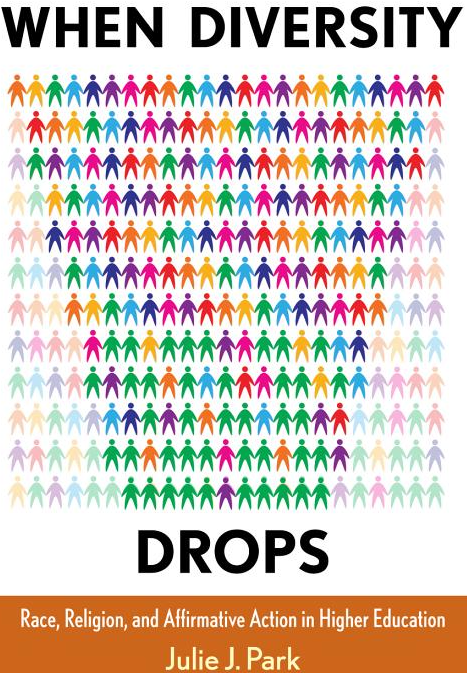
Reading Michelle Alexander’s The New Jim Crow for example portrayed to me afresh what it is like to be stopped simply for driving or walking while black, and the practices of illegal searches in this country that violate our Fourth Amendment protections.  Sheryl Wu Dunn’s Half The Sky reminds me of the systematic injustices and violence we do to women around the world, and how women have courageously fought back.  Jhumpa Lahiri’s collection of short stories, The Interpreter of Maladies, helped me look at life through the lens of immigrants encountering very different value systems and trying to hold onto something of their identities. Julie Park’s When Diversity Drops helped me see  our collegiate ministry as students of different ethnicity encounter it. John Perkins books and the writings of Martin Luther King, Jr. help me begin to understand the difficult experience of Blacks in America, and challenges me to match their Christ-likeness in pursuing justice and reconciliation.

This year I have been listening to a variety of voices, mostly outside my own faith community, who are writing about the future of higher education. Some of this has to do with a conference on this subject I am leading this summer. Why this is valuable for me is that if we are going to participate as responsible partners in conversations about the future of the university, we need to understand the issues and each other well. For similar reasons, I’ve read science writers like J Craig Venter on genetic research and Sir John Houghton (actually a committed Christian) on issues of climate change. Sometimes they open my eyes to issues I haven’t thought about. I don’t agree with all I read–what would be the fun in that?

I need diverse books because I believe God’s intention is to form a “beloved community” that is a mosaic of the peoples of the world. What a great design for engaging the diverse peoples and problems we confront in this world! Yet I come from a white, working class background that has shaped my outlook, for good and less than good. Beginning with the diverse narratives of the Bible, diverse books that help me understand the parts of the world that are “different” for me, and diverse friendships, I hope to be able both to offer what is unique in my own gifts and background and to welcome the abundant variety of gifted people that make up a “God sized, beloved community.”

Those are some of the reasons I need diverse books. What diverse books would you suggest I read? Who knows, you might see them in future reviews on this blog.


What’s Missing in the Diversity Discussion?

I came across a blog post the other day, “Blue Tongue, White Collar” that caught my eye. The writer described interviewing for admission to Yale and found herself tripped up by her blue collar origins. And this brought back long suppressed memories of a similar interview, and similar rejection because I, too, betrayed my working class origins. [Ironically, I discovered that this blogger and I both grew up in Youngstown–go figure!].

It’s weird, actually. Technically, I lived in a white-collar home in a blue collar neighborhood. Dad worked a series of lower level management jobs while most of the friends around me had parents working in the mills or in other union jobs connected to steel-making. I think I’ve always felt a bit bi-cultural. I still feel that. I work in a collegiate ministry among graduate students and faculty at a major university. These are really bright people–most of whom have never been near a blast furnace (we used to go on field trips to see them–at least from a safe distance!).

What I think many of them don’t appreciate is that there were really bright and gifted people in the blue collar neighborhood I grew up in. Many were children of immigrants who worked hard to achieve home ownership and took pride in their homes, which they remodeled, added onto and cared for meticulously. They often did dangerous work and were savvy enough to survive.  They fed families through labor strikes. My wife’s father worked in a factory but was a gifted artist. And one of the reasons many worked so hard was to send their kids to college so they could have a different life.

In some ways, this scene is changing, as manufacturing jobs disappear and more and more, many workers are going to be “knowledge workers”. But while I think our definition of “working class” may be changing, the fact that this is a class, that kids grow up in homes of working class parents, and have aspirations to mix with a wider society means that we need to think about what does diversity and inclusion look like for this group of people. Just as organizations often erect tacit barriers (glass ceilings, color lines, etc.) for other groups, so also the lack of perception of the cultural difference of social class leads to barriers for those from working class backgrounds being included and giving their best in our organizations.

One example: several years ago, our organization hosted a conference at a hotel that ran over a weekend. One of our speakers, probably meaning well, proposed that we all clean our own rooms over the weekend so hotel workers could have some time off. Subsequently there was an apology and the acknowledgement that our presence meant overtime as well as tip income that made a substantial difference in the family incomes of these workers.

This shows up in so many ways. Take vacations for example. Growing up, a vacation was a weekend at Niagara Falls, or renting a cabin at a nearby lake. Imagine what it is like to rub shoulders with those whose families routinely took trips to Europe or even more exotic destinations? Take sports. For some of us, it was just pickup games at the local sports field. We didn’t have the opportunity to go to soccer or lacrosse camps.

More than that, it can show up in the attitudes classes have for each other. It is just as easy to belittle the blue collar folks as those who never get all the dirt from under their fingernails, as it is to belittle academics as worthless ivory tower intellectuals. In business settings, it is the suspicions that exist between “management” and “labor”–the fat cats and the little guy.

Most people doing diversity work say it is bad be “color blind”. We should call out and even celebrate our ethnic differences. Yet I would propose that many of our organizations are class blind. We don’t recognize this as difference and so don’t “call out” that difference. And because we don’t call it out, we don’t discover what there might be of value in that difference. Recently in one of these “sharing exercises” people do in seminars, we were asked to answer this question: What would you like someone to ask you about yourself?” I found myself responding, “I’d like them to ask me what it was like growing up in working class Youngstown.” But I wonder if anyone really wants to know…

[Update: This post, meant to be a stand alone, is what led to the “Growing Up in Working Class Youngstown” series, which began in response to “Steve’s” comment below. Along the way, I’ve discovered there are people who want to know, and many others who identify deeply with the answers.]

Review: The Inclusion Paradox: The Obama Era and the Transformation of Global Diversity

The Inclusion Paradox: The Obama Era and the Transformation of Global Diversity
The Inclusion Paradox: The Obama Era and the Transformation of Global Diversity by Andrés T. Tapia
My rating: 4 of 5 stars

Andres Tapia has lived diversity and inclusion, not only as a Peruvian married to an American living in Chicago, but also as a chief diversity officer for Hewitt, and eventually CEO of Diversity Best Practices. More than that, Tapia believes that the hard work of inclusion in our businesses and other organizations is worth it–that when we call out and welcome the differences that our diverse population bring, this has a multiplier effect in our organizations in terms of the performance of our people and performance in the marketplace. This is very different from the guilt or quota driven or advocacy driven approaches to diversity and inclusion.

Tapia distinguishes diversity and inclusion as follows: diversity is the mix and inclusion is making the mix work. The first part of the book focuses on the rapidly changing landscape in our country where whites will be a minority by 2040 or sooner, where we elect an African American president and operate in a global marketplace. Tapia would argue that in this landscape, the organizations that do inclusion well are those that will thrive–that we need the differences we all bring.

Part Two recognizes a simple truth–we often think of difference as evil or incompentence, rather than as just different. Part Three then goes on to “call out” the differences that exist in our cultural landscape: white and minority ethnic, women, millenials, disabled, LGBT, and artists. Each of these chapters identifies key cultural differences and the challenges of inclusion in each group. I was most struck by the fact that as groups, whites differ from African Americans on six of seven cultural dimensions (and from most of the rest of the world): universalist vs. particularist, task vs. relationship, individualist vs. communal, sequential vs. synchronous, internal vs. external control, and neutral vs. affective. Tapia’s point is that neither of these is “better” but rather that understanding that the way others engage the world, and then creating systems and working relationships that leverage these differences is key to good inclusion.

Part Four looks at organizations and their policies and systems and how inclusion can become part of the fabric of organizational life. His chapter on retention of people of color was especially striking in his emphasis on four pillars: community, recognition, mentoring, and advancement. There was a discussion of risk-taking that noted that organizations tend to advance those taking calculated risks and that whites tend to follow this approach while others either are more cautious or more risky, and the importance of working with this during mentoring and advancement processes.

There will be those that balk at the material on LGBT inclusion. Throughout, Tapia emphasizes that we do not need to give up the ways we differ to recognize and work with the differences in others–at least in businesses and other organizations in the public sector. He does not address faith communities that have moral reservations around sexuality and gender identity questions, except to infer that one’s views might change as one relates with LGBT persons. He doesn’t address the question that is peculiar to inclusion work with persons in this group of how inclusion works where one may show deep respect for the whole person and their gifts, where one can be a genuine ally in many regards, while retaining moral reservations about sexual practices and gender expression. Exploring how this might work would actually be more consistent with his approach of “calling out differences.”

Overall, however, I have to admit that I liked this book more than I thought I would. Its emphasis on calling out difference, and the opportunities for the advancement of organizational mission through inclusion, as well as the specific practical recommendations were all quite helpful. Tapia’s passionate enthusiasm for the opportunities that arise out of inclusion work is infectious and helps one move from a “have to” to a “want to” mentality.

View all my reviews

Privileged, Persecuted, or Participating?

As I wrote in yesterday’s blog, I was part of an online symposium on the theme of “The ‘End’ of the University”. Each of the groups (representing faculty and others meeting on eight different campuses across the Midwest) were encouraged to write responses. This is not one of those but a personal reflection on one aspect of Dr. Santa Ono’s presentation. One of the aspects of the changing university landscape he addressed was the increasing diversity represented in the student enrollment as well as faculty and staff of any public university in this country. By 2040 or sooner, Caucasians will be in the minority, and already are in some parts of the country. Universities are incredibly diverse places ethnically, in terms of social class, in terms of gender and sexual orientation, in terms of political persuasions, in terms of countries of origin–and in terms of religious and worldview beliefs. As part of a group of Christians considering our response to these changes, it seems to me that we could (and do) make one of three responses.

end-ono1

The first is to try to hold onto being the privileged majority. Indeed, as I’ve been involved in multi-faith discussions on the campus where I work, I’ve found that others still regard Christians, and particularly Caucasian Christians in those terms. At one time this was most definitely so, particularly before the Civil War, and even in many respects up until the upheavals on campuses in the mid-1960s. Much of the perception of this ‘privilege’ I think comes out of our political scene up through the Bush II years and the close alliance between some segments of the Christian community and the party in power. Vestiges of this sense of privilege may be reflected in our expectation that Christian holidays be recognized on public calendars, that prayers be a part of public events and in the “Christian nation” rhetoric we use. What is most troubling to me is that privilege seems to be utterly antithetical to those who follow the Jesus “who did not count equality with God a thing to be grasped but emptied himself, taking the form of a servant….and became obedient unto death.”

The second is to take the stance of the persecuted minority. This is not to say that persecution is not a real option for Christians. In many parts of the world today Christians are in prison, tortured and killed for their faith. They deserve our prayers and our advocacy. But we should not confuse our present situation in the US with theirs because in so doing we demean their suffering and faithfulness. Certainly, people speak pejoratively of Christian belief and particular groups of Christians. But I’m not certain that this is any worse than some of the speech I hear inside the Christian community about others. In some cases groups have been denied access on campus because of their faith stance. Faced with this, I’ve advocated against such decisions as inimical to the freedoms of all students, not just Christians. But again, I think it is demeaning to call this persecution. Many Christian student movements around the world don’t have “access” and yet have great impact. Furthermore, I think this stance leads us to an attack/defense mentality that turns others into adversaries to be defeated rather than those who differ with us to be engaged who even have the possibility of changing their beliefs.

I would advocate for a third stance, that of participating members in the university community, who seek its welfare and consider themselves co-participants in the pursuit of goodness, truth, and beauty, ideals to which every university aspires. One of the things that this means is that I treat others who are in this same community by virtue of their student, faculty or staff status as equal co-participants in that endeavor. I think this means that we co-labor to make the university good and safe places for everyone present, not just for us. As Christians, we should care deeply that internationals on our campuses are not exploited, that adjuncts receive a just wage for their training and contribution to student learning, that no one should be bullied because of their orientation. We should be among those advocating that the children of all our citizens be represented proportionately in our student bodies, not just the children who enjoyed the advantages of the best schools, and college prep tutoring.

Many of our student and faculty groups actually receive substantial benefit from the university community and we should consider how we are “paying it forward” (in good Woody Hayes terms!). I would hope that we are known among administrators as people who make the university a better place, not as headaches or as isolated groups meeting off in a corner of campus. I would also advocate that we be people who not only forthrightly speak of our own faith and desire that others embrace it but eagerly listen to the dissenting views of others and engage in respectful conversation that promotes understanding and enriches everyone in the dialogue.

Above all, I think this means loving the places where we work. I am neither a graduate of nor an employee of The Ohio State University but people who know me swear I bleed scarlet and grey. It’s not just about sports! I believe when God calls us to a place, he calls us to love the place and its people as mattering deeply to Him. I don’t know how we can possibly give ourselves to the pursuit of goodness, truth and beauty without that love.

[As with all my posts, the views expressed here are my own and reflect neither those expressed in the Symposium nor held by the sponsoring organization or any other entities.]


Review: When Diversity Drops: Race, Religion, and Affirmative Action in Higher Education

When Diversity Drops: Race, Religion, and Affirmative Action in Higher Education
When Diversity Drops: Race, Religion, and Affirmative Action in Higher Education by Julie J. Park
My rating: 4 of 5 stars

Diversity and inclusion are big buzz words in higher education circles. Most of the time, efforts to promote diversity and inclusion are university sponsored. What Julie Park does is study the unusual instance where a campus organization on its own initiative pursues a diversity initiative, moving from a mostly white and Asian-American group to one incorporating significant numbers of African-American and Latino/a students. The group? InterVarsity Christian Fellowship at “California University” (a pseudonym to provide anonymity to the group as well as students involved in this study). This book is based on her doctoral research project studying this group.

Beginning in the years after the LA riots in 1992 this group pursued an increasingly deliberate agenda to become more diverse ethnically. Staff leaders took risks, there was more regular teaching on racial reconciliation that grounded this in a biblical rather than “political correctness” agenda, frank and sometimes emotion fraught “Race Matters” sessions were launched, and intentional efforts were made to reach new students across ethnic lines. Julie Park chronicles the up and down difficult journey toward increasing ethnic diversity through a series of interviews with students, staff, and alumni involved with the group during this period.

Cutting across this trend to increasing diversity was the passage of Proposition 209, that mandated “color blind” admissions policies at the state’s universities. This led to a precipitous drop in African-American admissions and a continuing rise in Asian-American admissions. And what she found was that this constrained the InterVarsity’s group to continue to achieve the kind of ethnic diversity it had previously achieved, despite having a multi-ethnic team of campus workers. This occurred both through restricting the pool of African American students from which they could recruit (in one year, only 96 African American students were admitted). It also created a new majority among Asian-American students. This also required a renewed process of aligning vision and strategies to reach students of other ethnicity.

While it is clear that Park at many points is very impressed with the InterVarsity group’s efforts to increase diversity, she also doesn’t flinch at noting their failures and miscues, including a very explosive “Race Matters” session that actually set their reconciliation efforts back, or an instance of “vision creep” where a relaxed focus on multi-ethnic outreach led to a drop in diversity. She gives us a well-written, carefully researched narrative of what it takes to change the culture of a group around race and ethnicity.

This is an important book both for those who work in collegiate ministry and for those concerned with higher education admissions policies. Groups like InterVarsity provide a voluntary meeting place where students can gain a greater vision for relationships across the ethnic lines that we draw throughout American society. If laws and admissions policies decrease these opportunities (which rarely happen in the church or other societal structures), where will they happen? And what should we conclude about the disparity of admissions by ethnicity? That is complicated but one thing is clear, at least to me. We are not operating from a level playing field, which seems to be the assumption of “color blind” laws and admissions policies.

View all my reviews

Current Reads February 2014

You may have noticed on the side column of my home page that a “widget” lists some of the current books I’m reading. Thought I would take a moment to let you know about some of the books you can expect to see reviewed in the near future. Previews of  coming attractions!

Pilgrim

1. The New Pilgrim’s Progress by John Bunyan with revisions by Judith Markham and commentary by Warren Wiersbe. Our Dead Theologians group is reading this along with Pilgrim’s Regress by C. S. Lewis, which we will read later in the term.  Bunyan is quite insightful about the dynamics of the spiritual life, if you can tolerate his slams at the Church of England and the papacy.

consequential leadership

2. Consequential Leadership by Mac Pier. Pier profiles fifteen leaders from government, private, church and non-profit sectors having an impact on cities and on the poor. I’ve enjoyed the succinct profiles of these leaders whose lives provide both example and challenge.

Glorious War

3. Glorious War: The Civil War Adventures of George Armstrong Custer by Thom Hatch. I was prepared not to like Custer, but under this author’s attention, he doesn’t come off so badly!

resilient ministry

4. Resilient Ministry by Burns, Chapman and Guthrie. This is a wonderful resource for pastors and other ministry professionals who want to burn on, not burn out, based on research done with pastors as part of a Lilly Grant program.

5. Quiet by Susan Cain. I heard her TED talk and was intrigued. So I picked up the book, and before I could get to read it, my wife read it giving me chapter by chapter updates. It explores the gift of being an introvert. Cain believes they have a great deal to offer the world that is often overlooked.

good and beautiful life

Quiet

6. The Good and Beautiful Life by James Bryan Smith.  This is the second volume in Smith’s Apprentice series and I am re-reading it as I go through this with a spiritual formation group I co-lead on campus.

Books “On Deck”.  I also have several books I hope to read soon for various reasons that are my “next reads.”

1. Reading Scripture Together: A Comparative Qur’an and Bible Study Guide. Good friend Barbara Hampton has been involved with students reading the Bible and the Qur’an for a number of years and she wrote a book to help others with this. I’m eager to read this!

diversity

Reading scripture

2. When Diversity Drops by Julie J Park. I heard Julie speak on this in the fall. The book is her analysis of a study of a Christian group in California and how efforts to grow in ethnic diversity and race blind admissions policies intersect.

3. Big Questions, Worthy Dreams by Sharon Daloz Parks. I’ve been reading various books on higher ed and this is the one everyone refers to in discussing “spirituality” in the higher ed context.

4. The Inclusion Paradox by Andres Tapia. This is assigned reading for some meetings I will be attending next month. Tapia sees diversity as an opportunity and not a problem and explores how we might welcome diversity in workplace and other settings.

paradox

big questions

I will probably try to update you once a month on what I’m reading. What books are you reading right now? What books do you hope to get to soon? Who knows, your recommendations might end up on my list!

So Whose America is it Anyway?

When my son was young, my wife had an awakening experience as she waited to pick him up from school and realized that she didn’t understand the conversations going on around her because of the different languages being spoken. Growing up, he interacted with students from every continent and most of the major faiths. Similarly, one of the things I love about our church is that we don’t worship God in just one language. And in the community choir I sing in, we are currently rehearsing music in four different languages (English, Hebrew, German and Spanish). I look forward to the day in the new heaven and earth when we will sing in all the languages of all the nations the praise of our one God. (Maybe I’ll be able to sing better in other languages then!)

So I have to admit to really being baffled by the reaction to Coke’s “America the Beautiful” commercial during an otherwise ho-hum SuperBowl. Singers in multiple languages sang this song while we saw images both of the beauty of our country and the incredible mosaic of peoples that make up our nation. The reaction wasn’t to marketing a soft drink with no health benefits but to the portrayal of who we’ve become as a country. And what surprised me most is that people seemed to overlook the clearly sung, “God shed his grace on thee”.

What troubles me in the reactions to this song are several things:

1. The song acknowledges that our land and our richly diverse nation is a gift of God. That may offend atheists, although I haven’t seen protests from them. We don’t own this country–we all are blessed by God to live here.

2. There are people who are citizens of this country from all the nations represented in the piece. If they have immigrated and naturalized, they have sworn an oath of allegiance to this country, something I never did other than the pledge of allegiance. They pay taxes, serve in our military, and enrich our economy. Just because their first language isn’t English (and most do, or their children do learn English) doesn’t make them any less Americans. Unless our own family line has only English speaking people it is likely that we had forebears whose first language wasn’t English either.

3. Some don’t like the idea of certain peoples singing a song with both Christian overtones and that is a stirring American anthem. Apart from the issues of “civil religion” which could be a post all its own, the critics ignore the fact that we often begin to aspire to the things we sing. Isn’t singing our songs part of how “us” and “them” become “we”?

4. Perhaps most important both as a national value, and a deeply held Christian principle is the call to welcome the immigrant and stranger. This poem, “The New Colossus”. by Emma Lazarus is engraved at the base of the Statue of Liberty:

Not like the brazen giant of Greek fame,
With conquering limbs astride from land to land;
Here at our sea-washed, sunset gates shall stand
A mighty woman with a torch, whose flame
Is the imprisoned lightning, and her name
Mother of Exiles. From her beacon-hand
Glows world-wide welcome; her mild eyes command
The air-bridged harbor that twin cities frame.
“Keep, ancient lands, your storied pomp!” cries she
With silent lips. “Give me your tired, your poor,
Your huddled masses yearning to breathe free,
The wretched refuse of your teeming shore.
Send these, the homeless, tempest-tost to me,
I lift my lamp beside the golden door!”

The statue with its uplifted torch, along with the words of this poem, have represented generations of immigrants. Equally for Christians, passages like these have inspired past and present efforts to welcome and care for immigrants:

“When a stranger sojourns with you in your land, you shall not do him wrong. You shall treat the stranger who sojourns with you as the native among you, and you shall love him as yourself, for you were strangers in the land of Egypt: I am the Lord your God.” (Leviticus 19:33-34, ESV)

For I was hungry and you gave me food, I was thirsty and you gave me drink, I was a stranger and you welcomed me, (Matthew 25:35, ESV).

Our attitude to the immigrant is to be shaped by the fact that our spiritual story is an immigrant story. We remember Israel, once strangers in Egypt, and also remember that all of us were strangers to God apart from Christ’s reconciling work. Moreover, when we welcome the stranger, Jesus tells us that we welcome him. In fact the Matthew 25 passage warns of judgment for those who don’t welcome the stranger–that in our refusal to do so, we may be refusing to welcome Jesus.

I totally get that we have a broken immigration system and hard, substantive work needs to be done on this. I totally get that being a multi-lingual, multi-cultural, multi-faith nation has its challenges. I am encouraged that the early church thrived, even in persecution, in such an environment. And I also realize that to some degree, this has always been the American experience. E pluribus unum means “out of the many, one”. Perhaps the recognition of these challenges and opportunities should cause us to cry afresh with the song, “God shed your grace on us.”

When the Lord’s Supper was a Real Meal

Our church has begun a blog of responses from several of our congregation members to our pastor’s sermons each week. I will usually posting every other Wednesday and will re-post to my own blog. Enjoy!