I began October with a review of a book talking about the common ground between the philosophy of Ayn Rand and the Christian faith. I celebrated the work of Ohio novelist and agriculturalist Louis Bromfield, reviewing two of his narratives of his work to restore Malabar Farm in nearby Mansfield, Ohio. Faith and doubt were also themes of the month as I reviewed a book on eight adults who believed and the place of doubt in Christian experience. And I looked at the challenges facing the Western church as it relates to Christians throughout the world and how that changes our paradigms for mission and even how we think about who gets to define Christianity. With that, here are summaries of my reviews with links to my complete reviews:
 The Soul of Atlas, Mark David Henderson. Lexington: Reason Publishing, 2013. Is there any way to reconcile the thought of Ayn Rand and the Christian faith? Through a personal narrative of dialogues with his two fathers, one a Christian, and one an adherent to Ayn Rand’s philosophy (Objectivism) the author explores what possible ground could exist between Objectivists and Christians.
 The Unfinished Odyssey of Robert Kennedy, David Halberstam. New York, Open Road, 2013 (originally published in 1969). This is a classic account of Robert Kennedy’s last campaign tracing his decision to run, primary campaigns and evolving political vision that ended on the night of his primary victory in California.
 Pleasant Valley, Louis Bromfield. Wooster: Wooster Book Company, 1997 (originally published in 1945). The author, a Pulitzer Prize winning novelist, narrates his return from France to the area he where grew up, his purchase of several worn out farms, and his pioneering efforts in sustainable agriculture that restored the land to fertility, bringing health not only to the land but to those who made it their home.
 Overturning Tables, Scott Bessenecker. Downers Grove: InterVarsity Press, 2014. Scott Bessenecker argues that Western missions efforts are often captive to corporate culture and practices inconsistent with efforts to reach across cultures and to the marginal peoples outside the corporate world.
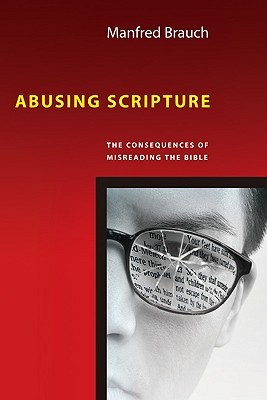
 Abusing Scripture, Manfred T. Brauch. Downers Grove: InterVarsity Press, 2009. The author explores the different ways we misread the Bible and consequently interpret and apply it in ways that abuse both the intent of the text, and sadly, in some cases the people with whom we apply these texts.
 Mere Believers, Marc Baer. Eugene: Cascade Books, 2013. Can individuals seeking to live faithfully to their calling change history? These profiles of eight British believers demonstrate that “mere believers” can indeed have a transformative influence in matters both of the heart and of the intellect.
 To Whom Does Christianity Belong?, Dyron B. Daughrity. Minneapolis: Fortress Press, 2015. This book argues that when one speaks of “Christianity” this must be understood in global terms in all of its diversity of expression and not simply in the forms we Westerners are most accustomed to.
 Questioning Your Doubts, Christina M. H. Powell. Downers Grove: InterVarsity Press, 2014. This book comes out of the world of academic research and proposes that the process of questioning our doubts as well as our faith builds bridges of understanding deepening both our exercise of reason and confidence in our faith.
 Malabar Farm, Louis Bromfield. Wooster: Wooster Book Company, 1999 (originally published in 1948). Malabar Farm continues the story begun in Pleasant Valley of the author’s efforts of restoring a worn out farm to productivity, covering the years from 1944 to 1947 and going deeper into his philosophy of agriculture and the all-important matter of the soil.
 The Theology of the Book of Isaiah, John Goldingay. Downers Grove, InterVarsity Press, 2014. Taking the book of Isaiah as a whole and as it would have been read by its first readers, Goldingay both considers the theologies present in each major section of Isaiah, and traces the theological themes emerging from the book as a whole.
Best Book of the Month: I’m going to go with Louis Bromfield’s Pleasant Valley. I loved his descriptions of restoring the land, building the “Big House” and his stories about other farmers. I think Bromfield’s farm books deserve a wider reputation for their path-breaking descriptions of early sustainable agriculture practices. I also deeply appreciated his love of the hill country of north central Ohio, which I also consider among the most beautiful parts of the state.
Best quote: I’m going to go with Bromfield’s description of his neighbor Walter Oakes and his love for “My Ninety Acres”:
“As I watched that big work-worn hand caressing that stalk of corn, I understood suddenly the whole story of Walter and Nellie and the ninety acres. Walter was old now, but he was vigorous and the rough hand that caressed that corn was the hand of a passionate lover. It was the hand that had caressed the body of a woman who had been loved as few women had ever been loved, so passionately and deeply and tenderly that there would never be another woman who could take her place. I felt again a sudden lump in my throat, for I knew that I had understood suddenly, forty years after the woman was dead, one of the most tragic but beautiful of all love stories. I know now what Robert’s strange remark about Nellie and the ninety acres getting all mixed up had meant. Robert himself must once have seen something very like what I had just seen” (p. 154).
Coming Attractions: Look for my review of The Fellowship, Philip and Carol Zaleski’s book on the Inklings, which I’m a good way through. I also am currently reading a book suicide from a pastoral counseling perspective, a novel of Frederick Buechner, and a book on Athens and Jerusalem, on philosophy and Christian faith. I’m looking forward to reading a new book on acedia, one of the seven deadly sins and a history of the Great Books movement that arose out of the University of Chicago.
[“The Month in Reviews” serves as a kind of index of all the reviews posted on this blog. By selecting “The Month in Reviews” link on the menu bar, you can explore a nearly complete list of books reviewed at Bob on Books.]
Like this:
Like Loading...