Review: Neither Complementarian nor Egalitarian

Neither Complementarian Nor Egalitarian

Neither Complementarian nor EgalitarianMichelle Lee-Barnewall. Grand Rapids: Baker Academic, 2016.

Summary: Argues on the basis of the biblical texts for a reframing of the discussion of the relationship of men and women from one of power versus equality  to one that focuses on the elements in the biblical texts around reversal, inclusion, unity and service.

In the mouthful that is the title to this book lies a heated, sometimes hurtful, occasionally constructive intramural discussion in the evangelical community about how men and women relate to each other in the church and in marriage. Complementarians argue for gender distinctives that are complementary, for some form of male headship, female submission in marriage and that certain roles of leadership in the church are open only to men. Egalitarians argue that the best way to understand the biblical texts is that in creation and redemption, men and women are equal at the foot of the cross, that all roles of leadership are open to both in the church and that husband and wife mutually submit to each other as equals. Both “sides” contend that they are being faithful to the teaching of scripture.

I’ve watched this debate go on through my adult life, although rarely have scholars on one side or the other of this discussion reached out to see if there is some way the two positions can be reconciled. Over time, some have moved to a “soft” complementarian position, while egalitarians have been open to explore distinctives of gender while avoiding any form of hierarchy in marriage or church. What has troubled me is that the discussion has often been framed around authority or rights and hasn’t explored questions of servanthood, inclusion, and the kind of mutual care that ought characterize communities shaped by the crucified and risen Christ.

Michelle Lee-Barnewall has been troubled by this as well and thinks that part of the reason for the impasse to which we’ve come is that the discussion has been framed around categories of roles, authority, and rights that may draw more from contemporary culture that the biblical narratives and that there may be a perspective inherent in the narratives that is missed because of the framing questions we ask.

The first part of the book reviews the evangelical history of women. She breaks this into three periods, the first of which is around the turn of the 20th century when women were significantly involved in many social and mission causes, the focus being on doing one’s duty where needful. The second was a period of retreat, after the turbulence and separation of World War II, emphasizing the role of women in the home and in child-rearing. This transition, in the post-civil rights and feminist era to a focus on equal rights for women, with others holding to a more traditional role, that in contemporary discussion has been framed as complementarian.

The second part of the book turns to biblical theology and the biblical text to develop themes that might reframe the discussion. First she considers the idea of the kingdom of God and the emphases on unity and corporate identity, and on the great reversals of power, including the exaltation of the lowly and the humbling of the exalted. She then goes on under the theme of unity to explore the idea of inclusion and whether this is a better way to understand the place of women than either complementary roles or equal rights, that women are welcomed in Jesus circle and shared in and were included in the blessing of Pentecost. She also explores the radical teaching about leadership as servanthood, or even slavery, which radically upturns for both men and women, the hierarchies of the New Testament period.

In the latter part of this section, she considers two passages, Genesis 2-3, and Ephesians 5:21-33. In Genesis 2-3 she notes particularly the one flesh instructions to Adam and how in his disobedience, this is broken as he blames Eve, even though it is to Adam that God first addresses himself. She does note how the relationship originates in Adam, through whom Eve is given life and named, and yet the focus, she contends is not his authority or precedence but his leaving, cleaving, becoming one flesh with her. In Ephesians, while the man is indeed “head” (and the meaning of this can be debated) there is no command to exercise authority but rather to love and give oneself, with the husband and wife relationship demonstrating the union between Christ and church.

Lee-Barnewell does not take a “side” in this discussion, even in conclusion. She advocates instead for a different kind of discussion. She suggests that the rhetoric used to characterize the “other” as “feminist” or “patriarchal” is not helpful. Rather than answer the question of what women can or cannot do, she believes these other biblical themes are crucially important as foundations for any constructive discussion, and for reaching a place informed more by scripture than culture for all concerned.

My fear with a book like this is that it will either be disregarded or attacked by advocates on either side of this discussion, and especially by complementarians. I do think the upshot of her “reframing” would be to support the position of egalitarians, albeit with a different spirit. Yet I think this is an important book, as are similar books around questions of origins and the Genesis text, in reframing the discussion by changing the kinds of questions we ask of the biblical text, indeed in trying to listen to the text and let it deliver us from our own cultural captivities. That might even have the effect of bringing us together in the inclusive, unifying ways Lee-Barnewell envisions.

____________________________

Disclosure of Material Connection: I received this book free from the publisher. I was not required to write a positive review. The opinions I have expressed are my own.

Review: Crossroads

Crossroads

Crossroads: Women Coming of Age in Today’s Uganda, ed. Christopher Conte. North Charleston, SC: CreateSpace, 2015.

Summary: Narratives of fourteen Ugandan women on various aspects of growing up in a Ugandan society in the midst of political upheaval, the intersection of traditional and modern ways, between repression and reform.

I’ve written in the past about the need to read diverse books, to listen to diverse voices, and not simply western White voices of my own political and religious persuasion. Among the voices I’ve wanted to listen to are women’s voices. I’m also aware that as Americans, we have not often listened to African voices, at least I haven’t. So when the editor of this collection of narratives, a former Wall Street Journal reporter and editor, contacted me about possibly reviewing this book, I made an exception to my usual rule of saying no to these kind of review requests. It was worth it.

You can’t really argue with narratives. You either listen and learn, or shut your ears and eyes. The narratives of these women capture the incredible beauty of a culture where people take time for relationships, where a village really does raise (or did raise) a child, and the wisdom of elder women, and village herbalists. The narratives also capture a great deal of pain of a conflict-ridden society in the midst of rapid social change.

The opening essay describes how people are “pigeon-holed” into religious categories by names, and the difficulty of adopting a traditional African name when the two categories are “Christian” or “Muslim”. Other essays describe the clashes of traditional and modern culture around things like sex education and gender roles, including the difficulty a woman who loves sports has until a movement of women athletes in various sports gains traction. There is the transition from traditional forms of discipline like caning to more enlightened forms. One essay explores the labyrinthine organization and ineffectiveness of western NGOs working in the country.

An underlying theme in several essays is the syncretistic religious beliefs of many of these women, and the impact of modernity upon them. It is apparent that for many, whatever Christianity they experienced was more rules and ritual than a theology or a worldview that informed those rules and ritual. Often it was a pastiche of traditional beliefs in spirits and demons mixed in with Christian or Muslim practices. Often it was interwoven with social structures that were repressive of women, permitting severe abuse, incest, rape, spousal violence, and polygamous marriages when woman did not bear sons. One essay describes the struggle of being lesbian in a society where this could lead to rape or murder. Little wonder that as a number encountered university education, that they threw off much of their religious backgrounds, in particular the parts that weren’t African, or were most repressive.

Some of the most disturbing narratives are those written about the personal effects of political disruption and guerrilla warfare in the post-Idi Amin years. One essay describes the arrest, imprisonment, and torture of two women unaware of the charges for which they were undergoing this torment, resulting in the death of one of them. Another tells of fleeing to the jungle each night to escape the forces of Joseph Kony, and slaughter or abduction, returning to the village each day.

I found myself with nothing but admiration for the resilience of these women, who experienced so much and live in the hope of a better Uganda. As a Christian, I was troubled by the portrayals of Christianity in these essays. Again, you cannot argue with the narrative, but only listen and learn, and it was clear there are lessons for the church, both in Africa, and the West, if we will listen.

I also wondered if these are the only narratives. Were other women finding liberation, not from, but within religious communities, seeing the teachings of those communities provide the basis for deep social reform in a changing country, rather than colonialist repression, affirming both the best of what is African, and the justice, mercy, truth and beauty that are at the core of Christian faith? I know of such movements within African societies, but you would not know of them from this collection of essays, which I cannot help but wonder came from a particular circle of women writers.

Still, it is important to listen to these voices if we would understand both the injustices women here, and elsewhere in the world, face, as well as the aspirations of such women for a better world for their children, more opportunities in every sphere of life, equal partnerships with those they love and form families with, the chance to have their own name. And they help us understand the struggles of so many African societies to negotiate the paths between village and clan traditions and outside influences of faith, commerce, and learning.

But will we listen?

____________________________

Disclosure of Material Connection: I received this book free from the publisher. I was not required to write a positive review. The opinions I have expressed are my own. I am disclosing this in accordance with the Federal Trade Commission’s 16 CFR, Part 255 : “Guides Concerning the Use of Endorsements and Testimonials in Advertising.”

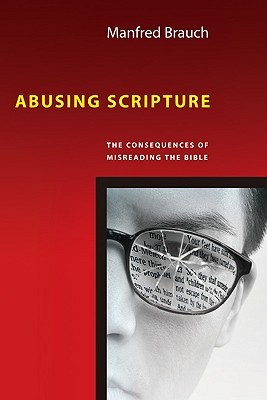
Review: Abusing Scripture

Abusing ScriptureAbusing ScriptureManfred T. Brauch. Downers Grove: InterVarsity Press, 2009.

Summary: The author explores the different ways we misread the Bible and consequently interpret and apply it in ways that abuse both the intent of the text, and sadly, in some cases the people with whom we apply these texts.

I teach the Bible in my work, and on occasion, in the congregation of which I am a part. That is both an exciting and sobering opportunity for me. One one hand I believe that I am explaining what God has said through human beings, and that this can be powerfully transformative in lives. On the other hand, I am keenly aware that how I explain and apply a text can either lead people to such transformative encounters with the living God, or mislead them. I’m always mindful of James’ comment that “we who teach will be judged more strictly” (James 3:1, NIV).

Manfred Brauch is concerned that we might in fact abuse the scriptures in our mishandling of them. This is strong language which he defends in his opening chapter by the fact that we may well do violence to the intent of the text by our mishandling of it. And this violence in turn may warp the understanding of Christian truth by those who hear such teaching, and may, often unintentionally, result in causing others in the Christian community deep pain, or in misrepresenting the message of Christ.

He begins by focusing on the nature of scripture and argues that it is both intentional and incarnational and that abuse occurs when we ignore either the intent of the Bible or its incarnational character, both as the word of God and as given to particular people in a particular cultural context. In succeeding chapters Brauch six ways we mishandle scripture in our interpretation and application:

  1. The abuse of the whole gospel. We may tend toward a focus on a gospel of personal salvation or a social gospel, focusing on the redemptive work of Jesus and its impact on overcoming injustice and setting right the structures of society. Neither alone are the whole message of scripture.
  2. The abuse of selectivity. It is often observed that differing positions on an issue like gender roles can both cite scripture for their view. The issue often is selective use of scripture, ignoring passages that may not agree with one’s view. Often, we need to listen to all the relevant texts and look particularly for those that reflect the overarching redemptive trajectory of scripture.
  3. The abuse of biblical balance. This differs from the abuse preceding it in overemphasis on a particular doctrine while under-emphasizing others. We may focus on certain sins while ignoring others. Again, we need to hear all these perspectives and consider a both/and rather than either/or approach.
  4. The abuse of words. Most of us read, and certainly preach the Bible in translation. Care must be used to be certain that the words we use and meanings we attribute to a word accurately reflect what the author would have understood, as best as we can ascertain. Brauch uses as an example the word cephale and argues for how our translations as “head” may ignore the dimension of “headship” that has to do with “source” and instead uses the term hierarchically.
  5. The abuse of context, both literary and theological. Literary context concerns the place of a particular passage in a larger narrative. Theological context has to do with relating a particular theological idea to the larger theological themes of a book, or even all the books of a particular writer, like Paul.
  6. The abuse of context, relating to historical context and cultural reality. We may universalize what is particular to a historical context or assume that teaching in a context must be applied in the same way in very different cultural contexts–for example, how we understand Jesus healings on the sabbath and the implication for early Christians of whether and how to carry over Jewish sabbath practices.

He then concludes by considering what it could mean if those who differ over scripture and give weight to one part while ignoring others would simply begin to listen to the witness of each other. And he includes appendices going deeper on selective issues of interpretation. And most helpful throughout is that Brauch illustrates both abuses and the proper handling of scripture using contemporary issues.

This book is important for anyone who teaches the scriptures and seeks to be thoughtful of engaging the disparate views one encounters with others who may even claim a similar, evangelical faith. It advocates neither a culture war nor expulsion of those who differ, but the engagement that takes both the scriptures and our hearers seriously. Church leaders facing sharp doctrinal challenges might read this to think through how this might be approached both irenically and yet with doctrinal integrity.

Growing Up in Working Class Youngstown — Work and Gender

bringing_home_the_bacon“Dad brings home the bacon and mom fries it up.”

That pretty much summarized how work and gender functioned in my family growing up in Youngstown. It was typical of many, though not true of all, and it became less the case over the years as many families felt it increasingly necessary to have both adults in wage-earning jobs.

Many of the blue-collar jobs of that time were thought to be too strenuous and dangerous for women, although then as now, one of the principle dangers was the men themselves as there was almost no protection against sexual harassment. Yet as time went by courageous or simply financially motivated women broke through in many of these male preserves.

My wife talks of employment options for women being fairly limited in terms of what was talked about in schools: secretaries, sales clerks, nurses, teachers, telephone operators being some of the leading ones. Men went to work in the mills, in machine shops, and if more educated, in management and more technical jobs. But for many families, when children came along, mom stayed home either by mutual choice, or sometimes, the husband’s choice. There was the expectation, sometimes resented, in many households that when the man came home, dinner would be on the table.

Work around the house tended to be divided up by gender, at least at our house. The guys primarily did the outside jobs — yard care, painting and maintenance, work on the cars, and some of the inside tasks like plumbing and carpentry. Most of the indoor work — cooking, cleaning, laundry was women’s work. Laundry was a job. My mom used to wash the clothes with a ringer washer by laundry tubs where they were rinsed and wrung out. I’ve heard of several women whose arms got mangled in those wringers. Then the clothes were hung on lines–we had them in our basement for cooler weather.

I think as kids we were fortunate to have a parent at home. It was a gift to be able to talk with mom about a bad day at school, or being made fun of, and then have someone get after you to do your homework! Only in later years did it begin to occur to us that it didn’t have to be mom. My dad worked hard, and he was decent with the people who worked with him, but he never was all that good in making any more than we needed to get by. Somehow, I suspect that mom would have been shrewder and better at this if she had the chance.

Some say World War II was the watershed opening the doors of women into the workforce. Both of our moms worked during the war–my mom as a telephone operator, and my wife’s mom as an aircraft inspector (she was still single at the time). But neither continued to work when family came along and my recollection was that most moms in the neighborhood were at home–if they weren’t volunteering at the school PTA.

Is it better today? In some ways certainly as many positions, even in the military have opened to women and progress has been made toward equal pay. There are still gaps, and the truth is that women still seem to bear the brunt of child-rearing responsibilities. Part of it is that I think we still, to some degree, question the manhood of men who aren’t “bringing home the bacon” and many employers still don’t give men who want to spend time caring for their kids much help with this.

I haven’t even talked about single parents. That’s not my experience but I can only imagine the challenges of being sole provider AND caring for one’s children. I’m amazed at those who do it so well.

One thing I know is that most people, men and women, worked hard in working class Youngstown. They bought houses, raised kids, and in some ways, built a city. We might see gender roles differently today and open opportunities for work for women and parenting for men that once weren’t considered. But nothing can take away from what our parents’ generation did.

What did you see in your experiences growing up of work and gender? 

Growing Up in Working Class Youngstown — Spring Cleaning

spring cleaningHave you started your spring cleaning yet? Chances are, if you grew up in Youngstown cleaning wasn’t just something you did when the fancy struck you. There was spring cleaning and fall cleaning, with routines for each time of the year marked by the transition from cold weather to hot, or hot weather to cold.

One of the basic tasks of the spring was windows. Most of us grew up with old fashion storm windows that had to be removed to put in screens. So you washed windows, put away the storms and got those screens in so you could get some ventilation in the house on those hot summer days before air conditioning.

Then there was the putting away of all those winter clothes — with mothballs or cedar blocks, or in cedar chests — and pulling out your summer things to see if they still fit. Those mothballs probably weren’t good for us, but at least our clothes weren’t moth-eaten.

Of course, this was the time when the house was scrubbed from top to bottom. Drapes were washed and rehung, walls cleaned, furniture shampooed, everything given a good dusting and vacuuming, and all the dishes that weren’t used regularly pulled out and washed. In some cases, this would be the time to re-paint before the hot summer weather.

Mom did most of this indoor work, and it was a lot! This was still in the days when many women stayed home and work around the home occurred along pretty strict gender lines–inside work was mom’s, outside work was dad’s and we helped as needed–girls inside, boys outside.

There was outdoor cleanup as well. You cleaned up all the debris from the winter. I remember dad “rolling” the yard with a heavy roller to even out the high spots so it would be easier to mow. Before there were all-season radials, there were snow tires to pull off the car, replacing them with regular tires. We’d clean and sweep out the garage. And we would get the beds around the house ready for planting flowers and vegetables, clearing out any weeds, turning over the soil, maybe working in some humus or sand to break up Youngstown’s clay soils. You pulled out the lawn mower and sharpened the blade and tuned it up.

As a small kid, I always looked forward to dad getting the swing set out of storage. It was metal and he didn’t leave it out to rust. I also remember as I got older carrying our heavy porch chairs and porch swing from the basement coal cellar where we stored them for the winter to our front porch. For many years, dad hung green awnings to keep out the afternoon sun from the porch and the front part of the house.

These routines of spring cleaning reflected the pride of ownership our parents felt about our homes. For many, they were the first generation to own a home and they had worked hard to reach that goal. So it was a matter of self-respect to take good care of that investment–and if you didn’t the relatives let you know!

What are your memories of spring cleaning?

Want to read more “Growing up in Working Class Youngstown” posts? You can find all of them by going to my home page and clicking “On Youngstown” under categories.