Review: Leading Well in Times of Disruption

Cover image of "Leading Well in Times of Disruption: by Joseph W. Handley, Jr. Gideon Para-Mallam, and Asia Williamson, eds.

Leading Well in Times of Disruption, Joseph W. Handley, Jr., Gideon Para-Mallam, and Asia Williamson, editors. Langham Global Library (ISBN: 9781839739859) 2024.

Summary: Amid global disruptions, focuses on the qualities needed in those who lead the church’s global mission.

In the summer of 1974, I had finished my second year of college. I was a leader of my InterVarsity group. I had a growing vision of the reach of the gospel. Six months earlier I had attended Urbana ’73, InterVarsity’s triennial missions conference. That summer, I was at a month long leadership training camp. During that time, we heard exciting reports from Lausanne ’74, focused on bringing the message of Christ to every people on earth. We all had a part to play, whether through prayer, giving, or going.

Fast forward fifty years. In 1974, the focus was primarily “from the west to the rest.” Now it is “from every nation to every nation.” Formerly unreached peoples are sending people to reach others–some even to the west. In the early fall of 2024 the Fourth Lausanne Congress was held in Seoul-Incheon, South Korea. The organizers framed the following as a purpose statement for the gathering:

The Fourth Lausanne Congress on World Evangelization aims to be catalytic in advancing the Movement’s fourfold vision—the gospel for every person, disciple-making churches for every people and place, Christ-like leaders for every church and sector, and kingdom impact in every sphere of society.

Leading Well in Times of Disruption was written in preparation for this gathering. Critical to advancing this global mission are leaders of vision, character, and skill. But how are leaders to be developed for such an expansive vision. That is the focus of the contributions from a global array of mission leaders.

After the first section focusing on the history of Lausanne, including the critical “quiet years,” the remaining four sections focus on the four “everys” of the vision statement. “The Gospel for Every Person” includes a couple essays on leadership development and two important essays on learning from new believers and the use of digital technology. Then “Disciple-Making Churches for Every People and Place” discusses multiplication over growth, elevating women, breaking out of silos to partner, and mentoring next generation leaders.

Thirdly, “Christlike Leaders for Every Church and Sector” begins with theological training and concludes with Christlikeness in suffering, a reality of mission. Finally, Kingdom Impact in Every Sphere of Society” looks outwardly to peacebuilding and inwardly to the reality of leadership burnout. They emphasize incarnational leadership as well as the skills of expanding organizational capacity.

I observed several themes running through the sections. First, godly character is uppermost. Empowering mentorship is critical. Then, platforming important but lesser heard voices–women, Gen Z leaders, and those in “unknown movements”–follows as a matter of course.

I expected more about leading in times of disruption. For example, we are facing political, economic, and environmental disruptions with missional implications and leadership challenges. Other than addressing persecution and some general comments about public leadership, I missed discussion of the disruptive challenges leaders must meet.

Nevertheless, this collection is full of both vision and practicalities for leading mission in our time. Not only that, seeing the growth of the Lausanne Movement over the past fifty years offered a refreshing contrast to the politically captive, compromised, and xenophobic church of my country. While we have “checked out” to our great loss, God has not left himself without a witness. This book offers ample evidence of that truth.

_____________

Disclosure of Material Connection: I received a complimentary copy of this book from the publisher for review.

Review: A Survey of the History of Global Christianity, Second Edition

A Survey of the History of Global Christianity, Second Edition. Mark Nickens. Nashville: B & H Academic, 2020.

Summary: A study of Christianity from its beginnings to the present, tracing its global diffusion, and the resulting diversity within the big “tent” of Christianity.

One of the dangers of our “presentism” and “individualism” is that Christian history often reduces to what is in the Bible and my personal story. Many of us don’t even know the story of our own church body. That being the case, we miss the sense of a vast, 2000 year story in which we are caught up, and one that touches every continent on earth. This text, which may be used for introductory college or seminary courses in global church history, or in an adult study group serves as a good place to start in filling that gap and enlarging our vision of Christianity beyond our own experience and “tribe.”

This survey is organized in five sections:

  1. The Early Church: 30-400
  2. Medieval Christianity: 400-1500 (in two parts from 400 to 1000, and 1000 to 1500)
  3. Pre-Reformers, the Protestant Reformation, and European Christianity (1500-1900)
  4. American Christianity: 1500 to the Present
  5. The Global South

There are several features that make this a readable and easy to follow resource. Each section offers an introduction to the whole and each chapter includes an outline of topics to be covered, helpful if you want to zoom in on a particular topic. Along the way, there are quotes and explanatory sidebars that helpfully illuminate the text. A link is provided for each section offering a supplemental timeline on the author’s website.

I thought the first section quite helpful in covering the rise of the church from a network of local bodies to the institution it became after Constantine. There is good discussion of the canon, doctrinal issues and the early councils and creeds The second section extends this with the seven ecumenical councils, the Latin Vulgate translation of the Bible, the challenge of Islam, the rise and decline of the papacy, the earlier breakaway of Oriental Orthodoxy, and the later schism between the eastern (Orthodox) and western (Catholic) churches. The section ends with key elements leading to the Reformation: early reformers, the printing press, and the rise of the universities.

The main subject of third section is an account of the different reformation movements and figures in Germany (Luther) and Switzerland (Calvin), the Anabaptists, Mennonites, and Amish, and the persecutions they faced, and the Church of England and other Protestant movements that arose, as well as the Catholic Counter Reformation. I perhaps should mention at this point that it is evident that the history reflects a Protestant point of view, but not tendentiously so, with fair descriptions of Catholic belief and practice.

In the section on American Christianity, I appreciated the focus on colonial and frontier religion, the rise of revival movements, a good amount of material on the black church, as well as the rise of Catholicism with southern and eastern European and Irish immigration and the rise of fundamentalism. The post World War 2 rise of evangelicalism is traced as well as coverage of the rise of pentecostalism, televangelism, and the Christian right, but there is no mention of Reinhold Niebuhr, or the later rise of more progressive forms of neo-evangelicalism. There is very little about the complicity of churches in slavery (apart from divisions in northern and southern denominations) and the only treatment of Native Peoples are the missionary efforts of David Brainerd and Jonathan Edwards

The last section was on the church in the Global South. The author provides a chart showing the number of Christians in each part of the world (leaving out Europe) showing the majority of Christians in the Global South. Yet the coverage of the history of these churches was only 25 percent of the text and confined to a single section. One strength is showing how mission movements transitioned to indigenously-led churches that often became mission movements themselves. A chapter is devoted to the history on each continent, with a fair amount of detail on movements in particular countries (for example, the churches in India tracing their roots to the Apostle Thomas). Good coverage is given to the rise of global Pentecostalism. Apart from some discussion of liberation theology, there is little on the church’s involvements in movements seeking justice. There is nothing on Samuel Escobar and Rene Padilla and other evangelicals who pressed the cause of social justice in Latin America, nor the role of religious leadership in ending apartheid (or the collapse of communism for that matter). Nor was there any coverage of the Lausanne movement, one increasingly shaped by concerns of the Global South, or of Pope Francis, the first Latin American pope.

What is not here suggests an avoidance of controversy and a conservative rendering of recent history. It also suggests a history still dominated by the West, in its focus on mission movements and their indigenous offshoots. There is no acknowledgement of nor engagement with the discussion of post-colonialism in the Global South. While a history cannot engage or critique such movements, their existence is also a part of the fabric of this history. This is regrettable, because the author renders historical accounts well, and a text like this could enjoy broader circulation if it told a broader story. It is especially useful for its concise but detailed history up through the Reformation but I would recommend supplementing it with other texts on American and Global South church history.

____________________________

Disclosure of Material Connection: I received a complimentary review copy of this book from the publisher in exchange for an honest review. The opinions I have expressed are my own.

Review: A Multitude of All Peoples

A Multitude

A Multitude of All Peoples: Engaging Ancient Christianity’s Global Identity, Vince L. Bantu. Downers Grove: IVP Academic, 2020.

Summary: A well-documented study of the global spread of ancient Christianity, controverting the argument of Christianity as White and western, and contending for the contextualizing and de-colonizing of contemporary global Christianity.

Often in Christian witness with people from Western countries, the challenge is whether someone can believe intellectually or volitionally, or dealing with ways they may have been put off by the church. In other parts of the world, or with people from those parts of the world or from minority cultures, the issue is that Christianity is thought of white and Western, and it would be an abandonment of one’s culture to believe. In significant part, this arises from mission efforts that have been both culturally captive to the West, and often been the Trojan horse for colonizing efforts.

This book addresses this challenge in several ways. One is that it traces how the early church in the West diverged from other believers in Africa, the Middle East and Asia. The fusion of church and state that began with Constantine marked the beginning of the separation from churches in the East. The framing of orthodox Christian belief at Chalcedon in Hellenistic language distanced believers who spoke of Christian faith in different heart languages.

Then in successive chapters Bantu traces the indigenous Christian movements in Africa, in the Middle East, and along the Silk Road. The exclusion of Miaphysites, those who would say that Christ exists as one person and one human-divine nature, separated the Africans and others from the West. What Bantu shows is the vibrant indigenous churches that developed in each of these parts of the world–the Copts in Egypt, the Ethiopian Church, the Maronites in Lebanon, and the Armenian Church, the early church in India tracing its origins to St. Thomas, and churches along the Silk Road.

The book summarizes the history of each of these indigenous movements that at one time, or even down to the present have been a vibrant Christian presence (consider the 21 Coptic martyrs brutally killed in a videotaped Isis message). The history is accompanied by images of church buildings and artifacts from these churches. The history and archaeological evidence make a strong case for the trans-cultural, global character of early Christianity that existed from the earliest centuries through the first millennium, long before western mission movements.

Likewise, the history of the interaction between the early churches of the West, and sister churches in Africa, the Middle East and Asia offer lessons for today. Chalcedon, from the perspective of these churches, rejected their understanding of Christ and the Christian faith, insisting on a Hellenistic framework for this belief. Bantu shows how indigenous churches responded to the rise of Islam, and sometimes were able to frame Christian faith in ways that were doctrinally sound and yet sidestepped the controversies surrounding God and his Son.

At the beginning of the third millennium of Christianity and the unprecedented global spread of Christianity, the message of this book more important than ever. At times, churches outside the West still struggle under Western theological and cultural domination. In other places, indigenous leadership is framing culturally contextualized yet theologically faithful approaches that advance the gospel. Will Western churches relinquish control in the former instance and affirm and learn from the latter? This book both offers historical evidence that indigenous churches may thrive, and that Christianity from its very beginnings was not exclusively white and Western.

________________________________

Disclosure of Material Connection: I received a complimentary review copy of this book from the publisher. The opinions I have expressed are my own.

Review: Christianity in the Twentieth Century

Christianity in the Twentieth Century

Christianity in the Twentieth CenturyBrian Stanley. Princeton: Princeton University Press, 2018.

Summary: A thematic account of the development of global Christianity during the twentieth century.

It is no small challenge to write a one volume history of Christianity in the twentieth century. The Christian faith has truly become a global faith, represented with indigenous churches on every continent, expressed and experienced in as many or more ways than there are countries in the world, and facing varied internal and external pressures leading to adaptation and change.

Brian Stanley has approached this task not by trying to write a series of chapters on regional histories, or denominational histories, or theological history, but by identifying fifteen themes running through Christian experience over the last hundred years. Each chapter develops a particular theme, sketching some of the global developments, and then offers two case studies, usually specific to two different countries or regions. In the course of this study, Stanley not only touches on fifteen critical themes or trends but also shows the development of Christian faith in every part of the world in its multiplex variety.

In brief, here are the themes covered:

  • Responses to World War I
  • Christianity and Nationalism
  • Prophetic movements
  • The Persecuted Church
  • Belonging and believing
  • Ecumenism
  • Christianity, Ethnic Hatred, and Genocide
  • Christianity in Islamic contexts
  • Christian mission in the modern world
  • Theologies of liberation
  • The church addresses human rights, racism, and indigenous peoples
  • Gender and sexuality
  • Pentecostalism
  • Eastern Orthodoxy
  • Migrant Churches

As mentioned above, each theme chapter is illustrated by two case studies. For example, in looking at Christian faith and nationalism, Stanley takes the contrasting cases of Protestant nationalism in Korea, and Catholic nationalism in Poland, developing the role of the church in the movements for national autonomy in each country, as well as the uneasy alliance of Christianity and nationalism more broadly. However, in the chapter on Christian mission, he considers first the Second Vatican Council of 1962 to 1965, and two contrasting gatherings of Protestants at Uppsala in 1968, focused more on the social dimensions of Christian faith, and Lausanne in 1974, focused more on the conversionist aspects of the faith, albeit with a strong witness for justice concerns by Christians from the majority world. I was somewhat surprised that little was said about the subsequent Lausanne movement or the efforts to identify and reach unreached people groups, a missiological development from this movement.

One of the observations I made while reading is that some themes felt like well-known territory, with names, issues and movements I was well familiar with. Other chapters, like the one on Orthodoxy, for example, surprised me as I learned of Orthodox movements in Africa, and how significant diasporas have been for the development of Orthodoxy in western Europe and the United States. I’ve recently become more aware of Ghanaian Pentecostalism in my own city and this book filled in context of the development of Ghanaian Christianity as well as Pentecostalism in other parts of the world. Numerous leaders of significant movements in twentieth century Christianity were mentioned that I had not heard of, conveying what a far-flung, diverse, and global movement Christianity has become.

The author opens and closes the book discussing the renaming of The Christian Oracle as The Christian Century. Was the twentieth century a “Christian century.” A simple answer to that question is not possible in the author’s estimate. In absolute numbers, no century has witness greater growth, and yet the world’s population has grown faster. In Europe, North America, and Australasia, the church has been in retreat, except for the immigrant churches that have come from South and Central America, Asia, and Africa. Secularism and persecution have attempted to undermine the church, have made significant inroads, and yet not succeeded, and sometimes resulted in a resilient and more robust faith. Christians have both played pivotal roles in justice movements, and been inextricably involved in ethnic hatred and genocide. Great progress has occurred in some sectors toward Christian unity, even while indigenous and immigrant churches assert their own autonomy and major bodies are riven over questions about human sexuality.

Rather than offering a triumphalistic account, Stanley offers a cautionary tale inviting the reader to reflection, summarized in his closing question of “whether Christianity has converted indigenous religionists or whether indigenous religious and cultural perspectives–whether these be African, Asian, Latin American, or even white North American–have succeeded in converting Christianity.” In raising this question, I think he has identified one of the critical issues facing Christians in the early twenty first centuries, questions that ought send us to our knees, turn us to our Bibles, and challenge us to listen to the prophetic voices that speak the uncomfortable truths we need to hear.

___________________________

Disclosure of Material Connection: I received a complimentary review copy of this book from the publisher in exchange for an honest review. The opinions I have expressed are my own.

Review: From Jerusalem to Timbuktu

From Jerusalem to Timbuktu

From Jerusalem to TimbuktuBrian C. Stiller. Downers Grove: InterVarsity Press, 2018.

Summary: A book that surveys the global explosion of Christianity, identifying five drivers of growth and five other factors that weave through these drivers.

Brian C. Stiller serves as a global ambassador for the World Evangelical Alliance, an umbrella alliance of evangelical organizations serving 600 million evangelical Christians globally. This places him in a unique position to discuss trends in the expansion of global Christianity from Europe and North America to the global south over the last fifty years. This growth accounts for the title of his book. He writes,

” With the surprising growth of the Christian community globally in the past fifty years, the demographic weight of Christianity in Africa and Asia has pulled this global center south and west. Demographers now place the center of population density of Christians in Africa.

The metaphorical center of world Christianity has literally moved from Jerusalem to Timbuktu in the nation of Mali. This is not merely some clever title—it is a remarkable sign that points out what we otherwise might miss. Long a city name used as a metaphor for a far-away and unreachable place, today Timbuktu signifies this massive shift, as the location of the center represents a mighty upsurge in Christian faith around the shrinking globe”   (p. 11).

Stiller’s book is not one focused primarily on the statistical shift but rather the factors that he believes have driven this global growth. He identifies five drivers:

  1. An awakened appreciation and experience of the person and work of the Holy Spirit. He sees this as expressive of longings for a deeper life and experience of God as well as a reaction to modernist rationalism that precluded the power of God. While this led to renewal movements in Europe and North America, Pentecostal Christianity was a major factor in the growth of movements in the global South.
  2. Bible translation. The concerted effort to translate the Bible into every language not only has preserved these languages and the culture they reflect, empowering its people, but also unleashes the inherent power of scripture to lead people to Christ.
  3. Indigeneity. Increasingly, nationals have stopped relying on Western personnel and have shaped national movements reflecting their own culture, often resulting in explosive growth, as in the example of the East Africa Revival.
  4. Re-engaging the public square. Paralleling the experience of Western evangelicalism, there has been a movement from simply a focus on inner change and eternal life to the social implications of the gospel message. Examples include Kenya’s president Daniel Arap Moi, and a growing representation of evangelicals in Brazilian politics.
  5. A focus on wholeness–a vision of the gospel concerned with all of life, and one that looks at systemic issues as well as personal redemption, one that fosters, for example in Africa “virtuous cycles” that result in both personal and economic development.

Cross-hatching these five drivers, the author sees five other factors that he delineates in his final chapter. Three of these, he calls “enablers,” which include prayer movements, women in ministry, often on the frontiers of mission advance, and worship. The other two are issues, arising at times from global missions growth, and sometimes from other factors–immigration, including refugee immigration, and persecution (including the sobering statistic of over 5,000 martyrs from the “top ten” countries in 2014 alone, probably a conservative figure).

The section on worship seemed oddly out of place with this focus on indigenous and culturally-rooted ministry. The discussion here focuses on the contemporary Christian worship movement in its Western expressions. The absence of discussion of Latin, African, and Asian examples of worship music and practice was surprising to me.

Overall, this is a tremendously positive and encouraging account. Stiller mixes judicious use of data with numerous illustrative examples drawn from throughout the world. Most clearly, Stiller’s account, along with those of researchers like Philip Jenkins, makes the case that Christianity is a global faith no longer dominated by white westerners, a fact that many American evangelicals and others who discuss the evangelical movement are woefully unaware of. In particular, it seems that we may need to listen to the voices of Pentecostal movements and what they are learning about the Holy Spirit.

The epilogue of this work notes that the dominance of the West in global Christianity has shifted to the global South and that this challenges those of us in the West to exercise humility in learning from our fellow Christians in these countries. Stiller suggests that the situation in some of our “Rust Belt” communities may be more analogous to parts of Africa, and that ministry approaches developed in these countries may have an impact in our communities. I find myself asking what might we learn from Christian migrants from these countries. What may our congregation learn from the Ghanaian Pentecostal Church (in Columbus, Ohio!) who shares our building? Will we rejoice in the global growth of Christianity? Are there lessons we might learn about engaging the public square and the wholeness of the gospel from these movements? And will we move from being patrons to partners in the spread of Christianity?

____________________________

Disclosure of Material Connection: I received a complimentary review copy of this book from the publisher in exchange for an honest review. The opinions I have expressed are my own.


The Month in Reviews: October 2015

I began October with a review of a book talking about the common ground between the philosophy of Ayn Rand and the Christian faith. I celebrated the work of Ohio novelist and agriculturalist Louis Bromfield, reviewing two of his narratives of his work to restore Malabar Farm in nearby Mansfield, Ohio. Faith and doubt were also themes of the month as I reviewed a book on eight adults who believed and the place of doubt in Christian experience. And I looked at the challenges facing the Western church as it relates to Christians throughout the world and how that changes our paradigms for mission and even how we think about who gets to define Christianity. With that, here are summaries of my reviews with links to my complete reviews:

soul of atlasThe Soul of AtlasMark David Henderson. Lexington: Reason Publishing, 2013. Is there any way to reconcile the thought of Ayn Rand and the Christian faith? Through a personal narrative of dialogues with his two fathers, one a Christian, and one an adherent to Ayn Rand’s philosophy (Objectivism) the author explores what possible ground could exist between Objectivists and Christians.

unfinished odysseyThe Unfinished Odyssey of Robert Kennedy, David Halberstam. New York, Open Road, 2013 (originally published in 1969). This is a classic account of Robert Kennedy’s last campaign tracing his decision to run, primary campaigns and evolving political vision that ended on the night of his primary victory in California.

Pleasant ValleyPleasant Valley, Louis Bromfield. Wooster: Wooster Book Company, 1997 (originally published in 1945). The author, a Pulitzer Prize winning novelist, narrates his return from France to the area he where grew up, his purchase of several worn out farms, and his pioneering efforts in sustainable agriculture that restored the land to fertility, bringing health not only to the land but to those who made it their home.

Overturning TablesOverturning Tables, Scott Bessenecker. Downers Grove: InterVarsity Press, 2014. Scott Bessenecker argues that Western missions efforts are often captive to corporate culture and practices inconsistent with efforts to reach across cultures and to the marginal peoples outside the corporate world.

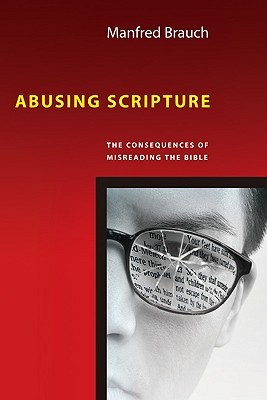
Abusing ScriptureAbusing ScriptureManfred T. Brauch. Downers Grove: InterVarsity Press, 2009. The author explores the different ways we misread the Bible and consequently interpret and apply it in ways that abuse both the intent of the text, and sadly, in some cases the people with whom we apply these texts.

Mere BelieversMere BelieversMarc Baer. Eugene: Cascade Books, 2013. Can individuals seeking to live faithfully to their calling change history? These profiles of eight British believers demonstrate that “mere believers” can indeed have a transformative influence in matters both of the heart and of the intellect.

To Whom Does Christianty belongTo Whom Does Christianity Belong?, Dyron B. Daughrity. Minneapolis: Fortress Press, 2015. This book argues that when one speaks of “Christianity” this must be understood in global terms in all of its diversity of expression and not simply in the forms we Westerners are most accustomed to.

Questioning Your DoubtsQuestioning Your Doubts, Christina M. H. Powell. Downers Grove: InterVarsity Press, 2014. This book comes out of the world of academic research and proposes that the process of questioning our doubts as well as our faith builds bridges of understanding deepening both our exercise of reason and confidence in our faith.

Malabar FarmMalabar Farm, Louis Bromfield. Wooster: Wooster Book Company, 1999 (originally published in 1948). Malabar Farm continues the story begun in Pleasant Valley of the author’s efforts of restoring a worn out farm to productivity, covering the years from 1944 to 1947 and going deeper into his philosophy of agriculture and the all-important matter of the soil.

Theology of IsaiahThe Theology of the Book of Isaiah, John Goldingay. Downers Grove, InterVarsity Press, 2014. Taking the book of Isaiah as a whole and as it would have been read by its first readers, Goldingay both considers the theologies present in each major section of Isaiah, and traces the theological themes emerging from the book as a whole.

Best Book of the Month: I’m going to go with Louis Bromfield’s Pleasant Valley. I loved his descriptions of restoring the land, building the “Big House” and his stories about other farmers. I think Bromfield’s farm books deserve a wider reputation for their path-breaking descriptions of early sustainable agriculture practices. I also deeply appreciated his love of the hill country of north central Ohio, which I also consider among the most beautiful parts of the state.

Best quote: I’m going to go with Bromfield’s description of his neighbor Walter Oakes and his love for “My Ninety Acres”:

“As I watched that big work-worn hand caressing that stalk of corn, I understood suddenly the whole story of Walter and Nellie and the ninety acres. Walter was old now, but he was vigorous and the rough hand that caressed that corn was the hand of a passionate lover. It was the hand that had caressed the body of a woman who had been loved as few women had ever been loved, so passionately and deeply and tenderly that there would never be another woman who could take her place. I felt again a sudden lump in my throat, for I knew that I had understood suddenly, forty years after the woman was dead, one of the most tragic but beautiful of all love stories. I know now what Robert’s strange remark about Nellie and the ninety acres getting all mixed up had meant. Robert himself must once have seen something very like what I had just seen” (p. 154).

Coming Attractions: Look for my review of The Fellowship, Philip and Carol Zaleski’s book on the Inklings, which I’m a good way through. I also am currently reading a book suicide from a pastoral counseling perspective, a novel of Frederick Buechner, and a book on Athens and Jerusalem, on philosophy and Christian faith. I’m looking forward to reading a new book on acedia, one of the seven deadly sins and a history of the Great Books movement that arose out of the University of Chicago.

[“The Month in Reviews” serves as a kind of index of all the reviews posted on this blog. By selecting “The Month in Reviews” link on the menu bar, you can explore a nearly complete list of books reviewed at Bob on Books.]