Close the Libraries?

In the July 18th issue of Forbes magazine, Tim Worstall proposed that we “close the libraries and buy everyone an Amazon Kindle Unlimited subscription.” This piggybacked on Amazon’s recently unveiled subscription service that gives you unlimited access to 600,000 titles (although it is worth investigating what those titles include and do not include). He argues that this gives for more access than any library can offer and, based on library budgets in the UK, could be done at a savings, particularly if a special mass subscription price could be negotiated (I can see Jeff Bezos rubbing his hands together now!).

Library Levy sign from November 2013

Library Levy sign from November 2013 (picture taken in our front yard)

While from a simple cost calculation this might be true (and there is a question of what would happen if Amazon were given an even greater monopoly of the book market–for example consider what happens with cable rates) there are some compelling reasons not to go this direction:

1. It gives Amazon (or Google) a greater monopoly on the access to books, and control over what books are available to the reading public. Our current library system, as de-centralized as it is, allows for local control, patron interest, and access through inter-library loan to most of the libraries in the country.

2. Libraries provide services to every class in society without charge. This includes borrowing privileges, internet access, and often loans of tablets and other electronic resources. Will Amazon also provide all users tablets, Wi-Fi at no charge? If not, this is only books for some.

3. Libraries provide trained reference librarians who can help access materials one would never find on Amazon, ranging from public records to a myriad of databases. Replacing this with Amazon at best assumes that heuristics and algorithms will guide you and at worst makes you your own reference librarian.

4. On a related note, online resources, whether from Amazon or others, are uncurated. That is, it is totally up to the user to assess the reliability of the information you obtain. Librarians are not infallible curators, but they devote time and research to assessing what books and other resources to acquire.

5. Amazon will recommend books based on your interests. Librarians will do this as well and also help you explore new interests and connect you with titles Amazon’s algorithms wouldn’t come up with.

6. While one can listen to a computer audio voice “reading” a book, libraries offer to children the wondrous experience of librarian-storytellers skilled at reading books and kindling in children the love of story.

7. Libraries offer a “third place” between home and work, whether for children at Story Hours, or teens after school, or senior citizens. Our local library hosts various community meetings and summer concerts. When a number of us in my community gathered to oppose the development of a local wetland, where did we meet? The library.

8. Libraries represent money invested into a local community that enriches our communal life. An Amazon subscription is not taxed and only draws money out of the community into the expansive vision of Jeff Bezos.

I’m not a Luddite. I have an e-reader and do read some books that way. Actually libraries offer many digital resources for lending at no cost. Given that you don’t “own” your Amazon content because of Digital Rights Management, might it not make sense to borrow through the library that you or others in your community support with your taxes?

The larger issue is what kind of a society we want, one where all our experiences are mediated virtually and digitally, or one where we remember that we are physical and social beings meant for real human contact in real physical places.  I suspect the reality for us in this digital age is that the best answer involves both-and thinking rather than the either-or argument proposed in the Forbes article. Both-and solutions may be more complicated than what seems a simple solution of closing the libraries. But I would contend that like so many aspects of life, simpler means smaller and less qualitatively rich. Do we really want that?
Alternatives to Amazon

I admit it. Amazon is my primary source for e-books. And they are often my go-to source for print books I want to get in a hurry or can’t otherwise find. Yet Amazon’s dispute with Hachette has left many of us uneasy if for no other reason than Amazon can dictate terms and exclude titles simply because it can without fear of losing its competitive edge. There is simply no one like them.

A recent article in Publisher’s Weekly notes how Macmillan Publishers alerted me that many publishers are now making their frontlist titles available immediately to libraries in ebook form for lending. Many are doing this through the Overdrive app, forms of which exist for IPads and I phones, Android devices, Windows computers and phones (XP or newer) and newer Kindles and Nooks. You also need a library card with your local library, which is the license holder for each title (typical arrangements seem to be for 52 withdrawals per license per two years).

In many ways this makes sense since you do not really own the ebooks you download from Amazon. The money you pay rents the title from them. Frankly, if you are supporting your local library through taxes you might as well get your money’s worth and use this service. And the truth is, I often remove books from my device once I read them (the Amazon ones are stored in their ‘cloud’ so that I can download them again should I wish). With ebooks borrowed from the library, they are automatically returned on their due dates and removed from your device.

There are also a variety of other sources, particularly for free ebooks (usually public domain). Project Gutenberg is the granddaddy of these and has many books in a variety of eformats. There is also archive.org (the Internet Archive) and the Open Library, just to name a few. In some cases, you may need to learn to download books to a computer and then transfer files to an e-reader.

Of course the question always arises of print vs. ebook. Having used both formats for a couple years now I am coming to the conclusion that the easiest way to think about this is that ebook is best if I know I don’t want to keep a book after I’ve read it. If it is something I want to keep and particularly to reference, then a print book seems better. This raises the question of why, apart from urgent need, would I pay for a book I’m not going to keep and don’t really own? Library or free options of ebooks, or print books from the library just seem to make the most sense in this case.

What this also suggests to me is that, with some thought, I can then dedicate more of my book-buying budget to supporting brick and mortar stores for most of my purchases, particularly to those who actually care about developing relationships with their customers. Sure, it takes more time, but the delights of a good bookstore can never be equalled on a website, and the serendipitous finds one makes can never be duplicated by Amazon’s heuristics generating book recommendations for me.

(Some of you may be wondering about Amazon’s new $9.99 per month unlimited ebook borrowing program. My son wrote a good blog post on this that I would recommend. Enjoy!)

E-books and Libraries

In this article on the ALA Midwinter session, the discussion underscores the continuing evolution of libraries from places with shelves of books to an “information port” or “hub”.  One development is that publishers are no longer asking whether to do this but how–and in particular how they and their authors are payed under these models.

The larger and more interesting issue is the authors who are not working through publishers. How can libraries serve as an outlet linking readers to their works? Then tension is finding readers and getting paid. Amazon’s Kindle Direct Platform allows for this but the librarians are arguing that Kindle should not be the only option.

To me it seems that the question is not only royalties but distribution. How are independently published e-books to be distributed to the many different libraries in this country or around the world? It seems that there is a need for some kind of counterpart to Amazon that serves as clearing house and financial agent between independent authors and local library systems. I also wonder how acquisition would work. Will librarians still acquire the works they think readers want or will they “acquire on demand” or some mix of the two, which would make sense.

Libraries of late have been making themselves into a kind of “third place” community gathering spot as this article suggests. Yet I wonder if they can continue to sustain this if they become “all-digital”. Why can’t I just meander down to my local Starbucks and “go to the library” while sipping that latte’?

The other side of this is that there is an immutability about physically printed books that digital resources do not have. Digital text can be deleted or altered, or hacked. Physical books and periodicals are much more difficult to do this to. This writer contends libraries play a crucial role in guarding our civilization against 1984-like re-writing of history and everything else.  The honest question though is, should every library be part of this or simply places like the Library of Congress, major university libraries and the like.

For those interested, all the articles linked to in this post come from today’s PW Daily email, also available on the web. I’m finding this to be an interesting source on what is going on in the world of books and publishing

Should I Read This Book?

Yesterday, I wrote about unfinished books. But it occurs to me that one of the best ways to finish a book is to make good decisions about which books to start in the first place. Particularly, this is an important question if you are buying the book. How does one figure out what to read in the first place? A few thoughts, and I’d be glad to hear how other readers think about this.

1. Many e-books will allow you to download a preview for free. This is usually just the first chapter and no guarantee that the rest of the book will be as good or better. This is “try before you buy.”  This is a good idea if the author, or genre is new to you.

2. Of course, another way to try before you buy is to borrow the book from the library, physically or electronically. It is always a greater disappointment to put down a book you’ve paid good money for.

3. Generally, books you find in the bargain bins are more likely to be ones you will lay down. They are usually there for a good reason!  But there are always those wonderful exceptions. Generally, if a book is selling at or close to retail (unless you are buying it secondhand) that’s an indicator that sales are such that they aren’t trying to unload surplus stock.

4. Are you entering a particularly hectic season of life? If you think you will have to lay a book down unread and then have a hard time picking up the train of thought without re-starting the book, you might do just as well to wait until a time when you can read your way through the book without long interruptions.

5. Why are you interested in reading this book in the first place? If it is simply because everyone is reading this book, or you liked the cover, you might take time exploring the table of contents a bit further or ask yourself, “am I really interested in the history of the American Whig Party?” (my family will get this one!).

. Different seasons of life call for different books.  I might really enjoy a spy thriller or a mystery at the beach or at an airport. I might take an interesting biography or a more serious novel for quiet evenings on a fall getaway. Cold winters’ nights might be a good time to wade through that multi-volume history of the Civil War. The early hours of the day are best for me to read thoughtful books on faith-related subjects. The beginning of spring training or World Series season is always a signal to me to read a good baseball book.

7. I have friends (and some reviewers) whose reading tastes seem close to mine. If they’ve liked a book that I think I’d be interested in, then I feel more assured in picking it up and starting it. Of course, not all the things my friends are interested in are the same as my interests!

Those are a few thoughts. It is not a sin to put down a book. Sometimes we will start out on a book when we are just not ready for it. I’ve come back to books years later that I’ve put down and found that for whatever reason, I’m now ready to read them. And if we gain insight into our book choices through the books we lay down as well as the books we finish, that is valuable.

How do you decide when to buy or read a book?


Seriously? People Need Reasons to Read?

That was a response to my post yesterday, Reasons to Read.  Actually, I get that. I have to admit I’ve loved reading from when I first learned how to read. I probably owe this to parents who valued reading and education. My mom loved to read and I remember conversations over lunch about the books each of us were reading. She was a member of a couple of book clubs and new books would regularly arrive at our home. She enjoyed historical fiction and as I got older, I read some of this as well–books by Leon Uris come to mind. It was fun to explore the bookshelves at home, particularly as I discovered that they went two to three books deep at times. Sometimes I would just page through the encyclopedia set we had in the hall by my bedroom, fascinated that there was so much one could explore and learn.

main

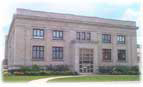
Main Library-Youngstown Ohio

The household budget only allowed for one of us to be buying books, so I grew up with regular trips to the library–first on Saturdays to our downtown library, and later on my own to our local branch library on the west side of Youngstown. It was a “rite of passage” of sorts to get my own library card! Sometimes the librarians would help, but mostly I was allowed to wander the shelves and discover interesting books–mostly I liked science and sports, but I also remember reading books about some of the battles of World War 2–interesting because my dad was in the army during that war. It was exciting as I got older to be able to take books out of the “adult” section of the library!

West Side Library--Youngstown Ohio

West Side Library–Youngstown Ohio

If there is a lesson from this trip down memory lane, it might be that if you want to be a reader, choose your parents well! I certainly did. I also suspect I had some personal propensities to this end. I wasn’t particularly athletic as a kid, and somewhat heavyset until I reached adolescence. It was probably the case that if I couldn’t be good at baseball, at least I could be good with books! I wonder how many readers are out there with similar experiences.

What I think about more and more though are the large numbers of people who rarely or ever crack open a book–whether in physical or e-book format. I guess one of the things I hope in writing about reading and the books I read is to not only preach to the choir but also to entice some for whom reading is an infrequent practice, other than on Facebook, that there are ways books can enrich our lives that are different from other enriching activities.

That happens in different ways for me. Books capture my imagination. The Hobbit and The Lord of the Rings in my head is far richer and more vivid than the best of Peter Jackson, and gets richer with each re-reading. Books help me understand where I came from. The biography of John Quincy Adams I recently read helped me appreciate the role he played in the abolition of slavery–something I never knew before. Books challenge my thinking. The New Jim Crow forced me to ask some serious questions about the structures of our society and how they still undergird a racialized society.

What is different about books from our visual media? At best, what they do is engage our imagination and our intellect. They give us a chance to reflect and not simply absorb an endless set of images. They allow us to do that at our own pace and time. Something that captures our attention can be re-read, reflected upon, dialogued with. Books give us words to express what might be inchoate ideas or feelings.

What I would encourage for those who sense they might be missing something and want to read more is probably analogous to our experiences of learning about wines–of which we are still woefully ignorant. But we’ve been to some wine-tastings in our area, including one recently at a local vineyard where we could talk about the characteristics of different wines, and taste the differences for ourselves. “Taste” some different types of books, kind of like different wines and find those you enjoy.

As I’ve suggested before, GoodReads is a great resource to get ideas of interesting books from the recommendations of your friends or others (GoodReads will even give you their own recommendations based on books you have read or would like to read–most are pretty good). Or just visit your local library. Chances are, there is someone there who would be glad to help you find something interesting!

I’d love to hear stories of those who have become readers after growing up and how that happened for you!


You Know You Have Too Many Books When…

We stopped by our favorite used book store the other night. Only bought one book–a biography of Henry Stimson from the History Book Club’s Parkman Prize series. It cost me only $2. Was feeling pretty good about that until I had this niggling feeling that I already owned a copy of this book, yet unread. Turned out, I even knew exactly where to find it. I think I may have too many books!

What are some other signs that you have too many books? Here are a few I can think of–although for my own sense of self-respect, I won’t say how many are true for me!

You have too many books when…

1. You will not be able to read all the books you have in what life remains you–even by generous measures.

2. You’ve run out of shelf space for your books.

3. Book piles are sprouting up on the flat surfaces in your house.

4. You can’t find a book you know you own.

5. You have boxes of books squirreled away in secret places.

6. You’ve considered adding onto your house to make room for your books.

7. Alternatively, you’ve considered asking someone in your house to move out to make room for your books! (I will say I’m not guilty of this one!)

8. Children visiting your home ask if this is a library.

9. You have  more books than the local library!

10. Your Nook or Kindle overfloweth!

The funny thing is, even then, we remain suckers for “that book I’ve always wanted to read”, particularly if we find it for a bargain. And our unread books never trouble us too much. After all there is the reputed counsel of Winston Churchill who encouraged friends not to trouble themselves over unread books but just to “fondle them”.

Can you add to my signs of having too many books? If you are a bibliophile and not in denial (or the spouse of a bibliophile!), you probably can.

Sigh…