Review: Bittersweet

Bittersweet, Susan Cain. New York: Crown, 2022.

Summary: Describes the state of bittersweetness, where sadness and joy, death and life, failure and growth, longing and love intersect and how this deepens our lives and has the power to draw us together.

About ten years ago, Susan Cain published Quiet, helping the extroverted world discover the power of introverts and what they bring us all. In this work, Cain explores why at least some of us like sad songs, rainy days, and react intensely to art?

She helps us enter into understanding bittersweet by telling the story of the cellist of Sarajevo, who during the worst of the shelling, appeared every day and played Albinoni’s Adagio in G Minor. It is a beautiful, sad, and evocative piece that capture both the beauty of pre-war Sarajevo and the terrible loss of the war. This is bittersweet, this embrace of sadness and the longing for beauty, for something beyond our fractured existence. Holding together these seemingly disparate experiences, Cain believes is the pathway to “creativity, transcendence, and love.” Bittersweet can draw us together in the shared experience of longing for the transcendent.

Cain explores the sources of our longings for the good, the true, and the beautiful, the wonder of those moments and yet their transience. She contends that it is the place of creativity. She talks about how we live with bittersweet in a world of relentless positivity whose mantra seems to be, “be happy.” She offers an insight into the mental health crisis on university campuses, where everyone has to project a put-together, perfect Instagram image of effortless perfection that no one can live up to. She contends that our understanding of bittersweet can transform workplaces, where we understand the other side of fantastic success is the risk of failure, where allowing workers to acknowledge their struggles releases them to work more freely and productively, knowing that we’re all strugglers here.

The material of the third part on mortality, impermanence, and grief was the most thought-provoking for me. It is framed with the death of her brother and father from COVID-19 and the descent of her mother into dementia, a mother with whom she has had a bittersweet relationship. In between, she narrates attending RAADfest, a gathering of people into radical life extension, who are in revolt against aging and death. While Cain, like all of us would like to live longer, she doesn’t believe the pursuit of deathlessness will lead to peace and harmony, but rather the acceptance of mortality and walking together in it has the power to draw us together. She believes that the embrace of bittersweet is the way out of inherited trauma, when we face and embrace the pain in the lives of our forebears and live with gratitude for their resilience and the gifts they passed on to us.

I found myself reacting in several ways to this book. One was that I recognized a strength Susan Cain has is to name what is often an inchoate sense many of us have. While her “quiz” at the beginning of the book suggests some score higher on the bittersweet scale than others, anyone who has lived enough life, or even through a pandemic grasps this tension of sorrow and wonder, of longing and hope within which we live. Cain’s genius is to name it and give the lie to the American (and often Christian) focus on being happy.

Cain develops her ideas through a series of stories of travels around the world and interviews with a number of insightful people. She is a storyteller, and sometimes, it is hard to keep track of the larger story she is rendering for all the stories. Only in going back over the book for this review did I get any sense of the development of her ideas. With that, I also found the book somewhat repetitive as she makes again and again the point that bittersweet gives meaning, and creativity, love and union with others to our existence. It felt to some degree that this is the world she wanted to be so.

Cain describes herself as moving from an agnosticism to something different, not exactly faith or belief in a particular conception of God. Yet it seems in the end, in an attempt to identify with universal human experience, all she can do is believe in the longing for something more. She quotes C. S. Lewis from Surprised by Joy, noting that “we have hunger because we need to eat, we have thirst because we need to drink; so if we have an ‘inconsolable longing’ that can’t be satisfied in this world, it must be because we belong to another, godly one” (pp. 53-54). Yet Lewis found the fulfillment of his longing not in longing but in God. I fear Cain’s argument is to embrace the hunger and the thirst, but not go on to where there is food and drink. I sense she believes that longing or bittersweet is its own satisfaction. I can’t help but wonder if there is a dark side to bittersweet not discussed here, the disillusionment and despair of a life of longing without finding. I found myself praying that she would find, and have the courage to accept, the “other” that she longs for.

Growing Up in Working Class Youngstown — Summer Camps

Modern_Cabent

Some campers at Camp Fitch. Ckondas [Public domain], via Wikimedia Commons

Did you ever grow to summer camp when you were growing up in Youngstown? I have to admit that this was not a personal experience until my college years when I went to a month long program at a camp in the Upper Peninsula of Michigan. But going away for a week or so, living in a cabin with other boys, camp fires, games, crafts, hiking, swimming, overnight tent camping, and the omnipresent camp counselor–those were only stories I heard from friends.

I used to bicycle past the Fresh Air Camp at Wilkinson Avenue and McCollum Road on the edge of Mill Creek Park just above the Lily Pond. I heard this was where “underprivileged” children, particularly from neighborhoods near the industrial heart of the city could come for a week or two of fresh air at this West Side camp upwind from the mills. All I know was that as I cycled past, it looked like the kids were having fun. On the other hand, the camp was surrounded by fences and I always wondered if the fences were for keeping others out, or keeping them in. Either way, I think I was glad to bike away.

The camp had a long history, being started in 1910. In 1919, a bequest from Henry Stambaugh provided significant funding for the camp. I found one recollection of the camp online at “Youngstown Memories” on the MahoningValley.Info Forums from “Mary_Krupa” who wrote,

“I went to Fresh Air Camp for one year in the sixties. I have great memories of the camp and absolutely loved going there. I remember their little library which had some old Nancy Drew books in it that I got to read.

It was a special place.”

I also learned that one of my former anthropology professors at Youngstown State, Dr. John White, served as a co-director of the camp for four seasons and was known as “Big John” (he was a big man) and was loved by the kids. He passed in 2009, and I learned this about him from the online tribute for him.

The camp is still in use, now named Camp Challenge. It is operated by Alta Head Start as a recreational camp for children with behavioral and social skill problems.

There were other camps around Youngstown that some of my friends went to in the summer time. The YMCA operated Camp Fitch over in Pennsylvania. Boy Scouts went to Camp Stambaugh. Church friends went to Camp Joseph Badger Meadows or Camp Lambec.

I’m not sure I would have been a great candidate for summer camp. I was (and am) probably much like Susan Cain, the author of Quiet, a book on the gift of being an introvert. In her TED talk, she recounts her own summer camp experience:

“When I was nine years old I went off to summer camp for the first time. And my mother packed me a suitcase full of books, which to me seemed like a perfectly natural thing to do. Because in my family, reading was the primary group activity. I had a vision of 10 girls sitting in a cabin cozily reading books in their matching nightgowns. Camp was more like a keg party without any alcohol. And on the very first day, our counselor gathered us all together and she taught us a cheer that she said we would be doing every day for the rest of the summer to instill camp spirit. And it went like this:”R-O-W-D-I-E, that’s the way we spell rowdie. Rowdie, rowdie, let’s get rowdie.”

But the first time that I took my book out of my suitcase,the coolest girl in the bunk came up to me and she asked me, “Why are you being so mellow?” –mellow, of course, being the exact opposite of R-O-W-D-I-E. And then the second time I tried it, the counselor came up to me with a concerned expression on her face and she repeated the point about camp spirit and said we should all work very hard to be outgoing.

And so I put my books away, back in their suitcase, and I put them under my bed, and there they stayed for the rest of the summer. And I felt kind of guilty about this. I felt as if the books needed me somehow, and they were calling out to me and I was forsaking them. But I did forsake them and I didn’t open that suitcase again until I was back home with my family at the end of the summer.”

Instead of summer camp, I spent summer days cutting lawns for neighbors, making trips to the library and reading on our front porch, the coolest place around our house. When not reading, some of my friends would come over for marathon Monopoly games, or trading baseball cards. Of course there were afternoons at Borts Pool, evening trips to the DQ, and sitting out on the front steps with my friend Jim, solving the world’s problems, or at least trying to figure out girls. Truthfully, I don’t think I ever missed camp, and looking back, I kind of wonder if I would have been a bit miserable.

This series is not just about my memories but the collective memory of those of us who grew up in Youngstown. Others probably have different memories about summer camps than I do. Did you go to camp? Where did you go? What were your best memories? Your worst?

Books I Wish I Had Read Sooner

Recently I wrote a post titled “Books I Read Too Soon“. Today I was wondering whether there were some books that I wish I had read sooner. So I perused through the books that I’ve reviewed over the past few years and came up with a list of some I wish I had come across or read earlier in life. It is not that I did not benefit from these books when I did read them. Rather, I just wish I had enjoyed the benefit of discovering their riches sooner. In some cases, this would just not have been possible because they were written in the last few years. What I would say is, if you agree with my reasoning about each book and you are younger than I am, don’t wait until your fifties or sixties to read them!

GoblinCurdieThe Princess and the Goblin and The Princess and Curdie by George MacDonald. I even wrote in my review of the former of these two that I wondered why I hadn’t read this sooner. Both are stories that work on multiple levels that only get richer with each reading. Of The Princess and the Goblin, G.K. Chesterton said it “made a difference to my whole existence.”

QuietQuiet: The Power of Introverts in a World That Can’t Stop Talkingby Susan Cain. I think both my wife and I wish this book had been written years sooner. Introverts often feel they should try to be extroverts, which it seems society prefers. Susan Cain’s book, without being whiny, suggests that introverts bring a unique gift to the world. Wish I’d read this one in high school!

CanticleA Canticle for Leibowitz, by Walter M. Miller, Jr. This was a sci-fi book I passed up reading as a kid because I thought “Canticle” seemed too highbrow. Read it a few years ago for the first time and was struck with both the memory of living under a nuclear cloud in the sixties, and the fascinating project of this book of preserving learning in a post-nuclear holocaust world.

Critical journeyThe Critical Journey, Stages in the Life of Faithby Janet O Hagberg and Robert A. Guelich. I wish I had understood in my thirties that faith was a journey rather than a static reality. It took hitting the wall that Hagberg and Guelich talk about in this book during mid-life to wonder if there are greater depths to the life of faith than what I was taught as a young adult.

Daring GreatlyDaring Greatly by Brene’ Brown.  This is a book I wish I had read as a young leader. Brene’ Brown talks about the strength to be found in vulnerability, not something most men do well, including me. Her explorations of the way we avoid vulnerability through perfectionism and through numbing and through thinking we cannot allow ourselves joy described the strategies I’ve too often used to “maintain control” and not risk.

Exclusion & EmbraceExclusion and Embrace by Miroslav Volf. I think we (and I include myself here) spend too much time dividing the world into “us” and “them” and I spent too many years thinking in these terms. Yet the real question is how do we embrace the “other” who really is different in important ways from us. Volf’s “drama of embrace”  and the practice of “double vision” gave me new ways of thinking about how we love across our differences and have genuine and deep encounters with the “other”.

to change the worldTo Change the World by James Davison Hunter. I’ve used “world-changing” rhetoric in my work during most of my life but my ideas of what real culture change looked like were naive and simplistic. Hunter challenges both our superficial engagements with the culture and the naive hopes we often have put in politics to change the world and calls for the “long obedience” of “faithful presence” in society.

I think I could have profited by reading each of these books earlier in life. Nevertheless, I’m glad I read them when I did because each of these were works of worth that have served me well since. I was also struck when I perused my reviews of how many books I did not necessarily wish I had read sooner. They seemed fine for this time and this group of books was in the vast majority. I’m really not overly troubled by this. But if the books I’ve mentioned encourage someone twenty or thirty or more years younger than I to read them and that person profits from the reading–then that will be a good thing.

Are there books you wish you had read sooner?

Review: Quiet: The Power of Introverts in a World That Can’t Stop Talking

Quiet: The Power of Introverts in a World That Can't Stop Talking
Quiet: The Power of Introverts in a World That Can’t Stop Talking by Susan Cain
My rating: 5 of 5 stars

It is funny how someone speaking softly but with conviction can change a conversation. Susan Cain has done just that with her bestselling Quiet. The book is about the unique gift, the “quiet power”, introverts bring to the world, particularly American culture, which places a premium on extroverted behavior–group work, public charisma, being the life of the party. And this is important as she argues because one-third to one-half of all people are introverts. Cain is not arguing that we suddenly coddle introverts or that being extroverted is bad. Rather, she paints a compelling picture of what happens when introverts and extroverts can appreciate each other’s temperament and gifts. Her examples of this include Rosa Parks and Martin Luther King, Jr and Franklin and Eleanor Roosevelt.

She introduces the book with a compelling narrative of her work with a young Wall Street lawyer and the negotiation she faced in terror that turned out with her being offered a job by opposing counsel. During the negotiation “Laura” turned to her “quiet power” and through persistent questions and proposal carried the day against her extroverted, brazen opposite. “Laura”, it turns out is our author.

The first part of the book focuses on the American extrovert ideal. Cain traces the history of this ideal and what she calls “the new Groupthink” and its manifestations in education, business, and even the church (she visits Saddleback Church at one point observing that it was “all communication” with no chance for reflection).

In the second part of the book, she turns to the research on temperament and argues that introverts are actually different in their sensitivity to stimuli, in how their brains process dopamine, and more. This is the most technical part of the book but Cain livens this up through first person interviews and illustrative stories including that of Franklin and Eleanor, and the contrast between the “Masters of the Universe” on Wall Street and Warren Buffett. At the same time, she avoids a “biology is destiny” argument. Introverts can push the boundaries of their temperament in things like public speaking when it is for causes and purposes they care for deeply.

Part three is the shortest section, just one chapter, in which she proposes that all cultures do not share our extrovert ideals. Working in a university context with many Asian-Americans, I found this of interest because she suggests that the Asian ideal is different and that all the group discussions in our classrooms and the extroverted character of much of campus life poses real strains for many Asian-Americans. Part of the strain is the pull to deny one’s own cultural heritage and temperament, thinking the American is “better”.

Part four focuses on how introverts may constructively engage an extrovert world–when to act more extroverted than you are, how to talk to the opposite type and how to raise children who are introverted. Most enlightening to me was the idea of not “throwing them in the deep” when they fear something, but gradually and safely introducing them to new things. I’ve know introverts who received the former treatment in childhood who still carry painful memories of these experiences.

Perhaps it is part of her lawyerly training, but Cain writes with clarity, building a compelling argument in a quiet voice, with nothing extra. What I most appreciate, in contrast to some I’ve read on this topic, is that Cain does not come off “whiny” or with an entitlement mentality. She makes her case for cherishing the gift introverts bring to the world without downplaying the gifts of others. Her plea is one that plays not on guilt manipulation but the recognition of a tremendous opportunity to recognize what introverts add to our families, our organizations, and our world.

View all my reviews

Is Extroversion a Virtue?

That’s a question posed in Susan Cain’s QuietAlong with that comes the corresponding question: is introversion a sin? It is interesting that the context in which this arises is Cain’s visit to Saddleback Church, at the suggestion of Adam McHugh, author of Introverts in the ChurchTrue, no one says either that being an extrovert is virtuous, or that the introverted are sinners or somehow spiritually lacking. Rather, all this is inferred from the ethos of the worship experience-enthusiastic singing, jumbo-tron images, greeting neighbors, lengthy messages. As McHugh and Cain discussed the experience, one of their observations was that it was all about non-stop communication. There was no quiet, no silence, no reflection. None of this was a criticism of the message of Saddleback, or by extension of the evangelical movement. Rather, it was the case that for those who don’t like big crowds, lots of socializing, and who need times of reflection or even aloneness, that the implicit message was that there must be something wrong with you.

Quiet

Cain would contend that this is a part of a larger cultural trend that seems to celebrate the charismatic extrovert–whether in religion, politics, sports, business, or the media. It is not that she has it out for extroverts, or for extrovert-driven churches. Rather, her contention is that extroverts and introverts are wired differently and that each has a unique contribution to bring. She opens her book with the example of introverted Rosa Parks, whose quiet civil disobedience launched the Civil Rights movement that was greatly enhanced by partnership with extrovert Martin Luther King, Jr, whose preaching and leadership gave meaning and direction to the resistance she began.

My wife and I have spent our adult lives around evangelical sub-culture, and for the most part I would agree with Cain’s characterization. What has often struck both of us is that the church unwittingly tries to turn us into extroverts rather than tries to understand the gift that our introversion brings. In Cain’s much watched TED talk, she observes how many of the great religious leaders from Moses to Jesus to others like Muhammad and the Buddha all spoke out of their wilderness experiences. She movingly describes her rabbi grandfather, a shy, gentle introvert with an apartment full of books who brought to his weekly messages at synagogue a depth of insight and wisdom that shaped a religious community.  A breath of life to us in recent years is to have a fellow introvert for a pastor. His sensitivity, his reflectiveness, his love of study and insightfulness into both his own journey and others brings strikingly fresh insights from our scriptures for our lives.

What is the gift that introverts bring the church, and to society? In various forms, it is often a creativity that comes out being someone who listens, observes and reflects. Introverts may bring perspective, inventiveness, and artistry into what is needed, what is missing, out of their times alone. One thing that isn’t understood about introverts is that they actually value community and want to contribute. But often they speak quietly and are not the first to speak. Often, to be heard in a culture of extroverts means to press uncomfortably into conversations where the quick response in word and action is the currency of the day. Sometimes, we need quick responses and actions. But sometimes we also need the considered response and care-full action that comes out of reflection. What might happen if we have more partnerships like Parks and King, or Steve Wozniak and Steve Jobs? What could it mean for our churches and other institutions to welcome the gifts that both extroverts and introverts bring? What would it mean to create spaces at work and worship that allow for both sociality and solitude?

Perhaps that is worthy both quiet reflection and considered discussion.

Current Reads February 2014

You may have noticed on the side column of my home page that a “widget” lists some of the current books I’m reading. Thought I would take a moment to let you know about some of the books you can expect to see reviewed in the near future. Previews of  coming attractions!

Pilgrim

1. The New Pilgrim’s Progress by John Bunyan with revisions by Judith Markham and commentary by Warren Wiersbe. Our Dead Theologians group is reading this along with Pilgrim’s Regress by C. S. Lewis, which we will read later in the term.  Bunyan is quite insightful about the dynamics of the spiritual life, if you can tolerate his slams at the Church of England and the papacy.

consequential leadership

2. Consequential Leadership by Mac Pier. Pier profiles fifteen leaders from government, private, church and non-profit sectors having an impact on cities and on the poor. I’ve enjoyed the succinct profiles of these leaders whose lives provide both example and challenge.

Glorious War

3. Glorious War: The Civil War Adventures of George Armstrong Custer by Thom Hatch. I was prepared not to like Custer, but under this author’s attention, he doesn’t come off so badly!

resilient ministry

4. Resilient Ministry by Burns, Chapman and Guthrie. This is a wonderful resource for pastors and other ministry professionals who want to burn on, not burn out, based on research done with pastors as part of a Lilly Grant program.

5. Quiet by Susan Cain. I heard her TED talk and was intrigued. So I picked up the book, and before I could get to read it, my wife read it giving me chapter by chapter updates. It explores the gift of being an introvert. Cain believes they have a great deal to offer the world that is often overlooked.

good and beautiful life

Quiet

6. The Good and Beautiful Life by James Bryan Smith.  This is the second volume in Smith’s Apprentice series and I am re-reading it as I go through this with a spiritual formation group I co-lead on campus.

Books “On Deck”.  I also have several books I hope to read soon for various reasons that are my “next reads.”

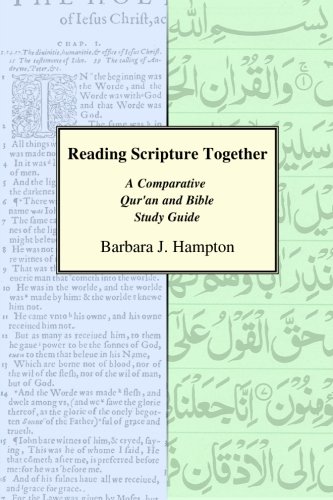
1. Reading Scripture Together: A Comparative Qur’an and Bible Study Guide. Good friend Barbara Hampton has been involved with students reading the Bible and the Qur’an for a number of years and she wrote a book to help others with this. I’m eager to read this!

diversity

Reading scripture

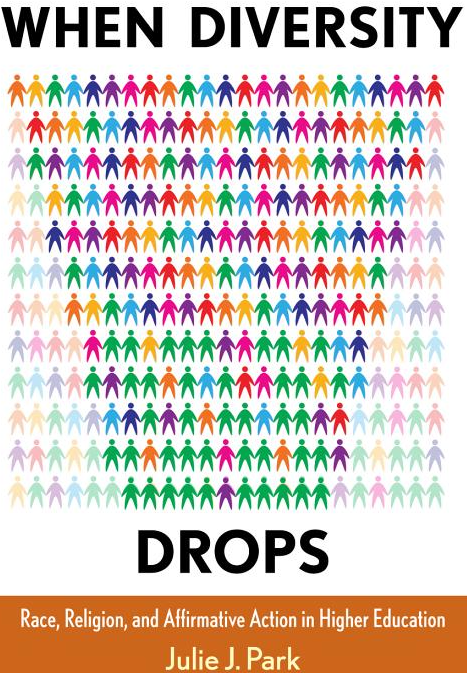
2. When Diversity Drops by Julie J Park. I heard Julie speak on this in the fall. The book is her analysis of a study of a Christian group in California and how efforts to grow in ethnic diversity and race blind admissions policies intersect.

3. Big Questions, Worthy Dreams by Sharon Daloz Parks. I’ve been reading various books on higher ed and this is the one everyone refers to in discussing “spirituality” in the higher ed context.

4. The Inclusion Paradox by Andres Tapia. This is assigned reading for some meetings I will be attending next month. Tapia sees diversity as an opportunity and not a problem and explores how we might welcome diversity in workplace and other settings.

paradox

big questions

I will probably try to update you once a month on what I’m reading. What books are you reading right now? What books do you hope to get to soon? Who knows, your recommendations might end up on my list!