I grew up hearing about all the labor-saving devices that were going to make my life so much more leisurely. The forty hour work week would become a twenty hour week because technology would make our work so much more efficient. Funny thing though–while technology has indeed increased our efficiency, it has not led to a more leisurely or unhurried life.
I’m struck with this every time I fly (something I’ve done a bit of, lately!). Flying itself is interesting, because I can be in meetings in Columbus in the morning, and be leading a retreat in another state that evening. But it is not only that. I am amused with how as soon as we are “wheels down” everyone is on their smartphone (except for me who still has a “dumb” phone), to retrieve messages, emails, texts and Facebook updates queued up for them during the hour they had to turn their device to airplane mode (even then they are often composing emails). Gone seem to be the days of the leisurely nap or conversations with a seatmate. I was struck recently with what quiet places planes have become–except when there are babies and children on board. Everyone is working. Airlines of course are capitalizing on this by offering wi-fi so you can be even more connected.
The paradox is that efficiency doesn’t make life simpler. The faster we can do things, the more things we do which may have been needless. And sometimes, technology actually complicates things. Remember when you could pick up the phone and actually get a person on the line and schedule a time to meet, whether for business or fun–and you might get a few minutes of catching up with the person in as well? Now it is often a matter of a series of emails or texts back and forthing about a time, then a place–if you get responses. What once could be done in five minutes now may take a series of interchanges over a half day or more–and far less personal.
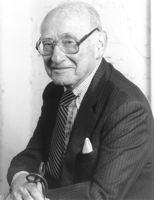
Meyer Friedman, MD
What it seems all this has done is created a society that is far more complicated, and in a hurry. Recently, I came across the term “hurry sickness.” The term was coined by Meyer Friedman, MD, whose research was on type A personalities and the increased incidence of heart attack and other circulatory diseases caused by stress.
Perhaps it is time for a return to the old wisdom, which never would have talked about “working harder, faster, and smarter” but rather recognized that rest, play, reflection, and deliberate thought actually were far more fruitful adjuncts to a creative and fruitful life than relying on technology to “save labor.”
How have you stepped off the treadmill of “efficiency” to embrace a life of unhurried simplicity?