The Weekly Wrap: July 14-20

Image for The Weekly Wrap: person wrapping a book
Photo by cottonbro studio on Pexels.com

In the US, this was the week that kicked off the political convention season. It is an especially fraught year. One party’s candidate just survived an assassination attempt. Meanwhile, the other’s candidate has COVID and faces questions about his fitness to serve another term, just weeks before his party’s nominating convention. And ours isn’t the only country facing such challenges

I’ve reflected on how books help me live with purpose and peace amid these times. For one thing, they give me fresh perspective, as did Shirley A. Mullins Claiming the Courageous Middle which I reviewed this week. She helped me see the possibilities for those of us in the middle, neither drawn to the positions or the polarization of our political parties.

Sometimes books remind me of perennial issues. I’ve been reading James by Percival Everett, reminding me in narrative form of the humanity of Black slaves and the terrible world of whippings and lynchings and family separation they face. James reminds me that any politics that dehumanizes any group is dangerous.

And then there are times when I just need diversion. I read my first Abe Lieberman story by Stuart Kaminsky. I enjoyed getting to know this street-savvy Jewish cop who prays even though how much he believes is up for grabs, struggles with his cholesterol, a troubled daughter, and paying for his grandson;s Bar Mitzvah. A quick and delightful read.

Five Articles Worth Reading

The New York Times stirred up all kind of conversation in the book world over the books not on its list of “100 Best Books of the 21st Century.” Mostly, people protested all the great books they missed. The folks at Lit Hub came up with its own list in “What the New York Times Missed: 71 More of the Best Books of the 21st Century.”

Not to be outdone, The new York Times gave readers the chance to nominate their top one hundred (not paywalled). The result was 61 books not one the Times list. The chose works I liked by Anthony Doerr, Amor Towles, and Haruki Murakami left off the Times list. The upshot of all this are some great reading lists. I still would have liked to see more non-fiction.

Some of us read at night when we can’t sleep. The Atlantic posted “Seven Bedside-Table Books for When You Can’t Sleep” (not paywalled for 14 days) this week. I’m just curious as to whether these will keep the reader awake or put them to sleep!

Then there are the times when we need adventure. Remember “Choose Your Own Adventure” stories? Open Culture posted a retrospective, “How Choose Your Own Adventure Books Became Beloved Among Generations of Readers,” complete with three videos. This will bring back memories for some of you!

On a more serious note, reading is often promoted as being morally formative. Certainly our choice of books plays a part. But in “Reading as Moral Formation,” Derek King draws upon C.S. Lewis and Iris Murdoch to advance the crucial importance of “attentional humility” in our reading rather than “using” books.

Quote of the Week

Speaking of Iris Murdoch, her birthday was July 15. She was born in 1919. She made this trenchant observation:

“Love is the difficult realization that something other than oneself is real.”

Sadly, I think there are some who never make that “difficult realization.”

Miscellaneous Musings

Trips to the bookstore are often an experience of serendipity. This week’s visit to our local Half Price Books was one of the more delightful ones. We sold four boxes of books and a few videos and were offered $87. In turn, my wife found an art book. And I found books by Jon Meacham and Candice Millard, two of my favorite authors, as well as a book about my hometown of Youngstown, filled with pictures I’d never seen before. Since it was a Golden Buckeye discount day, we walked out $68 to the good.

It seems this is the summer a number of friends have written books that looked review worthy. One is Stan Wallace’s Have We Lost Our Minds?, arguing biblically and philosophically for the existence of the soul against physicalist neuroscience that reduces us to brains. A second is David J. Claassen’s Growing Old Gracefully. Forty-six years ago, Dave was our pastor and gave us wise marriage counsel as we prepared for our wedding. Now, I am continuing to learn from his wisdom. What a gift to have friends who write such great books! And these are just two of several I’ve received.

I was saddened to learn of the passing of Bob Newhart. From audio comedy routines on albums that won Grammys to two long-running sitcoms, his smart, deadpan, and clean humor made us laugh at ourselves. He married in 1963 and was only parted from his wife when she died in 2023. Rest in peace, Bob Newhart. And thank you for helping us laugh at ourselves and all of life’s incongruities.

Well, that’s The Weekly Wrap for this week!

Past editions of The Weekly Wrap may be accessed under The Weekly Wrap heading on this page.

The Weekly Wrap: July 7-13

Banner image for "The Weekly Wrap:" A person wrapping a book with brown paper.

The publication of the New York Times top 100 books of the 21st century (so far) reminded me of the old adage: “So many books; so little time.” I read over 200 books a year. But I’d read only 17 on this list spanning 24 years. They missed some wonderful books (in my opinion): All the Light We Cannot See which is arguably better than Cloud Cuckoo Land which made the list, and The Covenant of Water. All the same, I got some ideas of books I want to read. This is the stuff of TBR piles! I’m curious to hear what you think of the list.

Five Articles Worth Reading

Obviously, “100 Best Books of the 21st Century” (no paywall). Tick off books you’ve read on the list and books you are interested in, as well as “if you liked this…” suggestions of other books to read. Perfect for a hot afternoon with an iced-tea at your side!

Many fans of Alice Munro were troubled to learn that her daughter was abused by her step-father, Munro’s husband. Munro stayed with him and was estranged from her daughter. “A Silence Is Shattered, and So Are Many Fans of Alice Munro” unfolds the story. What do we do when someone we admire is shown to have feet of clay?

I’ve bookstore-crawled in my home town. Axios covered the story of a 500 mile bookstore crawl across two states in “Hundreds line up in North Carolina and Tennessee for used books road trip.” At stake? $800 in store credit and swag!

Henry David Thoreau, one of the American transcendentalists, was born July 12, 1817. The Point published an article this week on Thoreau, transcendentalism, and Thoreau’s use of metaphor. Read or listen to “The Imitative Impulse” to understand more about Thoreau and this important intellectual movement.

Finally, if you are a fan of the writing of Zora Neale Thurston, Publisher’s Weekly announced “Amistad to Release Never-Before-Published Novel by Zora Neale Hurston.” Publication is slated for January 7, 2025, what would have been her 134th birthday.

Quote of the Week

As a walker, I enjoyed this quote from Thoreau:

“An early-morning walk is a blessing for the whole day.”

As an evening walker, I might add “An evening walk is a fit ending for any kind of day.”

Miscellaneous Musings

Shirley Mullen, in Claiming the Courageous Middle, speaks for many of us frustrated by the binary choices our polarized politics offers. She uses language I’ve used before of being “third way people.” I think I’ve found my people! Looking forward to seeing how she works this out. I’ll be reviewing it next week.

On a related note, I’ve always struggled with mutually exclusive binaries. Sure, there are some things that are just wrong. But I’ve also found that on many things, when I listen to those I disagree with, I often learn that I don’t have the whole truth. And if we are trying to solve real world problems, we often come up with better solutions, ones that work for all or most of us rather than just some.

I’ve waded into Gary Habermas’ 900+ page On the Resurrection: Volume 1: The Evidences. He unpacks the case for the resurrection of Jesus step-by-step using a “minimal facts” approach. The book is daunting in size but reads well. This is part of a four volume series. Two volumes are out. He is 74. I hope he completes this project but I’m not sure I’ll read all four! He does have a great research assistant.

I am a George MacDonald fan. This week, I interviewed Timothy Larsen, who introduces and annotates a new edition of Diary of an Old Soul. If you have a chance, I invite you to listen to the interview. I learned so much about MacDonald and this work of devotion. I’m thinking it will make some good Christmas gifts!

Well, that’s The Weekly Wrap for this week!

Past editions of The Weekly Wrap may be accessed under The Weekly Wrap heading on this page.

Christian Books on Women

In honor of Women’s History Month, I thought it might be interesting to compile my reviews in recent years of Christian books on subjects related to women. I found everything from current issues to biblical studies. There are biographies and collections of writing by various Christian women in history. There is a discussion of a woman literary figure and one of women in literature. The books are ordered alphabetically by author. The list includes twenty-six reviews going back to January of 2018. This certainly doesn’t exhaust the good things that have been written (and there are reviews older than 2018 on this blog as well). If you are interested in reading some thoughtful books by and about women this offers some recent titles you might consider.

#ChurchToo: How Purity Culture Upholds Abuse and How to Find Healing, Emily Joy Allison. Minneapolis: Broadleaf Books, 2021. An argument connecting sexual abuse and other sexually dysfunctional teaching to the purity teaching upholding an ideal of abstinence until marriage between a man and a woman. Full review

Reason to ReturnEricka Andersen. Colorado Springs: NavPress. Forthcoming, 2023. A book directed to believing women who have left the church looking at the reasons why they have left and reasons why they should consider returning, both for what they may gain and what they may give. Review

The Making of Biblical WomanhoodBeth Allison Barr. Grand Rapids: Brazos Press, 2021. A study of women in church history and the construction of the idea of “biblical womanhood which underwent a series of developments from the Reformation to the present. Review

A Week in the Life of a Greco-Roman Woman (A Week in the Life series), Holly Beers. Downers Grove: IVP Academic, 2019. A creative rendering of what life was like for a woman from the lower free classes in Ephesus during the period when Paul was preaching in the city. Review

The Gospel According to EveAmanda W. Benckhuysen. Downers Grove: IVP Academic, 2019. A history of women who have written on Genesis 1-3 since the fourth century, treating their worth, education, their roles as wives and mothers, whether they may teach and preach, and as advocates of social reforms. Review

A Subversive Gospel (Studies in Theology and the Arts), Michael Mears Bruner. Downers Grove: InterVarsity Academic, 2017. Proposes that the grotesque and violent character of Flannery O’Connor’s work reflects her understanding of the subversive character of the gospel and the challenge of awakening people in the Christ-haunted South to the beauty, goodness, and truth of the gospel. Review

That Way and No OtherAmy Carmichael (Introduction by Katelyn Beaty). Walden, NY: Plough Publishing, 2020. A curated collection of writings of Amy Carmichael, the missionary to India who became house mother to girls saved from sex trafficking. Review

The Reckless Way of LoveDorothy Day, edited by Carolyn Kurtz, Introduction by D. L. Mayfield. Walden, NY: Plough Publishing, 2017. A collection of Dorothy Day’s writings on following Jesus in the ways of faith, love, prayer, life, and communityReview

Together in MinistryRob Dixon (Foreword by Ruth Haley Barton). Downers Grove: IVP Academic/Missio Alliance, 2021. A field research-based approach to mixed-gender ministry collaboration identifying ten attributes for healthy partnerships. Review

The #MeToo ReckoningRuth Everhart. Downers Grove: InterVarsity Press, 2020. A discussion of sexual harassment and assault in the church, the impact on victims and the response of many churches more focused on institutional reputation than protecting victims and justice for the perpetrators. Review

Resisting the Marriage Plot (Studies in Theology and the Arts), Dalene Joy Fisher. Downers Grove: IVP Academic, 2021. Contrary to prevailing ideas of Christianity being an oppressive force in women’s lives in Victorian literature, looks at four instances in this literature where women resist cultural expectations around marriage due to the liberating and empowering quality of their faith. Review

Blessed Are The NonesStina Kielsmeier-Cook. Downers Grove: InterVarsity Press, 2020. A memoir of a Christian woman coming to terms, with the help of some Catholic nuns, with her husband’s de-conversion. Review

Redeeming Power: Understanding Authority and Abuse in the ChurchDiane Langberg. Grand Rapids: Brazos Press, 2020. A psychologist looks at the dynamics of power behind various forms of abuse and trauma in which church figures are either perpetrators or complicit. Review

Women in God’s MissionMary T. Lederleitner. Downers Grove: InterVarsity Press, 2018.  An account of research into the many ways women are leading in God’s mission around the world, the distinctive traits in their service and leadership, the challenges they experience around gender discrimination, and the conditions under which they do their best work. Review

Mother of Modern Evangelicalism: The Life and Legacy of Henrietta Mears, Arlin C. Migliazzo, Foreword by Kristen Kobes Du Mez. Grand Rapids: Wm. B. Eerdmans, 2020. The first comprehensive biography on Henrietta Mears that focuses on her early life, her Christian Education ministry at Hollywood Presbyterian Church, and her national impact on a nascent evangelical network of leaders, on Christian publishing and retreat ministry. Review

Discovering Biblical Equality: Biblical, Theological, Cultural & Practical Perspectives (Third Edition), Editors: Ronald W. Pierce and Cynthia Long Westfall, Associate editor: Christa L. McKirland. Downers Grove: IVP Academic, 2021. A compendium of scholarly essays addressing gender differences in marriage and the church supporting an egalitarian perspective. Review

The Samaritan Woman’s StoryCaryn A. Reeder. Downers Grove: IVP Academic, 2022. Challenges the view of the Samaritan woman as a sexual sinner, considering how this has been read in the church, and the realities of the life of women and marriage that points to a very different reading. Review

The Gospel in Dorothy L. SayersDorothy L. Sayers with an Appreciation by C. S. Lewis, edited by Carole Vanderhoof. Walden, NY: Plough Publishing, 2018. An anthology of Sayers’ work organized by theological topics, drawing on her detective fiction, plays, and essays. Review

Husband, Wife, Father, Child, Master, Slave, Kurt C Schaefer. Eugene, OR: Wipf & Stock, 2018. In contrast to many biblical scholars who argue that the “household codes” of scripture do indeed, for various reasons, affirm cultural role expectations, this work argues that Peter’s version is actually a subtle satire that opposes the cultural norms of Greco-Roman culture. Review

Partners in Christ, John G. Stackhouse, Jr. Downers Grove: IVP Academic, 2015. A case by a convert to egalitarianism for why both complementarians and egalitarians find scriptural foundations for their views with a proposal for what can make the best sense of the diverse testimony of scripture. (Review)

Women RisingMeghan Tschanz, Foreword by Carolyn Custis James. Downers Grove: InterVarsity Press, 2021. A global mission trip awakens the author both to the injustices women face throughout the world and the patterns of subjection she learned in childhood that held her back and which she learned to name and use her voice to speak against. Review

The Way of Julian Norwich: A Prayer Journey Through LentSheila Upjohn. London: SPCK, 2020. Six meditations on the writings of Julian of Norwich that redirect our focus from sin and judgement to the greatness of God’s love revealed in Christ’s incarnation and death. Review

Sex and the City of God, Carolyn Weber. Downers Grove: InterVarsity Press, 2020. I wrote about this book: “This skillfully written narrative, punctuated with poetry and Augustine, invites us into the the aching wonder of human love shaped by the growing pursuit of the City of God. We are left wondering if God has something better on offer, even when it comes to human sexuality.” Review

With Fresh Eyes, Karen Wingate. Grand Rapids: Kregel, 2021. Sixty reflections of a woman born legally blind, who gains significant sight in one eye, seeing not only the world, but also the world’s Creator with new eyes. Review

Priscilla, Ben Witherington III. Downers Grove: IVP Academic, 2019. An imaginative rendering of the story of Priscilla, a companion of Paul, as a dictated narrative recorded by her adopted daughter Julia, as she faces possible trial before a Roman tribunal. Review

Power WomenEdited by Nancy Wang Yuen and Deshonna Collier-Goubil, Foreword by Shirley Hoogstra. Downers Grove: IVP Academic, 2021. Fourteen women who are both mothers and academics write about how they navigate these callings as women of faith. Review

For other titles reviewed here on the blog, you can use “The Month in Reviews” and skim titles from 2017 and earlier or if you are looking for a particular title, enter it into the search box on this blog, which works very well with titles or topic searches.

Ten+ Books on Theology of Work

Photo by Ono Kosuki on Pexels.com

Most of us spend the majority of our waking hours at work, paid or unpaid. Losing work is devastating for most people. Why is work such an important part of being human? How are work, rest, and leisure properly related in our lives? And what does God think of our work? From the work of God in creation in Genesis 1 to Revelation 21 where the kings of the earth will carry their splendor into the new Jerusalem, the heavenly city, work runs through scripture. Yet teaching on our work has often been absent from our churches. Yesterday, I reviewed Workplace Discipleship 101 by David W. Gill, an excellent book on work. I’ve included it again here along with others I’ve found helpful.

Keeping the Sabbath Wholly, Marva J. Dawn. Grand Rapids: Eerdmans, 1989. God’s intent for us is not endless work but a rhythm of work and rest. Dawn explores the biblical material on sabbath and practical suggestions for keeping it.

The Common Rule, Justin Whitmel Earley. Downers Grove: InterVarsity Press, 2019. Daily and weekly spiritual practices that may be used by people in the workplace, and may become “common” by being practiced in community.

Workplace Discipleship 101, David W. Gill. Peabody, MA: Hendrickson Publishers, 2020. Focuses very practically on how we may follow Jesus as we prepare for and engage in our work.

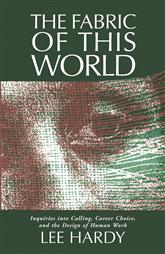
The Fabric of this World, Lee Hardy. Grand Rapids: Eerdmans, 1990. One of the early books on this subject, surveying various views of work in classic philosophy and through church history.

Leisure and Spirituality, Paul Heintzman. Grand Rapids: Baker Academic, 2015. Using biblical, historical and contemporary leisure studies to look at the relation of work, rest, and leisure, contending that “leisure reaches its fullest potential when our lives are lived in relationship with God.

The Sabbath, Abraham Joshua Heschel. New York: Farrar, Strauss and Giroux, 1951. A Jewish rabbi contends that Judaism is a religion of time, not space and that sabbath represents the sanctification of time.

On Human Work, John Paul II. Washington: United States Catholic Conference, 1981. John Paul II’s encyclical on work addressing what it means to work and be human, the conflict between labor and capital, the right of workers, and the spirituality of work.

Work and Worship, Matthew Kaemingk and Cory B. Wilson. Grand Rapids: Baker Academic, 2020. One I’m looking forward to read making the connection between our Sunday worship and our work the other six days.

Every Good Endeavor, Timothy Keller with Katherine Leary Alsdorf. New York: Dutton, 2012. Explores God’s plan for our work, our problems with work and how the gospel transforms work.

After Sunday, Armand Larive. New York: Continuum, 2004. A theology of work grounded in the Trinity.

Kingdom Calling, Amy Sherman. Downers Grove: InterVarsity Press, 2011. A theology of vocation, focused on stewarding our faith and work toward righteousness.

Your Work Matters to God, Doug Sherman and William Hendricks. Colorado Springs: NavPress, 1987. One of the early books addressing a theology of work.

From my shelves to yours, a good collection of works on work, rest, leisure, and spiritual practices spanning seventy years. Hopefully they will become good friends to you as they have for me, enriching my understanding of these rhythms of work and rest. Work existed before the Fall and is not the curse. Work reflects something of what it means to reflect the image of God, the God who works. It is well worth exploring works like these to enrich our work and our lives!

Ten Books I Want to Read Before I Die

20180920_1837037142880719224234442.jpg

Some of my “Read Before I Die” Books

I posted a question at my Bob on Books Facebook page yesterday asking people to name one book they would like to read before they die. It seems that this is a popular topic. Here is a link to a Google search I did on the topic. It’s actually a worthwhile question to think about. We can read only so many books in a life, the length of which we have no way of knowing. One book available proposes a list of 1001 books.

Here’s my answer pared down to ten books. One of my criteria is that I’ve not read the book. The other is that I have the book already. That should warn you that it is probably a pretty idiosyncratic list. Don’t feel under any obligation to make it your list but use it simply as an example for doing this yourself.

  1. Charles Taylor, A Secular Age. It seems every other book I read references this book, and it seem a seminal work in helping us understand the time we are in.
  2. Hannah Arendt, The Origins of Totalitarianism. There seems to be a sense that the horrors of Stalinism and Nazism can’t happen here. I think they can, and I’d like to know what Arendt, who wrote the classic work on this thinks.
  3. T. S. Eliot, Collected Poems and Plays. I have read poetry of Eliot since college and acquired this work several years ago.
  4. Margaret Mitchell, Gone With the Wind. I’ve never read this and it was one of the books I inherited from my mom.
  5. Marcus Aurelius, Meditations. Might be as close as we get to the reflections of a philosopher-king.
  6. Karl Barth, The Epistle to the Romans. Barth’s study of Romans rocked not only his world but the theological world around him.
  7. Ron Chernow, Washington. I’ve delighted in his biographies of Grant and Hamilton.
  8. Charles Hodge, Systematic Theology (3 vols.). I bought this set from a retiring pastor 40 years ago. I suspect Hodge and I might differ on a few things, but his rigorous thought will make the argument worth it!
  9. Kenneth Scott Latourette, A History of Christianity. This has been on my shelves only half as long, but this classic study of church history has been begging to be read.
  10. Honore de Balzac, Pere Goriot and other stories. My mother loved Balzac as a young girl. I have her whole set of Balzac novels, that came from her father. I think I want to read these for what they might tell me about my mom before I pass them along.

It would not be hard to add to this list, and if you ask me another time, I might come up with a completely different one. But doing this makes me ask, why have I waited so long on a number of these? Perhaps the time has come to wait no longer.


The Month in Reviews: August 2018

LeonardoMany book blogs focus on one genre of books. This is not one of them. I enjoy reading literary fiction, biographies, sports writing, history, and science fiction. I read a fair amount of “religious” material, particularly that which connects Christian faith with other aspects of life. My day job involves ministry with graduate students and faculty who are trying to make those connections, and I want to be a good companion with them on their journeys as well as progress on my own. You will find all of this in the books I reviewed in the last month. For those of you who are new to the blog and don’t know me well, I thought it might help to explain the eclectic mix you will find in this list. One other note: each book listed has two links. The title is linked to the publisher’s website and the word “Review” at the end links to my full review. I hope you will take time to visit both if you think the book sounds interesting.

loneliness of the long distance runner

The Loneliness of the Long Distance RunnerAlan Sillitoe. New York: Open Road Media, 2016 (originally published in 1959). A collection of nine short stories set in the pre-and post-World War II British working class, characterized by a strong sense of anger, alienation, and desolation. Review

kingdom collaborators

Kingdom CollaboratorsReggie McNeal. Downers Grove: InterVarsity Press (Praxis), 2018. An affirmation of kingdom-centered rather than church-centered leadership and a description of eight signature practices that characterize such leaders. Review

Contemporary Art and the Church

Contemporary Art and the ChurchEdited by W. David O. Taylor and Taylor Worley. Downers Grove: InterVarsity Academic, 2017. Essays from artists, theologians, and church leaders participating in the 2015 Christians in the Visual Arts (CIVA) Conference exploring the conversation to be had between the church and contemporary artists. Review

Early Christian Writings

Early Christian WritingsVarious, Translated by Maxwell Staniforth, Revised by Andrew Louth. New York: Penguin Classics, 1987. A collection of early, post-apostolic Christian writings concerned with the organization, leadership, worship, conduct, martyrs, and doctrinal teaching of the nascent church. Review

Best Bible Books

Best Bible Books: New Testament ResourcesJohn Glynn, edited by Michael H. Burer with contributions by Michael H. Burer, Darrell L. Bock, Joseph D. Fantin, and J. William Johnston. Grand Rapids: Kregel Ministry, 2018. A review of commentaries, dictionaries, and other scholarly resources related to the New Testament, singling out those the contributors deem of greatest value. Review

Born to Wander

Born to WanderMichelle Van Loon. Chicago: Moody Publishers, 2018. An exploration of the theme of our pilgrim identity as followers of Christ, and how this makes sense of the seasons of transition and loss, and struggles for control in our lives. Review

the eye of the world

The Eye of the World (The Wheel of Time #1), Robert Jordan. New York: TOR Books, 1990. Following an attack of trollocs and a Myrdraal on Emonds Field, Rand and two friends, joined by several others, flee when they realize that they are the object of the attack, and somehow at the center of a web of destiny that may either thwart or aid the rise of the Dark Power. Review

rethinking incarceration

Rethinking IncarcerationDominique Dubois Gilliard. Downers Grove: InterVarsity Press, 2018. A call for Christians to address mass incarceration in the United States that considers its pipelines, its history, and proposes alternatives to prison and a focus not merely on punishment but upon restoration. Review

Tigerland

Tigerland: 1968-1969: A City Divided, A Nation Torn Apart, and a Magical Season of HealingWil Haygood. New York: Knopf, (Forthcoming September 18), 2018. The story of the 1968-69 East High School Tigers championship basketball and baseball teams at a black high school in segregated Columbus, Ohio during the tumultuous aftermath of the killing of Martin Luther King, Jr. Review

Adventures in Spiritual Warfare

Adventures in Spiritual WarfareWilliam P. Payne (Foreword by Charles H. Kraft). Eugene, OR: Resource Publications, 2018. A narrative of the author’s awakening to the reality of spiritual warfare and personal evil, and the resources and commended practices available to Christians for engaging that warfare. Review

Raise Your Voice

Raise Your VoiceKathy Khang. Downers Grove: InterVarsity Press, 2018. Explores both why we stay silent and how we may learn to speak up about the things we most deeply care about, particularly in seeking a more just society for all. Review

Knowing and the Trinity

Knowing and the TrinityVern Poythress. Phillipsburg, NJ: Puritan and Reformed, 2018. How various triads of perspectives on both God and the world reflect the Triune God. Review

scars across humanity

Scars Across HumanityElaine Storkey. Downers Grove: IVP Academic, 2018. A description of the global crisis of violence against women, possible explanations, and the measures being taken to address different forms of violence. Review

the reckless way of love

The Reckless Way of LoveDorothy Day, edited by Carolyn Kurtz, Introduction by D. L. Mayfield. Walden, NY: Plough Publishing, 2017. A collection of Dorothy Day’s writings on following Jesus in the ways of faith, love, prayer, life, and communityReview

Leonardo

Leonardo da Vinci, Walter Isaacson. New York: Simon and Schuster, 2018. A biography of da Vinci, from his illegitimate birth, his life long quest for patrons, his insatiable curiosity, his various artworks, and the notebooks, in which are revealed so much of the genius of da Vinci. Review

Book of the Month: The hands-down choice here is Leonardo da Vinci by Walter Isaacson. This is a tour de force in every way in its exploration of da Vinci’s genius, surveying the notebooks, which are the particular record of that genius, and the works of art that made that genius visible. The book is printed on quality paper to properly render the works of art and other figures from his notebooks and drawings.

Quote of the Month: Dominique Dubois Gilliard’s Rethinking Incarceration is a thought-provoking challenge to a country, the United States, that leads the world in the number of people it incarcerates. This quote powerfully drove that home to me:

While the United States constitutes only 5 percent of the world’s population, we have 25 percent of its incarcerated populace. Statistically, our nation currently has more people locked up—in jails, prisons, and detention centers—than any other country in the history of the world. We currently have more jails and prisons than degree-granting colleges and universities. In some areas of the country, there are more people living behind bars than on college campuses.

One out of every twenty-five people sentenced to the death penalty are falsely convicted. In many states, pregnant women are shackled to gurneys during their delivery. Thirteen states have no minimum age for prosecuting children as adults, such that children as young as eight have been tried and sentenced as adults, left vulnerable to trauma and abuse while living among adults in jails and prisons.

Eighty thousand inmates per day are locked in solitary confinement, where they are quarantined in a twelve by seven foot concrete cell (smaller than a standard horse stall), frequently for twenty-three hours a day, and are only allowed outdoor access and human interaction for one hour. This dehumanizing form of “incarceration” is more accurately defined as torture—a slow assault on the dignity of individuals and a strategic disintegration of their body and psyche.

Current Reads: Edgar Andrews, What is Man? explores the contrast particularly between materialist and Christian worldviews of what it means to be human. I’ve loved everything I’ve read by Doris Kearns Goodwin, and her Lyndon Johnson and the American Dream uses personal interviews as well as historical narrative to render a portrait of this president who carried out the Kennedy dream in social policy only to have so much of it, and his own reputation, undone by the quagmire of Vietnam. Answering Why is written by a Cleveland area author who explores the skills gap in the workplace and how effective career education can answer the “why” for the rising generation to pursue a particular line of work with passion and excellence. Invitation to Retreat by Ruth Haley Barton is an insightful guide for anyone going on retreat that not only answers the question of why we all should, but also the practices and questions that help us enter into retreat, encounter God, and return to daily life with the insights of this time. Two other books I’m looking forward to sinking my teeth into this month are Alan Noble’s Disruptive Witness and Karen Swallow Prior’s On Reading Well. Imagine that–reading about reading!

Here’s hoping that you find something good to read this month.

Books For Independence Day

CAA58B79-155D-451F-6734F0C9AF79D4C2

Benjamin Franklin from a painting by David Martin (1835)

“A nation of well informed men who have been taught to know and prize the rights which God has given them cannot be enslaved. It is in the region of ignorance that tyranny begins.” Benjamin Franklin

Today is Independence Day in the United States, the birthday of our country. What was born on that day was not only a nation but an idea eloquently expressed in the Declaration of Independence in these opening words:

We hold these Truths to be self-evident, that all Men are created equal, that they are endowed by their Creator with certain unalienable Rights, that among these are Life, Liberty, and the Pursuit of Happiness—That to secure these Rights, Governments are instituted among Men, deriving their just Powers from the Consent of the Governed, that whenever any Form of Government becomes destructive of these Ends it is the Right of the People to alter or to abolish it, and to institute new Government, laying its Foundation on such Principles, and organizing its Powers in such Form, as to them shall seem most likely to effect their Safety and Happiness.

In these words are an assertion of the equality and human rights inherent in being a human being created by God. Government does not confer these but rather exist to secure these pre-existing rights, and properly derives its power to govern from these rights-bearers. Finally, there is the opening of an argument for the revolt the Founders led.

Along with a military revolution was an intellectual revolution led by some of the most brilliant political thinkers of the day. Franklin was wise enough to recognize that a thoughtful and well-informed citizenry was crucial in every generation if what was gained and established in our nation’s birth not be lost to anarchy or tyranny.

Might it not be appropriate amid our celebrations to resolve to enhance our understanding of the history, ideas, and challenges that have shaped the American experiment? One could conceive many lists to do this. One work not appearing in the list below that may be essential as any would be The Debates on the ConstitutionThis is not a single work but a series of letters and articles capturing the arguments about the shape our constitution would take.

Here are ten others, most of which have been reviewed at Bob on Books:

  1. The Glorious CauseRobert Middlekauf. Oxford: Oxford University Press, 2007. Perhaps the definitive account of the Revolutionary War, part of the Oxford History of the United States.
  2. John AdamsDavid McCullough. New York: Simon & Schuster, 2002. There are many full-length biographies of the founders. Adams is lesser known than some, but worthy of attention for his intellect, his courage, his efforts on both sides of the Atlantic for American freedom, and the incredible correspondence between him and his equally brilliant Abigail.
  3. The Return of George WashingtonEdward J. Larson. New York: Morrow, 2014. This narrative not only offers one more reason why Washington was the indispensable man, but also shows the difficulties of governance under the Articles of Confederation that led to the U.S. Constitution, and recounts the debates that gave us that Constitution. Review
  4. Lincoln and Douglas: The Debates the Defined AmericaAllen C. Guelzo. New York: Simon and Schuster, 2009. These debates in 1858 when these two were running for Senate (Lincoln lost) define the discussion around slavery. Guelzo helps us understand the extraordinary phenomenon of these hours long open air debates, the substance of each debate, and their significance in the lead up to the Civil War.
  5. America’s Original SinJim Wallis. Grand Rapids: Brazos Press, 2016. The thesis of this book is: “The United States of America was established as a white society, founded upon the near genocide of another race and then the enslavement of yet another.” The author raises the question of whether we will face that history, understand the deeply engrained character of racism in our society, and begin a walk toward freedom from racism’s burden. Review
  6. The Warmth of Other Suns: The Epic Story of America’s Great Migration, Isabel Wilkerson. New York: Vintage, 2011. The story of the black migration to the north and west following the failure of Reconstruction, and how it changed the lives of families who made that migration and the cities to which they moved. Review
  7. The American Spirit: Who We Are and What We Stand ForDavid McCullough. New York: Simon & Schuster, 2017. A wonderful collection of addresses by the author, mostly at college commencements, articulating some of the defining and distinctive qualities that define America at its best. Review
  8. The Soul of America: The Battle for Our Better Angels, Jon Meacham. New York: Random House, 2018. Just recently published, it narrates the battle between the politics of fear and the politics of hope for our national soul. Meacham gives examples of leaders of both parties who led with hope, even when challenged by a politics of fear. Review
  9. The Global Public SquareOs Guiness. Downers Grove: InterVarsity Press, 2013. Guinness argues for the critical importance of the human right of the freedom of conscience that undergirds our freedom of speech. Most societies through most of history have ruled by power and violence. The first amendment protections of our country are exceptional and worth not only protecting but extending to other countries, reflecting the equality of all human beings. Review
  10. Confident PluralismJohn D. Inazu. Chicago: University of Chicago Press, 2016.  Recognizing the deep fissures in American society and the necessity of maintaining some kind of civil union in the face of the scary alternatives, this book explores the constitutional commitments and civic practices that make that possible. Review

There are hundreds of others, of course, that might be included. I suggest these because they help us understand ourselves at our best and less than our best. They help us understand the ideals that have shaped us, and the compromises we have made with those ideals. They explore what hope there may be for an America that is plural in character–a people of many nations and beliefs–yet dedicated to the idea of e pluribus unum–out of the many, one.

So, amid the fireworks and picnics and family gatherings, I hope you will find a moment to reflect on the ideas as a nation that make us what we are, and perhaps to grow in your understanding of our rights, leaving no room for the ignorance that is the seedbed of tyranny. Perhaps a book from this list might help!

Books on Books

20160601_204859One of the ways you know you are a bibliophile is when your reading includes books on books, or bookish subjects! Margaret Aldrich posted a great list recently on BookRiot of 100 Must-Read Books about BooksWhat particularly impressed me about this list were the number of fiction books that “give books a starring role.” About the only one on the list I had read was Fahrenheit 451, and that in my adolescence! One things bibliophiles always like is finding a whole new treasure trove of books. In this list I think I found one.

The non-fiction list was equally delightful. Roughly, it divided into two kinds of books. One was lists of great books, or the experience of reading them. We have for example, 1,001 Books You Must Read Before You Die by Peter Boxall. Books like these are a great shortcut to discovering interesting books you’ve not heard of. I discovered there is even a website based on the book where you can go through and check off all the books on the list that you’ve read and compare your reading with that of others.

The other part of the list are books having to do with various aspects of our passion for reading. One that looked intriguing was At Home With Books: How Booklovers Live With and Care for Their Libraries.  Personally, I am more on the end of being interested in what is between the covers, but there are many people who collect and lovingly display books and a number of books on this list discussed this aspect of our love of books. One that I reviewed not too long ago is about The Man Who Loved Books Too Much describing the search for and character of a book thief, and why he loved stealing and collecting books. There was one book that I thought aptly described my own life as a bibliophile: The Polysyllabic Spree: A Hilarious and True Account of One Man’s Struggle with the Monthly Tide of the Books He’s Bought and the Books He’s Been Meaning to Read by Nick Hornby. The title nails it for me, particularly if you add in the books that show up in my mailbox or on my doorstep from publishers to be reviewed.

I was surprised not to find David Denby’s Great Books, describing his decision at forty-eight to enroll in Columbia’s two core courses on the Great Books. In a similar vein, the list did not include the account of the birth of the “Great Books” phenomenon, A Great Idea at the Time (reviewed here). I suspect that this idea has fallen out of favor with the rejection of the idea of a canon of literature and the interest in more diverse books and voices. The World Between Two Covers sounded like a great way to read one’s way around the world.

I also have a couple on my TBR stacks (pictured above) that I did not find here that look interesting. One is Bookstore: The Life and Times of Jeannette Watson and Books & Co, by Lynne Tillman. This is the story of a classic New York City bookstore from its opening to its closing. So many bookstores have a lifecycle like this, and leave behind a legion of fans who loved hanging around them. The other is BiblioTECH: Why Libraries Matter More Than Ever in the Age of Google, by John Palfrey. I’m intrigued with the whole question of how libraries are defining their mission with the advent of so many new technologies.

Perhaps one of the most interesting things about Margaret Aldrich’s post is that it part of a whole other genre of writing about books, of which BookRiot and Bob on Books are a part. There are a whole group of us who are not writing books about books per se’, but in the serialized format of blogging are doing what amounts to the same thing. Perhaps we are trying to recover, in the words of another title on Aldrich’s list, The Lost Art of Readingperhaps because we believe the assertion of the subtitle, that “books matter in a distracted time.”

Of Books and Brownies

brownie

I work with a collegiate ministry at a big Midwestern university with groups of graduate students and faculty. I love this work because of the intelligent people I get to interact with.  (I often wonder what I am doing in the room!). One of our favorite traditions in the grad fellowship is our Books and Brownies Night. It really is just about that simple. Invite people to bring their favorite brownie recipe (or equivalent) and books they’ve enjoyed or found significant in their lives. Add milk, and off you go. I kept a list, and I think you will agree there are some interesting and unusual choices, including a couple textbooks! (These are grad students after all!). So, without further ado, here is the list:

Jonathan StrangeJonathan Strange & Mr Norell, Susanna Clarke. New York: Bloomsbury USA, 2005. Historical fiction set in 19th century England where two magicians meet up to change history. This looked like a ridiculously long book that our grad student read in a ridiculously short period of time, so it had to be good. I understand BBC has turned it into a TV series.

Great DivorceThe Great Divorce, C. S. Lewis. New York: Harper Collins, 1945. Recommended as a great rendering of theology through story about the choice between heaven and hell and Lewis’s contention that the people in hell are there because they have chosen it.

If on a winters nightIf On a Winter’s Night a Traveler, Italo Calvino. New York, Houghton Mifflin Harcourt, 1982. This is actually of book of ten novels, alternating with a male and female reader. Sounds different, but was loved by the math grad student who shared it!

Principles of BiochemistryLehninger Principles of Biochemistry (6th edition), David L. Nelson and Michael M. Cox. New York: Macmillan Learning, 2013. One of our biosciences grad student thought this was simply the best basic text on biochemistry and one he kept as a reference.

Wright BrothersThe Wright Brothers, David McCullough. New York: Simon & Schuster, 2015. The story of these two Dayton, Ohio men (and their sister Katherine). Determined, intellectually curious and rigorous experimentalists who had the “(W)right stuff” to be the first to succeed at powered flight, while risking their lives in the process.

On Such a full seaOn Such a Full SeaChang-Rae Lee. New  York: Riverhead Books, 2014. A dystopian novel set in future urban America heavily populated with “New Chinese.”

parable discoveryThe Parable Discovery: First Century Discipleship, Jeffrey L. Curry. Roanoke, TX: See Again Press, 2004. The student recommending this book said it made the parables of the gospel of Matthew come alive as a discipleship manual.

Galactic DynamicsGalactic Dynamics (2nd edition), James Binney and Scott Tremaine. Princeton: Princeton, 2008. Recommended by one of our graduate astrophysics students. It is described on the publisher’s website as “the most widely used advanced textbook on the structure and dynamics of galaxies and one of the most cited references in astrophysics.”

Paradise LostParadise Lost, John Milton (edited and introduced by John Leonard). New York: Penguin Classics, 2003 (originally published 1667). Fascinating retelling of the Eden story and the conflict between Satan and God. An annotated version is important for getting the most out of Milton’s epic poem.

Change of HeartA Change of Heart, Thomas C. Oden. Downers Grove: InterVarsity Press, 2014. One of the prominent theologians of the late 20th century describes a conversation with a Jewish friend that changed the whole trajectory of his life and scholarship.

Blind Man's BluffBlind Man’s Bluff, Sherry Sontag and Christopher Drew. New York: PublicAffairs, 1998. A narrative drawn from hundreds of interviews of American submarine espionage during the cold war.

QuietQuiet, Susan Cain. New York: Broadway Books, 2013. Cain writes about the gifts introverts bring and the ways the differences between introverts and extroverts are rooted in our neurophysiology. The book stands out as, not a complaint against an extrovert-oriented society, but as an affirmation of the gifts introverts are to their friends, family, and communities.

Well, that’s the list. To be honest, I think I might like to read anything here I haven’t read, including the textbooks!

A few disclaimers:

  • I should note that the editions in this post may not match those shared.
  • Also, where possible, the links to the books are to the publisher. I prefer not to direct people to a particular online bookseller unless I cannot find a publisher website for the book.
  • Finally, in a post like this, I am simply passing along the recommendations of individuals. These books are not endorsed by Bob on Books, or the graduate fellowship of which the students are part.

With that, I hope you will have fun checking out some titles of which you may not have heard. And maybe think about having your own version of Books and Brownies!

Snowbound

IMG_1978

A past snowstorm in Columbus, January 25, 2014

A number of my friends spent this past weekend “sheltering in place” as Winter Storm Jonas (what a cool idea to name snowstorms!) blew through the Ohio Valley and up the east coast. This one missed us by less than 50 miles. We had flurries but no accumulations in beautiful Columbus.

One of the delicious things about being snowbound is the thought of some extended time to curl up with some good books and a warm drink while the snow flies outside (at least as long as the power stays on!). Digging out comes soon enough. Time now to savor that delicious thought of what to read during those extended hours.

So I was thinking, what books would I like to be stuck with in a snow storm? In this case, I decided to answer the question by looking through my TBR stack and picking some that looked most interesting. Here are five I wouldn’t mind being stuck with for a few days:

Last LionFlourishingNine TailorsFools TalkGreater journey

The Last Lion: Winston Spencer Churchill, Defender of the Realm, 1940-1965, by William Manchester and Paul Reid. I’ve waited for years for the final volume of Manchester’s biography of Churchill, covering World War 2 and the years following. Hopefully Reid preserved Manchester’s magnificent style.

Flourishing, by Miroslav Volf. He explores the importance of religion in a globalized world. I like the idea that someone doesn’t see religion as a problem and I’ve appreciated the other books he’s written even when we don’t agree.

The Nine Tailors, by Dorothy Sayers. One of the few mysteries of Sayers I haven’t read!

Fool’s Talkby Os Guinness. I’ve appreciated Guinness’s work since I read The Dust of Death during my student days forty years ago. This was a 2016 Christianity Today award winner and explores the question of how one might speak persuasively in the best sense of the word with regard to matters of faith. And yes, he is from that Guinness family. Now there is a thought, Guinness and Guinness!

The Greater Journey, by David McCullough. I have loved everything McCullough has written and I suspect this book about “Americans in Paris” will be no exception.

It would have to be some snow storm to finish all these books, particularly the Churchill book. The thought of getting started in each of these books is fun though. And truth is, you might see these in my reviews sometime this year anyway, snow storm or not!

OK, so my tastes may be different from yours. What books would you like to have with you if you were snowbound?