Fondling Your Books

Winston Churchill, an avid bibliophile and writer, as well as statesman, once said,

“If you cannot read all your books…fondle them—peer into them, let them fall open where they will, read from the first sentence that arrests the eye, set them back on the shelves with your own hands, arrange them on your own plan so that you at least know where they are. Let them be your friends; let them, at any rate, be your acquaintances.”

The other day, I wrote a post titled Close the Libraries? and was surprised by the number of comments I received not only about the importance of libraries as physical places in our communities where we encounter not only books but each other. I also received several comments about what I would call the “physicality of real books.”  Readers of the blog posted about how they enjoyed the sight, feel, and even the smell of their books. Some talked about children and picture books and curling up on a parents lap to share a good book together.

Research has shown that having books in the home enhances childhood literacy. C.S. Lewis grew up in a home filled with books that nurtured his love of reading. As I child, I remember exploring the shelves of books in our living room, basement, and way back in the closet in my bedroom. Sometimes, it was fun just to look at the dust jackets and sometimes to delve into books to learn about basic mechanics, science, or just to see what my mom liked to read. I wonder if there had been a tablet or e-reader sitting on the table if I would have had the same experience and same delight in exploration.

IMG_2217

Honore de Balzac Novels volume 1

I have old paperbacks like Bonhoeffer’s Life Together that I’ve read and re-read over the years. The pages have turned brownish yellow and some fall out as the inexpensive binding has become brittle. But these books chronicle my life in the margin notes as my understanding and interaction with the ideas of the authors have changed and grown. I treat these aging old friends with tenderness rather than just replace them with new editions or digital copies. Perhaps for the same reason, I like to listen to old LPs and CDs not only for the richness of the music but the connection to the time and place that I bought them, and in some cases the times where I’ve been a part of a performance of this music.

I have a collection of Balzac novels that I received from my mother. Inside the front cover, I find my grandfather Scott’s signature. The books were published in 1923 and my mother spoke of how she used to love to read this as a young girl. In holding these books, I leaf through pages pored over by my grandfather and mother.  I have Bibles owned by both of my grandmothers and the passages they underlined and the notes they scrawled connect me to the values that have formed our family.

Title Page from volume 1 of Balzac

Title Page from volume 1 of Balzac

I don’t think my son and daughter-in-law would appreciate getting all my books! But I wonder if there is some value in thinking about what are the books that have most defined us and that we don’t want subject to the ephemeral nature of digital media. Maybe our children are the best to answer this.  There may be others we keep as our “old friends” whose look, feel, and even smell we enjoy until the time comes when we are beyond these pleasures. And there are the books I discard, and some that I do acquire electronically because they have served their purpose once I’ve read them–whether for information or enjoyment or both. Perhaps a blessing of this age is that we can enjoy both the best of print books and the best of e-resources. Must we settle for the either-or zero sum thinking that says we must choose a smaller, less richly textured world? I hope not.

Teddy’s Rules

I knew that Teddy Roosevelt was a bookworm.  I knew he read at least a book a day and sometimes more (I average about one every three to four days which people think kind of freaky). And he was the President of the United States while doing this!  Bookriot recently posted Teddy Roosevelt’s 10 Rules for Reading. Here they are without the commentary, courtesy of the Bookriot post:

trreading

1. “The room for choice is so limitless that to my mind it seems absurd to try to make catalogues which shall be supposed to appeal to all the best thinkers. This is why I have no sympathy whatever with writing lists of the One Hundred Best Books, or the Five-Foot Library. It is all right for a man to amuse himself by composing a list of a hundred very good books… But there is no such thing as a hundred books that are best for all men, or for the majority of men, or for one man at all times.”

2. “A book must be interesting to the particular reader at that particular time.”

3. “Personally, the books by which I have profited infinitely more than by any others have been those in which profit was a by-product of the pleasure; that is, I read them because I enjoyed them, because I liked reading them, and the profit came in as part of the enjoyment.”

4. “The reader, the booklover, must meet his own needs without paying too much attention to what his neighbors say those needs should be.”

5. “He must not hypocritically pretend to like what he does not like.”

6. “Books are almost as individual as friends. There is no earthly use in laying down general laws about them. Some meet the needs of one person, and some of another; and each person should beware of the booklover’s besetting sin, of what Mr. Edgar Allan Poe calls ‘the mad pride of intellectuality,’ taking the shape of arrogant pity for the man who does not like the same kind of books.”

7. “Now and then I am asked as to ‘what books a statesman should read,’ and my answer is, poetry and novels – including short stories under the head of novels.”

roosevelt

8. “Ours is in no sense a collector’s library. Each book was procured because some one of the family wished to read it. We could never afford to take overmuch thought for the outsides of books; we were too much interested in their insides.”

9. “[We] all need more than anything else to know human nature, to know the needs of the human soul; and they will find this nature and these needs set forth as nowhere else by the great imaginative writers, whether of prose or of poetry.”

10. “Books are all very well in their way, and we love them at Sagamore Hill; but children are better than books.”

What this all boils down to it seems to me is to read what you love, don’t read what you don’t like, and don’t worry about what others think.  It is interesting to me to see his preference for poetry, and especially novels, which many might deprecate as not serious enough for presidential material, yet I think he is spot on in recognizing how critical an understanding of human nature is to leadership. To gain that insight through an enjoyable diversion seems all the better!

I’m not sure I would be as hard on reading lists as Roosevelt is–I just use them as starters in getting ideas of what to read. I would also add that often books lead to books. One book refers to another author, whose book I am then intrigued to read, or to a subject or person or place I’d like to learn about. What I value in Roosevelt’s list is its absolute unpretentiousness! Snobby readers strike me as the greatest hindrance to aspiring readers who don’t share their tastes.

My wife is an artist and we are members of a local art league that has a plein air painters group. My wife loves doing this and I love going with her and sketching (doodling might be more accurate). But I share my work along with the rest and I am so grateful for the unpretentiousness of this group toward one who knows very little about drawing. They seem glad that I would try my hand at this and are kind to this rank beginner.

Perhaps we booklovers need to learn a lesson from my artist friends, and from Teddy Roosevelt. Actually, I suspect the danger for both booklovers and artists is to get caught up in matters of current tastes and styles and other sorts of things to the point that we no longer read or draw or paint for the love of it – but somehow to be “with” it – whatever “it” is. And because we no longer act like we are loving it, those with any sense (particularly the children who matter even more!) will think there is nothing in books worth loving. But to share a book one loves that is appropriate for the age of the child can be magic for both!

June 2014: The Month in Reviews

This past month I read the classic account of the sinking of the Titanic and a book on Christianity’s engagement with classical culture. I explored the idea of the Holy, and the idea of the humanities. I read about immigrant zoologist Louis Agassiz and a contemporary book on the opportunities to serve immigrants. And I explored the diffusion of Christianity around the world in the 20th century, and the fiscal and moral deficits in our federal budgets.  Here’s the list of books I reviewed in June with links to the full review:

1. The Idea of the Holy by Rudolf Otto. Otto coined the term “numinous” and explores the “non-rational” aspects of our encounters with God.

2. The Humanities in Public Life edited by Peter Brooks. This book is the text of symposium presentations and discussions exploring the qualitative worth of the humanities in our public life when they are under fire on the grounds of their utility.

Idea of the HolyHumanities and Public LifeFixing the Moral DeficitGlobal Diffusion


3. Fixing the Moral Deficit by Ronald J. Sider. Sider believes our federal budget deficits reveal a deep moral deficit and he makes faith-informed proposals for how these deficits may be addressed so we don’t bequeath a mess to our children and grand-children.

4. The Global Diffusion of Evangelicalism by Brian Stanley. Stanley explores the diffusion of evangelicalism in two senses–both its global spread as well as its increasingly incoherent identity at the end of this time.

5. Louis Agassiz: A Life in Science by Edward Lurie. This biography of Agassiz spans his life and his passion for zoology, his emigration to the U.S. and his pivotal role in the American scientific establishment as well as the challenge presented to his leadership by evolutionary biology.

6. A Night to Remember by Walter Lord. This is the classic account of the sinking of the Titanic, drawn from first hand accounts of survivors. Not recommended reading if you are going on a cruise!

Stranger Next DoorChristianity & Classical CultureNight to RememberAgassiz

7. Christianity and Classical Culture by Jaroslav Pelikan. This is the text of Pelikan’s magisterial Gifford Lectures on the interaction of the Cappadocian fathers (and Macrina) with Hellenistic influences in defining Christian orthodoxy.

8. Strangers Next Door: Immigration, Migration, and Mission by J.D. Payne. Payne chronicles the migrations occurring throughout the world and the implications for the mission of the church of hosting so many immigrants in our communities.

I read a few less books than usual this month–a combination of some long books like the Agassiz biography and the Pelikan book–and a major conference I was directing.   But I hope in these reviews you will find something to your liking and look for more next month!

May 2014: The Month in Reviews

It was a rich and varied month of reading–everything from a long history of genocide to a reflective book on a one sentence prayer. I read primary source accounts of the beginning of the Atomic age and a collection of essays on the challenging theological question of “holy war” in the Bible. There was a book on 19th century efforts to reconcile faith and science, and the cutting edge 21st century science of genomics and its challenges to faith and ethics. I explored a full length memoir of growing up in southern Saskatchewan, a full-length biography of the “little woman that started this great war [the Civil War]”, and a delightful collection of short stories by a Bengali Indian writer. So, here is the month in reviews, with each of the links taking you to the full review of the book:

1. God and the Natural World: Religion and Science in Antebellum America, by Walter H. Conser, Jr. The title summarizes the book in many ways, exploring how 19th century theologians grappled, even before Darwin, with discoveries that called into question interpretations of the Bible.

2. The Manhatten Project: The Birth of the Atomic Bomb in the Words of Its Creators, Eyewitnesses, and Historians, ed. by Cynthia C. Kelly. The immediacy of these accounts combined with the skillful editing that fashions these into a seamless narrative makes this a compelling read of the beginning of the nuclear age.

3. A Problem from Hell: America and the Age of Genocide, by Samantha Power.  From the story of Rafael Lemkin who gave us the word “genocide” to the tragedy of Rwanda, and our first real steps to intervene in the Balkans, Power tells a story of America’s studied avoidance for the most part, of using its power to prevent genocide, even while piously saving “never again” after the Holocaust.

god and natural worldmanhatten projectproblem from hellexcellence in preaching4. Excellence in Preaching: Studying the Craft of Leading Preachers, by Simon Vibert. I appreciated both the concept and conclusions of this book but felt it was marred by its exclusive use of white, Anglo male models. Is excellence in preaching really limited to this demographic? I think not.

5. Harriet Beecher Stowe: A Spiritual Life, by Nancy Koester. Stowe did far more than just write Uncle Tom’s Cabin. She was a pioneer among women authors, the daughter and spouse of New School Calvinist pastors who moved away from these theological roots while not moving away from Christ, and contributed far more to the abolition of slavery than simply her novel. An outstanding biography.

6. Degrees of Inequality: How the Politics of Higher Education Sabotaged the American Dream, by Suzanne Mettler. Mettler argues that in the field of higher education as in the wider society, our education policies and our failure to maintain policies offering affordable access to all, are creating a new educated elite while excluding many from the lower classes of society.

holy warlive speed lightdegreesstowe

7. Life at the Speed of Light: From the Double Helix to the Dawn of Digital Life, by J. Craig Venter. Venter was the leader of one of two teams (Francis Collins led the other) who sequenced the human genome. In this book, Venter talks about what he and other genetic researchers have been doing since, particularly in developing our capacities to synthesize DNA and the ways they’ve applied this research.

8. Holy War in the Bible, ed. by Heath A. Thomas, Jeremy Evans, and Paul Copan.  This book represents the proceedings from a conference on this issue and is organized around essays representing six different approaches to the question of how we deal with war in the Bible. Probably the most thorough-going treatment on this issue I’ve read.

9. The Jesus Prayer, by John Michael Talbot. This little booklet reflects word by word on the Jesus prayer (Lord Jesus Christ, Son of God, have mercy on me, a sinner). A book at once theologically rich, devotionally nurturing, and ecumenically written.

jesus prayerwolf willowinterpreter of maladies

10. Wolf Willow, by Wallace Stegner. This is Stegner’s memoir of the settlement of south Saskatchewan in the area of the Cypress Hills and his own boyhood. He punctuates this with a riveting, fictional account of the struggle of cowboys to survive the winter of 1906, that devastated the herds and nearly took their lives.

11. Interpreter of Maladies, by Jhumpa Lahiri. This Pulitzer Prize winning collection of short stories by Bengali Indian Lahiri explores the intersection of traditional Bengali values with modernity, particularly in negotiating the immigrant experience. A number of the stories are set in Boston, where Lahiri was educated.

David Brooks, in a recent op-ed in The New York Times made this observation about what books can and cannot do in our lives:

I suppose at the end of these bookish columns, I should tell you what I think books can’t do. They can’t carve your convictions about the world. Only life can do that — only relationships, struggle, love, play and work. Books can give you vocabularies and frameworks to help you understand and decide, but life provides exactly the education you need.

That’s what I felt these books do in my life. It’s my hope that one or more might do the same for you!


April 2014: The Month in Reviews

Another month and another pile of books read! This past month I read of pilgrimages fictional and real, and collections of essays on the future of reading, of politics and religion in the past, and the present relevance of a martyred saint. I read books on big questions, worthy dreams and good and beautiful lives. I explored Winston Churchill’s leadership during World War 2, and a text promoting an alternative to the war around ‘origins’. In case you missed any of the reviews, here is the list with links to my review posts.

1. The Edge of the Precipice: Why Read in the Digital Age ed. Paul Socken. This collection of essays is an exploration of the future of reading and the promotion of reading of great literature by those who love to read and love great literature. It is also thoughtful about the impact of digitization on reading.

2. In Search of Deep Faith by Jim Belcher. Belcher recounts a sabbatical journey with his family through England and Europe exploring the lives, and visiting the sites where those lives were lived out, of his heroes of faith–C. S. Lewis, William Wilberforce, and Dietrich Bonhoeffer among them. His vignettes of these people and his “keeping real” the ups and downs of family life on ‘pilgrimage’ made this a great read.

3. Big Questions, Worthy Dreams by Sharon Daloz Parks. This is an oft referenced work on the spiritual longings of young adults and the role mentors may play in faith and values development.

Untitled-6deep faithbig questions


4. Politics and Religion in Enlightenment Europe, James E Bradley and Dale Van Kley, eds. This collection of papers chronicles the relationship between various religious reform movements and the political structures in their host countries during 18th century Europe–an interesting exploration of the almost unavoidable relationship of religion and politics in another setting.

5. The Good and Beautiful Life by James Bryan Smith. This is the second volume in his Apprentice series and explores how the Sermon on the Mount represents the core of Jesus’ teaching on how one indeed can live a sustainable good life. The book includes “Soul-Training’ exercises and is useful for both individuals and group discussions.

6. The Pilgrim’s Regress by C. S. Lewis. This is Lewis’s first work following his conversion and reflects something of his own spiritual journey. As an early work,  it may not be his best but read it if you love Lewis and you are curious about “why regress?”.

regressbeautiful lifeenlightenment

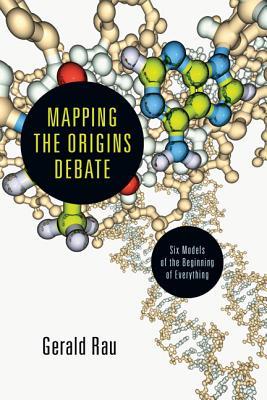
7. Mapping the Origins Debate by Gerald Rau. Rau’s purpose in this work is to delineate the six (not two!) models of origins of the cosmos and life held by different people and how each of these addresses the evidence around the origin of the cosmos, of life, of the species, and of human beings. His does not advocate for a particular view but shows how philosophical presuppositions and one’s definition of “science” shape one’s interpretation of the evidence and which of these models one is most at home with.

8. Winston’s War: Churchill, 1940-1945 by Max Hastings. This is neither strict biography nor war history but a look at Churchill’s leadership as Prime Minister of Great Britain during World War 2. It gives a balanced treatment of Churchill’s indispensable ability to rally his people and woo American support, and the flaws in his relationships with his war commanders and his perception of Britain’s post-war future.

9. Bonhoeffer, Christ, and Culture, Keith L Johnson and Timothy Larsen, eds. This book contains the papers give at the 2012 Wheaton Theology Conference, which focused on Bonhoeffer, and sheds valuable light on his Christ and Word-centered theology, the transforming influence of the Harlem Renaissance in his life, and Bonhoeffer’s decision to participate in resistance against Hitler and how he reconciled this ethically.

mappingwinstonbonhoeffer


That’s the month in reviews. Look for reviews in the next month on a collection of Manhatten Project materials, faith and science in Antebellum America, a new biography of Harriet Beecher Stowe, a landmark work on genocide and American foreign policy and more! Thanks for reading!

A New Life For Physical Books?

In this past Sunday’s New York Times Magazine there was an article with the intriguing title of “On Their Death Bed, Physical Books Have Finally Become Sexy“. Beyond the weird juxtaposition of death beds and sexiness, I wanted to know what this was all about, so I guess the title at least worked as a good “hook”!

It turns out that what this is all about is the fashion trend of decorating with books, even if one doesn’t read them, or only reads electronic versions of them. The article notes how almost any interior design magazine or home journal shows lots of pictures of rooms with attractive and book-filled shelves. It also describes how some people will buy books simply for the color of the book spines–all in purple or green, for example. And so, whole businesses have developed providing books in bulk to those who want to look literate. I’ve seen these in furniture stores and most look like old book club editions minus dust jackets and probably salvaged from estate sales, or desperate children cleaning out a parent’s home.

I guess this keeps them out of landfills, at least for another generation, or until their owners tire of that “look”. Yet in a strange way, I also get it. We have a bookcase with Library of America titles we bought on subscription until the bookcase was filled. I think the only way I got away with this was that my wife liked the way the books looked in our living room. But I’ve always had many hours of enjoyment reading those books, whether it is tales by Mark Twain, or the speeches of Abraham Lincoln.

IMG_2119

It seems that rooms lined with shelves have a special kind of coziness. They don’t just make their owners appear to be literate but, if not overly messy or threatening to tumble onto one’s guests, they lend a warmth to a room that might seem too stark with just a few pieces of furniture. And there is also the implicit invitation of, “come and read and explore the treasures within” that seems to be lacking when one looks at a Kindle or tablet lying on a coffee table.

The only problem I see with decorating with randomly acquired books one has no intent of reading is that you not only mislead your guests as to your literacy, but you send false messages about yourself. I love to look at the books on other people’s shelves to learn about what interests them. But if their books are selected only for appearance rather than content, that misleads me. Or maybe it doesn’t if I figure out that is what is going on. That also tells me something about the person, perhaps something not entirely complimentary.

Yet, my mother-in-law was always fond of saying, “where there is life there is hope.” I might just have to adapt that motto and say, “where there are books, there is hope!”

A Break From Blogging

Over the last six months, I believe I have not missed a day posting on “Bob on Books“. During that time, it has been delightful to interact with people around the world and in the blog’s first eight months, I’ve had over 7,000 visits.  Thank you!

Due to upcoming work and other responsibilities, and perhaps to re-charge the writing batteries, I will be taking a break from the blog for the next week. If time, and a compelling idea arise, you may see a post, but I plan to be back on Thursday April 17.

In the meanwhile, check out past blogs for what I hope you will find to be good ideas about books, reading, and life!


Review: The Edge of the Precipice: Why Read Literature in the Digital Age?

The Edge of the Precipice: Why Read Literature in the Digital Age?
The Edge of the Precipice: Why Read Literature in the Digital Age? by Paul Socken
My rating: 4 of 5 stars

What will become of reading? In particular, what will become of reading and engaging what have been considered the great works of literature from various cultures (no canon arguments here!)? With the advent of digital media with writing that comes to us in blog posts, tweets, and laced with visual content, what will happen to sitting down to read a long work like Don Quixote or War and Peace? With the growing emphasis on STEM education in our highly technological economy, will reading that seems to yield no immediate job skill or tangible benefit still have a place? These are among the questions explored in this collection of essays.

One of the things I realized immediately in reading this collection was that I was among my people! These people love reading and books and consider this love to have had a profound shaping influence in their lives. I suspect that people like that will love this book, particularly if they have been engaged in literary studies in the last several decades.

Some of the essays explore the questions of physical books versus various formats of e-books. The first is titled “Why I Read War and Peace on a Kindle (and bought the Book When I Was Done)”. A later essay, “Don’t Panic: Reading Literature in the Digital Age”, covers similar ground but is more hopeful about the value of e-books versus the aesthetics and advantages of physical books. These and other essayists in the book cover the now-familiar territory of discussions about how the media shapes our engagement with the content of books. Some are more reactionary, such as Sven Birkerts, in “Why the Novel and the Internet Are Opposites, and Why the Latter Both Undermines the Former and makes it More Necessary.” Yet, even as is implicit in the title of the first essay, I suspect most readers will engage in some hybrid of the two (or three if we include online, web content), which increasingly is my own view. The medium is a tool and every tool has particular uses and advantages. I wonder if in the coming years both publishers and users will become more discriminate to connecting medium to use.

Other essays focus on the value of great literature in our lives. Perhaps the most striking to me was Leonard Rosmarin’s narrative essay on “How Moliere and Co. Helped Me Get My Students Hooked on Literature”. This essay underscored for me what seems essential to grasp for those who care about great literature: we will never get people to read because they should but rather because they catch the love for great writing and make it their own. It was fascinating to me to learn how many of the essayists loved books from childhood and grew up in contexts where books were valued or were around inspiring teachers who imparted this love and ushered their students into the world of books. Other essays that explored the value of literature were that of Drew Nelles (“Solitary Reading in an Age of Compulsory Sharing”) Stephen Brockman’s “Literature as Virtual Reality” and the concluding essay (“Why Read against the Grain? Confessions of an Addict”) by Gerhard van der Linde. I believe it was in one of these essays (not easy to track down in the e-galley form I read this) that I also came across the great idea that one of the things that fosters reading is having books of ones own, and not just those of parents or from the library.

One of the unique and delightful essays was Vincent Giroud’s “A World without Books” that introduces us to the work of the librarian-archivist dealing with multiple editions, translations, bindings, and preservation of these works. Digitization cannot capture all the subtleties that can be found by physically examining some of these books and often fails to provide crucial information about the provenance of digitized works.

So, if you love literature and reading, or are looking for a thoughtful exploration of reading and literature in the digital age, this is a good read.

[My review is based on an e-galley form of this book provided for review purposes from the publisher through Netgalley.]

View all my reviews

March 2014: The Month In Reviews

In case you missed it here is what I read and what I thought about what I read in the last month. Included are links to all the reviews. Enjoy!

Praying lifeOne Bible

Challenger1. A Praying Lifeby Paul E. Miller.  I thought this had important things to say about the cynicism in our lives that hinders prayer and also very practical helps in prayer.

2. One Bible, Many Versions, by Dave Brunn. A helpful book exploring the nature and complexity of translation work, why we have different versions, and the folly of our “translation wars.”

3. Challenger: An American Tragedyby Hugh Harris. Harris was the “voice of NASA” during the Challenger disaster and gives a concise summary of events and the investigation that followed.

Hear my sonInclusion ParadoxJesus sage

4. Jesus The Sageby Ben Witherington III. This scholarly treatment explores the evidence for the influence of the wisdom tradition in the Old Testament and extra-testamental sources in the teaching and ministry of Jesus and the early church.

5. The Inclusion Paradox, by Andres T. Tapia. Tapia argues that the best reason for inclusion is that it is just good business and provides both an overview of the diversity landscape and strategies for effective inclusion.

6. Hear My Sonby Daniel J. Estes. This monograph explores the contribution of Proverbs 1-9 to a philosophy of teaching and learning.

God of LibertyFive PigsFaith and Fragmentation

7. God of Libertyby Thomas S. Kidd. This book explores the relationship between religion and the newly forming American state during the Revolution. We were neither a “Christian nation” nor a secularized state–it was far more nuanced.

8. Five Little Pigsby Agatha Christie. The five pigs are witnesses to a poisoning sixteen years earlier. The wife was convicted. The daughter was persuaded otherwise and enlists Poirot to find the truth.  Great fun.

9. Faith and Fragmentation. J. Philip Wogaman.  This book explores whether the Christian faith can be framed in a way that provides an integrated perspective in a pluralistic, technologically advanced age.

Story shaped WorshipWinter

10. Winter of our DiscontentJohn Steinbeck. One of his later novels, it explores the conflict of living with integrity and the pressures of social norms in a New England fishing village.

11. Story-Shaped Worshipby Robbie Castleman. This book contends that worship should be shaped by God’s story as we encounter it in scripture and the history of the church.

So, some theology, some fiction, history and science–a pretty good cross-section of the things I read. I hope you find something you like!

Re-reading by Mistake

Have you ever had this happen? You picked up a book that looked interesting, began reading it and had this vague suspicion that the book you thought you were reading for the first time was in fact one you had read before? And as you go along, suspicion becomes certainty. This is what happened to me recently when I started reading an edition of John Steinbeck’s The Winter of our Discontent. Not only did the plot seem familiar, but I discovered I had read this book a couple years ago and had written a Goodreads review.

Sigh! I suspect this reflects one of the hazards of reading lots of books! From the date of the review, I’ve probably read over two hundred books since then. I suspect the different edition may have thrown me, leading me to believe I hadn’t read this book. At least my memory isn’t totally failing–I recognized the plot and characters as familiar once I began reading!

John Steinbeck during his trip to accept Nobel Prize in 1962 Attribution: By Nobel Foundation [Public domain], via Wikimedia Commons

John Steinbeck during his trip to accept Nobel Prize in 1962
Attribution: By Nobel Foundation [Public domain], via Wikimedia Commons

So what do you do? Do you lay it down because you’ve already read the book? There are probably some books where the answer would be yes. But this is Steinbeck and I’ve come to love his writing. I know that I would someday like to re-read East of Eden for example. In the case of this book, Steinbeck explores the issue of personal integrity and the choice many of us wrestle with between integrity and “playing the game” where one maintains a veneer of being upstanding while cutting all kinds of ethical corners because that is just what it takes to get ahead.

I’m glad I’ve re-read the book. My previous reading focused on the main character, Ethan Allan Hawley, and his personal “winter of discontent”. What I’ve noticed this time through is social context and Steinbeck’s treatment of the hypocrisies of prevailing morality and the ironies of who is really “honest”.

There are books I’ve re-read intentionally, sometimes four or five times over the years. I do so because of their richness that seems to grow with each re-reading, perhaps because I’m at a different place in life as well, and the book reads me differently. I think something like that is going on with my “accidental” re-reading of Steinbeck.

Have you ever had this happen? What books have you come back to and re-read and what was that experience like for you?