This post comes out of a recent conversation with a student leader of one of our “manuscript Bible studies”. This form of study is called “manuscript” because we make copies of the text of a passage in the Bible (in one of the modern English translations) without verses or paragraphs. Participants are given markers and invited to carefully observe the written text, marking up the things they see, the connections between different parts of the text, and the questions they have. We encourage people to look for the “meaning markers” good writers use to convey meaning–repetition, contrast, various ways that ideas are related such as cause and effect or particulars to general truths. We look for figures of speech, we look up places and unfamiliar words. As far as this is possible, we do this to try to understand the text as its first readers would, and only then try to make application to our lives in our cultural context of the key ideas in the text.
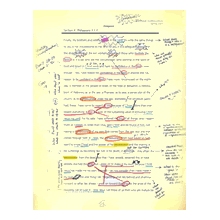
A rather weathered manuscript
English lit students would describe this as a form of “close reading”. Looking carefully at words, sentences, the relation and flow of ideas, the narrative or discursive arc matter. And what this student leader and I noted was how unusual this kind of reading is, even in the graduate school context. In truth, it is not possible for graduate students to practice “close reading” with most of the material they look at. There simply isn’t time.
But it also occurs to me that this is reflected in our wider culture as we’ve moved from print to digital–from a physical page to electronic print. I find myself increasingly accustomed to quickly scanning most of what I see on a screen, except maybe when I’m reading a book on my e-reader. I do this with email, websites, articles, and, truth be told, other blogs. What is also troubling is that I catch myself doing this even when I want to give more focused attention to a piece of writing, whether it is an important email from a work colleague, or a work of literature worth savoring. Worst of all as a person of faith, I find myself reading my scriptures this way.
Like the grad students I work with, I slip into this strategy to survive–I can’t possibly “close read” all the things that come across my screen. And for some of these things–simply a general awareness is enough. But I also wonder if I’m developing habits of reading that reads a mile wide and an inch deep, and becomes impatient with slowing down to read a sentence or paragraph.
One of the things I wonder is whether I’m glutting myself with too much stuff on the screen. I also wonder if it makes me less apt to discern and pay attention to messages that really matter–whether in an email, or an important work of literature or my Bible. Am I less inclined to read closely, listen closely, and understand when it matters? Might I do better to get back to that printed text (whether it is Shakespeare, Doestoevsky, or the Bible) , marker in hand, leaving off browsing posts and sites I’ll soon forget?
Is this just my quirkiness? Are others wrestling with this tension between browsing and close reading? How do you do it?