Review: The Edge of the Precipice: Why Read Literature in the Digital Age?

The Edge of the Precipice: Why Read Literature in the Digital Age?
The Edge of the Precipice: Why Read Literature in the Digital Age? by Paul Socken
My rating: 4 of 5 stars

What will become of reading? In particular, what will become of reading and engaging what have been considered the great works of literature from various cultures (no canon arguments here!)? With the advent of digital media with writing that comes to us in blog posts, tweets, and laced with visual content, what will happen to sitting down to read a long work like Don Quixote or War and Peace? With the growing emphasis on STEM education in our highly technological economy, will reading that seems to yield no immediate job skill or tangible benefit still have a place? These are among the questions explored in this collection of essays.

One of the things I realized immediately in reading this collection was that I was among my people! These people love reading and books and consider this love to have had a profound shaping influence in their lives. I suspect that people like that will love this book, particularly if they have been engaged in literary studies in the last several decades.

Some of the essays explore the questions of physical books versus various formats of e-books. The first is titled “Why I Read War and Peace on a Kindle (and bought the Book When I Was Done)”. A later essay, “Don’t Panic: Reading Literature in the Digital Age”, covers similar ground but is more hopeful about the value of e-books versus the aesthetics and advantages of physical books. These and other essayists in the book cover the now-familiar territory of discussions about how the media shapes our engagement with the content of books. Some are more reactionary, such as Sven Birkerts, in “Why the Novel and the Internet Are Opposites, and Why the Latter Both Undermines the Former and makes it More Necessary.” Yet, even as is implicit in the title of the first essay, I suspect most readers will engage in some hybrid of the two (or three if we include online, web content), which increasingly is my own view. The medium is a tool and every tool has particular uses and advantages. I wonder if in the coming years both publishers and users will become more discriminate to connecting medium to use.

Other essays focus on the value of great literature in our lives. Perhaps the most striking to me was Leonard Rosmarin’s narrative essay on “How Moliere and Co. Helped Me Get My Students Hooked on Literature”. This essay underscored for me what seems essential to grasp for those who care about great literature: we will never get people to read because they should but rather because they catch the love for great writing and make it their own. It was fascinating to me to learn how many of the essayists loved books from childhood and grew up in contexts where books were valued or were around inspiring teachers who imparted this love and ushered their students into the world of books. Other essays that explored the value of literature were that of Drew Nelles (“Solitary Reading in an Age of Compulsory Sharing”) Stephen Brockman’s “Literature as Virtual Reality” and the concluding essay (“Why Read against the Grain? Confessions of an Addict”) by Gerhard van der Linde. I believe it was in one of these essays (not easy to track down in the e-galley form I read this) that I also came across the great idea that one of the things that fosters reading is having books of ones own, and not just those of parents or from the library.

One of the unique and delightful essays was Vincent Giroud’s “A World without Books” that introduces us to the work of the librarian-archivist dealing with multiple editions, translations, bindings, and preservation of these works. Digitization cannot capture all the subtleties that can be found by physically examining some of these books and often fails to provide crucial information about the provenance of digitized works.

So, if you love literature and reading, or are looking for a thoughtful exploration of reading and literature in the digital age, this is a good read.

[My review is based on an e-galley form of this book provided for review purposes from the publisher through Netgalley.]

View all my reviews

Re-reading by Mistake

Have you ever had this happen? You picked up a book that looked interesting, began reading it and had this vague suspicion that the book you thought you were reading for the first time was in fact one you had read before? And as you go along, suspicion becomes certainty. This is what happened to me recently when I started reading an edition of John Steinbeck’s The Winter of our Discontent. Not only did the plot seem familiar, but I discovered I had read this book a couple years ago and had written a Goodreads review.

Sigh! I suspect this reflects one of the hazards of reading lots of books! From the date of the review, I’ve probably read over two hundred books since then. I suspect the different edition may have thrown me, leading me to believe I hadn’t read this book. At least my memory isn’t totally failing–I recognized the plot and characters as familiar once I began reading!

John Steinbeck during his trip to accept Nobel Prize in 1962 Attribution: By Nobel Foundation [Public domain], via Wikimedia Commons

John Steinbeck during his trip to accept Nobel Prize in 1962
Attribution: By Nobel Foundation [Public domain], via Wikimedia Commons

So what do you do? Do you lay it down because you’ve already read the book? There are probably some books where the answer would be yes. But this is Steinbeck and I’ve come to love his writing. I know that I would someday like to re-read East of Eden for example. In the case of this book, Steinbeck explores the issue of personal integrity and the choice many of us wrestle with between integrity and “playing the game” where one maintains a veneer of being upstanding while cutting all kinds of ethical corners because that is just what it takes to get ahead.

I’m glad I’ve re-read the book. My previous reading focused on the main character, Ethan Allan Hawley, and his personal “winter of discontent”. What I’ve noticed this time through is social context and Steinbeck’s treatment of the hypocrisies of prevailing morality and the ironies of who is really “honest”.

There are books I’ve re-read intentionally, sometimes four or five times over the years. I do so because of their richness that seems to grow with each re-reading, perhaps because I’m at a different place in life as well, and the book reads me differently. I think something like that is going on with my “accidental” re-reading of Steinbeck.

Have you ever had this happen? What books have you come back to and re-read and what was that experience like for you?


Is Reading Solitary or Social?

I probably drank too much caffeine yesterday and so had a restless night. So I was up for about an hour and read a couple essays in a recent book titled The Edge of the Precipice: Why Read Literature in the Digital Age? edited by Paul Socken. One particular essay caught my attention: “Solitary Reading in an Age of Compulsory Sharing”.  The author extolled the glory of reading as a solitary activity in an era where social media tracks most of our activity (including the books we read if we use vehicles like GoodReads). He worried that linkages between sites like Amazon and Facebook could mean that all the books we purchase could become “updates”, and even the use of e-readers could provide information about our reading habits. Print books purchased offline and read privately preserve that wonderful solitary experience, which he differentiates from loneliness.

As an introvert, I get this. Sometimes, having my nose in a book is the equivalent of posting a sign that says, “Leave me alone!” (though I also find that this often doesn’t work!). More than that, reading as we usually practice it, is a solitary act in the sense that words on a page engage and evoke thoughts and emotions in my inner person–sometimes enjoyment, sometimes perplexity, sometimes intense interest in a novel idea that rearranges my mental furniture. I can be in a coffee shop or alone in the family room and no one knows what is transpiring–unless I tell them.

At the same time, I note that the author of this essay differentiated being solitary from being lonely. I would contend that in fact, reading is never solitary because we are always engaged with another mind, and that is why we are not lonely. Last night while my wife was in dream land, I was mentally engaged in an argument with this essay’s writer. I was alone, yet not alone. While I was the solitary figure in my living room, I could not engage in reading alone–I needed another in order to have someone to read.

And so I would contend that reading, even apart from reading aloud, discussing books in groups, blogging and posting about books, is an inherently social activity, and one of the profoundest because in reading, I enter deeply in the thought world of another. I guess this is where I struggled with the essayist. To me, it seemed to be all about his experience of the book alone. For me, reading is about entering the world of another–someone I may never meet physically–but someone who I’ve become intimately involved with in the sense of entering their thought world, their vision of the world, their arguments. I both do this, and step back and think about what I admire, what I would want to explore more, what I would question.

I also found the writer kind of snarky about social media–particularly the idea of social media monetizing the things we share (which I will concede happens). At least he wasn’t being snarky about social media on social media! Certainly I’ve seen some of the same things he does–the people on GoodReads who never read anything, the mean-spirited reviews on Amazon that substitute attack for critique. Social media, like all our technologies, is a double-edged sword. What I am intrigued with is the project of using social media to foster a community of those who love significant conversations, who want to share what they are reading and thinking. I work in a national organization and I have the chance to interact with colleagues across the country who I may see once a year or less. I’ve had the chance to intersect with like-, and differently-minded bloggers. I’ve heard from total strangers who found a book I reviewed of interest or help to them. And my interest in a book has been piqued by the review of another.

Moreover, I love discussing books with my Wednesday morning book group. My wife and I sometimes read devotional literature aloud together or read aloud on car rides. So I would contend that, apart from the fact that I’m not talking to the human beings around me when I read, reading is an inherently social act, and one that is even richer with the personal and virtual social interactions we might have around our books.

But this brings up a question that might be the subject of a future post: can we be in solitude without books or any other form of external input? This may be one of the greatest challenges for us in an age where we undergo a 24/7 bombardment of media.


Close Reading in a Browsing Age

This post comes out of a recent conversation with a student leader of one of our “manuscript Bible studies”. This form of study is called “manuscript” because we make copies of the text of a passage in the Bible (in one of the modern English translations) without verses or paragraphs. Participants are given markers and invited to carefully observe the written text, marking up the things they see, the connections between different parts of the text, and the questions they have. We encourage people to look for the “meaning markers” good writers use to convey meaning–repetition, contrast, various ways that ideas are related such as cause and effect or particulars to general truths. We look for figures of speech, we look up places and unfamiliar words. As far as this is possible, we do this to try to understand the text as its first readers would, and only then try to make application to our lives in our cultural context of the key ideas in the text.

A rather weathered manuscript

A rather weathered manuscript

English lit students would describe this as a form of “close reading”. Looking carefully at words, sentences, the relation and flow of ideas, the narrative or discursive arc matter. And what this student leader and I noted was how unusual this kind of reading is, even in the graduate school context. In truth, it is not possible for graduate students to practice “close reading” with most of the material they look at. There simply isn’t time.

But it also occurs to me that this is reflected in our wider culture as we’ve moved from print to digital–from a physical page to electronic print. I find myself increasingly accustomed to quickly scanning most of what I see on a screen, except maybe when I’m reading a book on my e-reader. I do this with email, websites, articles, and, truth be told, other blogs. What is also troubling is that I catch myself doing this even when I want to give more focused attention to a piece of writing, whether it is an important email from a work colleague, or a work of literature worth savoring. Worst of all as a person of faith, I find myself reading my scriptures this way.

Like the grad students I work with, I slip into this strategy to survive–I can’t possibly “close read” all the things that come across my screen. And for some of these things–simply a general awareness is enough. But I also wonder if I’m developing habits of reading  that reads a mile wide and an inch deep, and becomes impatient with slowing down to read a sentence or paragraph.

One of the things I wonder is whether I’m glutting myself with too much stuff on the screen. I also wonder if it makes me less apt to discern and pay attention to messages that really matter–whether in an email, or an important work of literature or my Bible. Am I less inclined to read closely, listen closely, and understand when it matters? Might I do better to get back to that printed text (whether it is Shakespeare, Doestoevsky, or the Bible) , marker in hand, leaving off browsing posts and sites I’ll soon forget?

Is this just my quirkiness? Are others wrestling with this tension between browsing and close reading? How do you do it?

Distractions and Good Reading

Do you ever find yourself reading the same passage in a book over again because you realized you just read a page or more while your mind was somewhere else? I’ve got to admit, I’m looking for a little comfort here because it sure happens to me and I hope I’m not the only one and that it is not a sign of some type of advancing senility!

I find it happens most when I’m reading material that is intellectually “dense”. That doesn’t mean it is necessarily bad writing, but rather simply writing that is making a careful, extended argument. I read a certain amount of those kinds of books, mostly in theology or philosophy or sometimes academic books in other areas. I suppose a simple solution might be to not read those kinds of books! But I guess I still want to explore some new (and old) frontiers of ideas.

There are a few things that I do find important that help me in that kind of reading:

1. Do it when I am well-rested and awake. If I’m tired and want to read a bit, much better a light mystery.

2. Read this kind of material in a quiet setting. Sometimes I like to read with music in the background. I’m learning I can’t do that with this kind of material, particularly since I’ve begun singing with a choir–I can easily get distracted by a passage of music, and even more if it is choral.  Maybe this just signifies that, like Winnie the Pooh, I am “a bear of little brain”!

3. Posture matters. Sitting at a table with a hardback chair works best. Or sometimes standing!

4. Sometimes taking notes helps, although I mostly do this for books I’m discussing with a reading group.

5. Books with long, involved sentences sometimes make more sense if I read them aloud. This can be especially helpful if the writing was originally oral material.

6. It helps, if I can, to “unplug”–the computer, the cell phone–all those electronic intrusions that may seem so urgent but rarely are.

7. It helps me to recognize the point of no return–that point where I’m mentally saturated and what I need is time to reflect on what I’ve read rather than to read more.

There is one element of distraction that none of these measures completely helps with. That is that inner voice. Sometimes it is taking me down a rabbit trail from what I’ve read. Sometimes it is thinking about a task that lies ahead in the day or a conversation I had with someone, particularly if it was difficult. Sometimes it is a totally random thought–where did that come from?

Sometimes those distractions need attention. It may be that there is something more important for me to think about or act upon at that moment than what I am reading. Sometimes, a “note to self” allows me to set it aside. Sometimes a prayer helps if it is a concern that has come to my attention. Sometimes, I need to set that book aside to make a call, send an email, or do something. Sometimes, if it is totally random and unimportant, simply realizing my wandering mind and laughing at my puny mental capacity, and picking up where I left off seems best.

I suspect (or at least hope) I’m not alone. So how do you, my reading friends, deal with distractions?

Fifty-two books in a year?

Came across a Huffington Post article this past week on “How to Read a Book a Week“.  Its all about reading goals and the incentive they offer to better reading. And I get that. My own reading goal for the year is 100 books (on Goodreads). So far, I’ve read 24 and will probably make it, which is my own tip for reading goals–set them, but probably lower than what you will actually read. I think reading goals should be fun–maybe a slight stretch but doable.

So, there were some things I liked that the writer of this article mentioned:

  • One day at a time:  he suggests figuring out how many pages the average book one reads and setting a daily goal (say 30 to 40 pages) and try to set aside time early to read. I do have a daily goal in mind and I do read early, before life ramps up and I get into my day.
  • Make it a routine: I try to read first thing each day (which the author does). Don’t always get to do this because of early morning meetings, but this helps.
  • Use every moment: I will often do this if I have enough time to focus on what I’m reading. Otherwise, I often carry a periodical in my bag or on my Kindle that I can read in a few minutes.
  • It’s OK to give up: Some books just don’t turn out to be what we think, or we are not in the place to read them. No use being miserable just to reach some goal.

I had a problem with some of this article because it just seemed pretty OCD–and some of us bibliophiles don’t need any encouragement in that regard!

  • It’s OK to cheat: Sure, there are good short books we can read to reach our goals. But reading short books just to catch up if I’m behind on a reading goal seems to make the goal more important than reading good books–long or short. While I also agree that there is no inherent virtue in long books, I would say that the best thing is to read the book that captures your interest, that enriches your life, that is right for you at the time.
  • Never fall behind: This seems the most OCD to me. Sometimes life happens and there are things more important than reading. Sometimes we are just reading books that take longer than a week.

I agree with the writer’s conclusion that reading can enrich our lives. If a goal, whether reading one book a year, a month, a week, or even a day (as I understand was Teddy Roosevelt’s practice) serves as an on ramp to those riches, great. But let’s keep it rich, not a misery. Sometimes a challenging book takes mental effort to read and is worth it. But making oneself miserable (or just very task-oriented) just to add a book to meet our reading goals seems to defeat the purpose. My two cents, anyway!


February: The Month in Reviews

One new feature I would like to try (and get your feedback on) would be to do a post summarizing all the reviews I did over the last month. This can serve as a kind of index for my reviews and hopefully, if you missed one or more when it was first posted, gives you an easy way of finding what I reviewed in the last month.

I actually read quite a bit during February, so here is a good list. Enjoy!

A theology of the crosschina WakesGlorious War

A Theology of the Cross by Charles B. Cousar. This work does a good job of summarizing Paul’s “theology of the cross” using the Pauline epistles most widely accepted as being authored by Paul.

China Wakes: The Struggle for the Soul of a Rising Power by Nicholas Kristof and Sheryl WuDunn.  This is a fascinating chronicle of Kristof and WuDunn’s stay in China during Tiananmen and the rise of China as an economic and political power.

Glorious War: The Civil War Adventures of George Armstrong Custer by Thom Hatch. Most of us only know the story of the end of Custer’s life at Little Big Horn. Hatch helps fill in the picture, showing the key role Custer played in several Civil War battles, including Gettysburg, as well as chronicling his early years and marriage.

resilient ministryconsequential leadershipReading scripture

Resilient Ministry: What Pastors Told Us About Surviving and Thriving by Bob Burns et al.  These researchers discovered five factors contributing to pastoral excellence through summits with pastors as part of a Lilly research grant.

Consequential Leadership: 15 Leaders Fighting For Our Cities, Our Youth, Our Poor, and Our Culture by Mac Pier. Pier directs the New York Leadership Center and in this capacity is able to profile 15 leaders from a variety of walks of life whose faith and leadership is having a decisive impact in society.

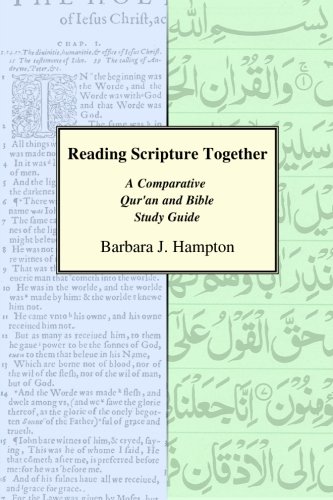
Reading Scripture Together: A Comparative Bible and Qur’an Study Guide by Barbara J Hampton. Out of numerous Christian-Muslim dialogues, Hampton developed this resource to promote a comparison between Christian and Muslim scriptures exploring key areas of belief and key differences as well as similarities between the two faiths.

QuietHoly is the Day

diversityQuiet: The Power of Introverts in a World That Can’t Stop Talking by Susan Cain. This best-selling book argues that introverts are simply different, not inferior or superior but rather offering unique gifts to the world that arise from their temperament.

Holy is the Day: Living in the Gift of the Present by Carolyn Weber. Weber shares her narrative of learning to live in the present as a mom of three under three who is also a college professor.

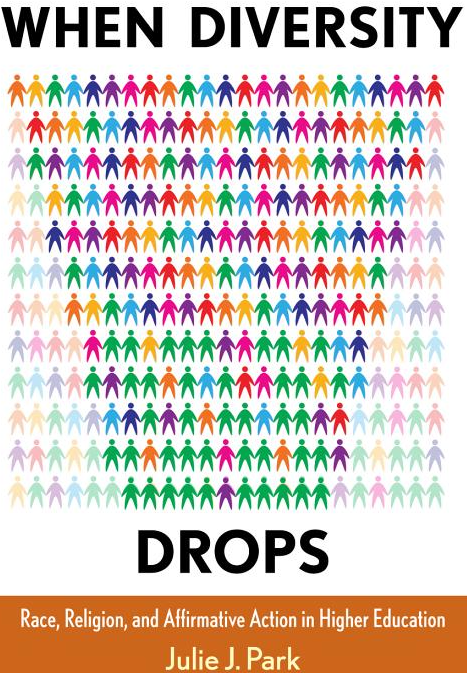
When Diversity Drops: Race, Religion, and Affirmative Action in Higher Education by Julie J Park. Park looks at the efforts of an InterVarsity Christian Fellowship at “California University” to increase ethnic diversity and the impact on these efforts that Prop 209 that led to steep declines in ethnic diversity at this campus.

Pilgrim

The New Pilgrim’s Progress by John Bunyan. This is Bunyan’s classic work in an updated edition (which includes only Christian’s journey) with helpful notes and commentary.

I hope you like this recap of what I’ve read that might point you to one or two books you might read in the next month. Tell me what you think.

How Many Books Did You Read in 2013?

Book Riot recently published the results of poll of its followers on questions around their reading habits in 2013. Here is what they discovered:

Responses: 2483 (overall)

Mean-Average of books read: 75

Median number of books: 50

Respondents read anywhere between 2 and 1500 books!

Nearly 75 percent read e-books this past year

Print books still outweigh e-books by roughly 70 to 30 percent read.

Book Riot connects predominantly with an 18-35 year old college-educated constituency. Compare their numbers with a Pew study that found the mean average of books Americans read is 12 with a median average of 5 in a year.

One of the things these numbers suggest to me is that there is a big gulf in reading between a small cadre’ of people who really read a lot, and the vast majority who read little. There are some questions this basic gulf raises for me:

1. Was it always this way or is the gulf widening?

2. Do numbers tell the whole story? What are we reading? Is there greater worth in reading one great work of fiction than fifty romance novels?

3. How much time are people spending in any type of reading? Are we reading more online posts, magazine articles?

4. While we know that more are reading on tablets and e-readers, and even smartphones, does this translate into any more books being read?

I participated in the Book Riot poll. My own totals were 121 books read and for me it was roughly an 80% to 20% split between print and e-books.  I’d be curious for those of you who track such things, what were your reading numbers like in 2013 and what are you observing about how you read?

What Will You Be Reading During the Next Snow Storm?

In our patch of Midwest, we are currently hearing forecasts of 6-10 inches or more of snow on Sunday. Will winter never end? Of course in my town this means a mass descent on the local grocery stores where people buy enough food for a month even though we’ll be dug out within a day or two. [See my post on Ten Things Columbus People Do When Snow is Forecast.]  I wonder, do book lovers make an equivalent descent on local bookstores or libraries preceding similar weather events?

January 25 storm looking out our front door

January 25 storm looking out our front door

It seems to me that “snow days” like this are a delicious invitation to curl up with a book (or three), a warm cup of something, a comfortable chair and maybe some good music. That is Nirvana to this introvert!

So if you are sharing in the latest version of “snowmageddon” or anticipating something like this in the future, what are the books you’d like to curl up with. Here are a few that I’m looking forward to:

Pilgrim’s Regress by C.S. Lewis. A group of us are starting to read it and this should be a good chance to get some of that reading done and see what Lewis did with this classic idea of a pilgrimage.

This feels like a great time for an Agatha Christie mystery.  I have a few of those on my Kindle and so I might just pull one of them up.

I’m in the midst of wading through a couple more serious books and I’ll probably take some time at my most attentive (usually mornings) to make some headway in Jesus the Sage by Ben Witherington exploring how Jesus represents the culmination of the Jewish wisdom tradition and in Andres Tapia’s The Inclusion Paradox, a book that is assigned reading for an upcoming conference.  The latter so far has been an eye-opening tour of how diverse our marketplaces are becoming and how businesses, non-profits, and educational institutions all need to take this on board. What is unique about this book is that Tapia sees diversity and inclusion not primarily through the lenses of challenges, problems or recruitment strategies, but rather as an opportunity for growth.

Lastly, I hope to finish off Paul Miller’s Praying Life, a very practical book that has been opening my eyes to the opportunities for prayerfulness in daily life.

Of course the one challenge to these great aspirations is that sometime I’ll have to get out and shovel all of that snow! But even just the thought of some time to curl up with a book is delicious. What about you?

Books and the Polar Vortex

Feeling a bit whimsical and was just musing on the benefits of books during the polar vortex:

10. You can insulate with them.

9. You can build a book igloo.

8. You can organize them. Along the way you can follow Winston Churchill’s comment that we should not feel bad about the books we’ve not read but just fondle them!

7. This could be a good time to winnow out the books you want to give away or re-sell.

6. You can gather some friends over a hot drink (or one that warms you up!) and talk about your favorite books.

5. You can decide which books you want to take along on that beach vacation next summer. Don’t you feel warmer already.

4. You can argue with your friends about whether climate change has or has not been caused by the shift from print to digital books.

3. You can pull out a volume of love poetry with that someone special.

2. You can read aloud as a family. I remember reading The Long Winter in the Little House series one winter and realized how good we had it.

1. Most of all, you can just curl up with a good book, a warm beverage, a comforter and just savor the luxury of losing yourself in a good book!

What other benefits of books have you found out there during this exceptionally cold winter?