Should I Read This Book?

Yesterday, I wrote about unfinished books. But it occurs to me that one of the best ways to finish a book is to make good decisions about which books to start in the first place. Particularly, this is an important question if you are buying the book. How does one figure out what to read in the first place? A few thoughts, and I’d be glad to hear how other readers think about this.

1. Many e-books will allow you to download a preview for free. This is usually just the first chapter and no guarantee that the rest of the book will be as good or better. This is “try before you buy.”  This is a good idea if the author, or genre is new to you.

2. Of course, another way to try before you buy is to borrow the book from the library, physically or electronically. It is always a greater disappointment to put down a book you’ve paid good money for.

3. Generally, books you find in the bargain bins are more likely to be ones you will lay down. They are usually there for a good reason!  But there are always those wonderful exceptions. Generally, if a book is selling at or close to retail (unless you are buying it secondhand) that’s an indicator that sales are such that they aren’t trying to unload surplus stock.

4. Are you entering a particularly hectic season of life? If you think you will have to lay a book down unread and then have a hard time picking up the train of thought without re-starting the book, you might do just as well to wait until a time when you can read your way through the book without long interruptions.

5. Why are you interested in reading this book in the first place? If it is simply because everyone is reading this book, or you liked the cover, you might take time exploring the table of contents a bit further or ask yourself, “am I really interested in the history of the American Whig Party?” (my family will get this one!).

. Different seasons of life call for different books.  I might really enjoy a spy thriller or a mystery at the beach or at an airport. I might take an interesting biography or a more serious novel for quiet evenings on a fall getaway. Cold winters’ nights might be a good time to wade through that multi-volume history of the Civil War. The early hours of the day are best for me to read thoughtful books on faith-related subjects. The beginning of spring training or World Series season is always a signal to me to read a good baseball book.

7. I have friends (and some reviewers) whose reading tastes seem close to mine. If they’ve liked a book that I think I’d be interested in, then I feel more assured in picking it up and starting it. Of course, not all the things my friends are interested in are the same as my interests!

Those are a few thoughts. It is not a sin to put down a book. Sometimes we will start out on a book when we are just not ready for it. I’ve come back to books years later that I’ve put down and found that for whatever reason, I’m now ready to read them. And if we gain insight into our book choices through the books we lay down as well as the books we finish, that is valuable.

How do you decide when to buy or read a book?


Unfinished Books

In my post yesterday, I wrote about how I hate not finishing things. That’s true of the books I read. Most of the time, I finish the books I start, and most of the time, I don’t mind. I have to admit, (and I know some will think I’m crazy) Gabriel Garcia Marquez’ One Hundred Years of Solitude was one of those I was tempted to give up on! And it probably shows in my review!

Someone asked me recently about “when should they give up on a book?” I’m probably not a good person to ask but I’ll hazard a few thoughts and ask you for more.

1. If you are conscious of how bad the writing is and suffering through it, give it up. You wouldn’t drink a whole glass of milk that has gone bad, would you?

2. Sometimes, a worthwhile work can be mentally demanding and if we are tired, or distracted, or simply not used to reading such dense fare, we might want to set it aside for a time we are more alert, focused, or have developed our capacity for wading through close argument.

3. Maybe we are experimenting with a new genre, have gotten good recommendations and discover we really don’t like the writing. I set aside the writing of one science fiction writer even though I found some of his ideas fascinating simply because of the graphic descriptions of violence in his books that I didn’t care to have lingering in my head.

4. Then there are the books that were meant to be articles or pamphlets where there is nothing new after the first twenty pages and the rest is filler. Hopefully you didn’t shell your own good cash out on this.

5. Finally, there are books that may evoke an unhealthy mental and emotional response from us. Others may read the book and be impervious. But if you find yourself having nightmares, unhealthy sexual fantasies, or other inordinate responses–lay the book down! (We even found this true with a few “read aloud” books when our son was young, and we left these unfinished.)

What are some of the reasons you set aside a book and decide it is not worth finishing–at least for now?

Seriously? People Need Reasons to Read?

That was a response to my post yesterday, Reasons to Read.  Actually, I get that. I have to admit I’ve loved reading from when I first learned how to read. I probably owe this to parents who valued reading and education. My mom loved to read and I remember conversations over lunch about the books each of us were reading. She was a member of a couple of book clubs and new books would regularly arrive at our home. She enjoyed historical fiction and as I got older, I read some of this as well–books by Leon Uris come to mind. It was fun to explore the bookshelves at home, particularly as I discovered that they went two to three books deep at times. Sometimes I would just page through the encyclopedia set we had in the hall by my bedroom, fascinated that there was so much one could explore and learn.

main

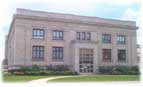
Main Library-Youngstown Ohio

The household budget only allowed for one of us to be buying books, so I grew up with regular trips to the library–first on Saturdays to our downtown library, and later on my own to our local branch library on the west side of Youngstown. It was a “rite of passage” of sorts to get my own library card! Sometimes the librarians would help, but mostly I was allowed to wander the shelves and discover interesting books–mostly I liked science and sports, but I also remember reading books about some of the battles of World War 2–interesting because my dad was in the army during that war. It was exciting as I got older to be able to take books out of the “adult” section of the library!

West Side Library--Youngstown Ohio

West Side Library–Youngstown Ohio

If there is a lesson from this trip down memory lane, it might be that if you want to be a reader, choose your parents well! I certainly did. I also suspect I had some personal propensities to this end. I wasn’t particularly athletic as a kid, and somewhat heavyset until I reached adolescence. It was probably the case that if I couldn’t be good at baseball, at least I could be good with books! I wonder how many readers are out there with similar experiences.

What I think about more and more though are the large numbers of people who rarely or ever crack open a book–whether in physical or e-book format. I guess one of the things I hope in writing about reading and the books I read is to not only preach to the choir but also to entice some for whom reading is an infrequent practice, other than on Facebook, that there are ways books can enrich our lives that are different from other enriching activities.

That happens in different ways for me. Books capture my imagination. The Hobbit and The Lord of the Rings in my head is far richer and more vivid than the best of Peter Jackson, and gets richer with each re-reading. Books help me understand where I came from. The biography of John Quincy Adams I recently read helped me appreciate the role he played in the abolition of slavery–something I never knew before. Books challenge my thinking. The New Jim Crow forced me to ask some serious questions about the structures of our society and how they still undergird a racialized society.

What is different about books from our visual media? At best, what they do is engage our imagination and our intellect. They give us a chance to reflect and not simply absorb an endless set of images. They allow us to do that at our own pace and time. Something that captures our attention can be re-read, reflected upon, dialogued with. Books give us words to express what might be inchoate ideas or feelings.

What I would encourage for those who sense they might be missing something and want to read more is probably analogous to our experiences of learning about wines–of which we are still woefully ignorant. But we’ve been to some wine-tastings in our area, including one recently at a local vineyard where we could talk about the characteristics of different wines, and taste the differences for ourselves. “Taste” some different types of books, kind of like different wines and find those you enjoy.

As I’ve suggested before, GoodReads is a great resource to get ideas of interesting books from the recommendations of your friends or others (GoodReads will even give you their own recommendations based on books you have read or would like to read–most are pretty good). Or just visit your local library. Chances are, there is someone there who would be glad to help you find something interesting!

I’d love to hear stories of those who have become readers after growing up and how that happened for you!


Bob on Books in 2014

IMG_1933We changed the calendar on our refrigerator last night before turning in. For many it seems January 1 is the day for New Year’s Resolutions (and from the viewer response, it appears a number of you are including “read more” among those resolutions!). Personally, I’m not one for resolutions but I thought I might share some thoughts I’ve had about the blog in the coming year.

1. I hope my son and I can do another conversation on our blogs. No guarantees here but we’ll see what comes out of our Tuesday nights at Chubby’s!

2. The question of how new technologies will impact reading, discourse, learning and the world of higher ed is one I hope to continue exploring. I think we are in a new Gutenberg revolution and I’m alternately intrigued and disturbed as I think about how this might affect literacy and thoughtful engagement with the books we read (or even the prevalence of reading).

3. I’m also intrigued by the intersection of reading, which is often a solitary activity, and social media and its potential to create new forms of learning communities, ranging from virtual book groups to online engagement among those sharing a professional interest.

4. I will be reading more books in the area of higher education because of a project I am working on related to my work in campus ministry.  Look for topical posts in this area as well as reviews of individual books, and a cumulative review post at some time in the first part of the year.

5. GoodReads and my shelving choices also make it possible to identify other categories where I’ve read a number of books on the same general theme. I’ll probably figure out a few other cumulative review posts–perhaps on biographies, American history, sports, books on Christianity and culture, mysteries or sci-fi. And I’ll probably save some for future years!

6. The posts “on life” are the least planned part of this whole thing. They arise out of something I’ve read, some personal life experience, or something that is happening in the world that I feel I have something I want to say about it. This is totally unpredictable.

7. I will continue to post writing on reading in general. I assume that many of those who consistently view or follow this blog love reading and are as interested as I am on how books may not only enrich our interior lives but how we might be enabled to live well through the books we read.

8. There will be those reviews! Generally those aren’t the most popular posts and not all the reviews will be of interest to all who follow me. I review a number of books that represent “a thoughtful approach to Christian faith” that reflects the university world I work in and my own passion for a seamless connection between our love for God, for his world, and our closer and more distant “neighbors”. Even if you don’t share my beliefs, I hope you will find some books that touch on interests that are common to us. I’ll be reading other things as well–history, biography, and fiction (some literary, sci-fi, and mystery especially), and a good baseball book here and there and an occasional science work.

9. At some point in the year look for a Teddy Roosevelt marathon! I have a couple volumes of Edmund Morris’s biography of Roosevelt on the stack and received The Bully Pulpit by Doris Kearns Goodwin for Christmas. I’ve always loved reading about Roosevelt and love anything I’ve read by Doris Kearns Goodwin so this will be a marathon I look forward to!

I’d love to hear your thoughts on reading this year, and on anything you’d like to see me explore in the blog. I’m still learning about this stuff and those who view and comment are my best teachers!

Your Favorite Posts of 2013

I thought it would be fun (and an interesting learning exercise for me) to share my top ten posts in terms of views from this past year. They are listed in order of the number of views:

1. Ten Things Columbus People Do When Snow is Forecast. People in Columbus go bonkers when it snows. Apparently a number of you love to read about our fears of “snowmageddon”.

2. Writing on Reading. This was my very first post written back on August 13 with a photo of a stack of books. Since then, I’ve read a few of them!

3. 3 Steps to Reading Harder, Better, Faster, Stronger. This was a re-post of a BookRiot post with some additional thoughts from me posted just the other day!

4. Best Reads of 2013. And this was just posted yesterday and consists of all my 5 star GoodReads reviews.

5. Mr Rogers Was Right. I reflect here on recent neuroscience research and how Mr Rogers approach to TV was good for the emotional and cognitive development of children.

6. Review: Teaching Naked: How Moving Technology Out of Your College Classroom Will Improve Student Learning. This is the only one of my book reviews to make the top 10! I suspect the title attracted at least a few views, and maybe a few others from people who needed a summary of the book for education classes.

7. You Lost Me, The Conversation about Creation Care. One of a series of blogs my son and I did on David Kinnaman’s book, You Lost Me. Fascinating that the issue of creation care was of such interest.

8. How I Review a Book. This is a surprise to me. My guess is that students writing book reports reference this!

9. Confession. My reflections on ways the church leadership of my generation has failed Millenials that sparked the idea of the blog interchange with my son.

10. The Strange Act of Forgiveness. Ironic that this follows the previous blog. It actually was some reflections on forgiveness in the light of the death of Nelson Mandela.

“Bob on Books” has been an interesting venture into the world of blogging since I began last August. I’ve learned quite a bit from other bloggers, including my son. I’ve been able to post most every day (this is post 136) and as of today posts on the blog have been viewed over 3200 times since the blog’s inception. Yesterday was my best day ever for views! Thanks to all of you who have read and especially those of you who have commented. Blogging is one form of online learning community that brings together for me my loves of the world of education and of forming communities. Writing helps me think more clearly about the things that are the theme of this blog: books, reading, and life, and a good part of that is interacting with my readers! So thanks to all of you who have joined me on the blogging journey! I look forward to our conversations in 2014!

3 Steps to Reading Harder, Better, Faster, Stronger

3 Steps to Reading Harder, Better, Faster, Stronger (from BookRiot.com) has some great ideas if one of your New Year’s resolutions is to read more.

I often get asked how I read so many books (although I was humbled by the person in this article who reads 2-300 books a year). I would agree with everything written here. Here are a few other thoughts.

1. I would amplify the idea of avoiding distractions. Read where and when you are free from TV, social media or smartphones.

2. Carry a book or e-reader with you for unexpected free moments–waiting for a flight, eating alone, while you are waiting to meet someone or on public transportation. I’ve probably read a book or two just in airports this year!

3. If you are working to cultivate a reading habit, don’t start with the most demanding, dense stuff you can think of that seems “profound”. Start with authors you like, or books in a genre you like.

4. Find book reviews or blogs on the kinds of books you like and see what others like. Goodreads is a great tool to find out what your friends are reading and what they think about their books.

5. After you read a book, try to capture in a few sentences what you liked about the book, a favorite quote, or something you want to remember from the book. Again, the Goodreads site is a great tool for this–you don’t need to be lengthy–think of this as just putting down what you want to remember about the book.

6. If you are a person who likes goals, track your progress through the year. Probably one of the few things I remember from my behavioral psych class from many years ago was that when you track a behavior, you increase that behavior if it is desirable, and often decrease it when it is undesirable. Hopefully reading is the former for you!

7. Read something “off the beaten path” for you — a different genre, an international author, a perspective you don’t think you agree with. Pick up a book at your bookseller’s that they are recommending that sounds interesting that you wouldn’t otherwise read.

Happy reading!

You Know You Have Too Many Books When…

We stopped by our favorite used book store the other night. Only bought one book–a biography of Henry Stimson from the History Book Club’s Parkman Prize series. It cost me only $2. Was feeling pretty good about that until I had this niggling feeling that I already owned a copy of this book, yet unread. Turned out, I even knew exactly where to find it. I think I may have too many books!

What are some other signs that you have too many books? Here are a few I can think of–although for my own sense of self-respect, I won’t say how many are true for me!

You have too many books when…

1. You will not be able to read all the books you have in what life remains you–even by generous measures.

2. You’ve run out of shelf space for your books.

3. Book piles are sprouting up on the flat surfaces in your house.

4. You can’t find a book you know you own.

5. You have boxes of books squirreled away in secret places.

6. You’ve considered adding onto your house to make room for your books.

7. Alternatively, you’ve considered asking someone in your house to move out to make room for your books! (I will say I’m not guilty of this one!)

8. Children visiting your home ask if this is a library.

9. You have  more books than the local library!

10. Your Nook or Kindle overfloweth!

The funny thing is, even then, we remain suckers for “that book I’ve always wanted to read”, particularly if we find it for a bargain. And our unread books never trouble us too much. After all there is the reputed counsel of Winston Churchill who encouraged friends not to trouble themselves over unread books but just to “fondle them”.

Can you add to my signs of having too many books? If you are a bibliophile and not in denial (or the spouse of a bibliophile!), you probably can.

Sigh…


Review: Why Read?

Why Read?
Why Read? by Mark Edmundson
My rating: 3 of 5 stars

English departments are under attack in higher education. To be precise, courses that involve reading literature are under attack. Some people still prize being able to express oneself well in writing–maybe what we’ll have down the road is simply “Writing Departments.”

Not if Mark Edmundson has his way. Why Read? is an extended essay on the value of reading, an expansion of a widely circulated Harpers Magazine article. His answer might be quite surprising to those who have been around English Departments of late. He argues that reading is important for great writers’ exploration of the big questions of life–why are we here? what is a life well lived? why should character matter? He believes books can change us and the test of a good book is that we can live its truth.

Against all the critical approaches that deconstruct literature, he argues for reading authors sympathetically–indeed “becoming” the author while retaining one’s sense of oneself–so deeply entering into the author’s world that we in some way identify with him or her. Likewise, he even suggests identifying with characters in novels. And he teaches at the University of Virginia for goodness sake!

He has a simple test for what he thinks ought to be canonical–it tests and transforms us and has done so for many people over a period of time. He includes writers from beyond the Western world without embracing trendiness.

What was striking for me is that Edmundson speaks of great works of literature as Christians would speak of the Bible. In fact, he acknowledges that in a world that no longer believes in the transcendent (and this is where he thinks we are going, and evidently where he is) these books help us define our truth and shape and expand our lives.

What is fascinating to me is this recognition of the power of words to change us. Edmundson and so many writers dealing with the current crisis of higher education seem “god haunted”. They are trying to recover or replace what was lost when we ceased believing that there was a connection between the God who speaks creation into existence and reveals himself in words, and the belief that the study of those words and the world of discourse beyond scripture has a power to change us. People like Edmundson still want to believe the latter while denying the former. I question whether this is ultimately sustainable, much as I share Edmundson’s love of these works.

View all my reviews

Am I Reading the ‘Wrong’ Books?

Goodreads opened up its annual reader poll for Best Books of 2013. I discovered in going through the poll that I had not read a single title on the list! Kind of makes me wonder if I am reading the ‘wrong’ books. At very least, I am not reading the books that are currently popular.

I can think of several reasons for this:

1. I read a number of books that would fall under the category of “religious” which was not included in the poll. That is pretty central to my identity and work, so I will probably go on reading a number of those books, and I find there are those in this “niche” who seem to appreciate what I have to say about these books.

2. I tend to pick up lots of my books at second hand stores and so am reading things that have been out for a while, usually longer than a year.

3. It also tends to take me a while to work through the stack of books unless something is of such current interest and importance to me that I make it a priority to read.

4. I do read some books in the categories that are polled, but usually those that have stood the test of a few years and have been recognized as significant books–“so many books, so little time” is a mantra for me.

Still, it was valuable to go through the lists and in some categories I cast votes for the books I would like to read, for example I Am Malala by Malala Yousafzai. I also voted for a book by John Scalzi in science fiction since my son has recommended him. I do want to pick up some of his stuff.

What is your experience when it comes to reader polls like this or other best-seller lists? Do you find yourself reading what lots of others read, or do you tend to choose “the road not taken” by others?

Review: Burning the Page: The eBook Revolution and the Future of Reading

Burning the Page: The eBook Revolution and the Future of Reading
Burning the Page: The eBook Revolution and the Future of Reading by Jason Merkoski
My rating: 4 of 5 stars

Jason Merkoski was involved on the development team for the Kindle e-book reader and, for a time became a “technology evangelist” for Amazon. This book is a combination memoir and thoughtful exploration of the future of reading in as we make the shift from “analog” to digital in books.

He begins with some history of Ebooks and the development and launch of the first Kindle and then moves into the various implications of the shift to digital, ranging from how we read to what it means to have cloud-based digital content to the use of digital content in education to the fate of libraries. At the end of each chapter is a “Bookmark”, a more focused reflection on a topic related (or sometimes not) to the chapter.

I found the “bookmarks” the most endearing parts of the book, because Merkoski explores in many of these what we will lose or will change in the shift to digital–thinks like book covers (I think of the “analog” to this in some of the wonderful album covers of the LP era). At most we may have a digital icon on our digital shelves. Another talks about the inscriptions we find in many books–how will we do that in a digital age?

There was a kind of guilty wistfulness in much of this–the reflections of someone who obviously REALLY loves paper books who was part of the revolution that will supplant them. He, like many of us in this time, realizes that we are witnessing a profound change in the way we read that will mean the loss of some of the things we love. He also observes that our children (or grandchildren) will probably be oblivious to such things–digital will be all they know.

At the same time, Merkoski sees tremendous potential in this “revolution”–particularly in connecting all that is written into the One Book of human culture. Reading can be immeasurably enriched as we discover the conversation going on between authors, and add to this conversation with our annotations and insights. At the same time, there are pitfalls that reflect the double-edged character of technology–will the lack of physical artifacts (paper books) put us at greater risk of losing great works, will commercialization and digital rights management unnecessarily restrict the availability of digital content, and will the connecting of all this content, and the accessing it on devices with an array of apps lead to digital ADHD?

I’ve explored in greater depth some of the issues Merkoski raises in several blog posts:

Seven Minutes a Day

The Seven Percent Shift

Where Will All The Print Books Go?

Reading 2.0?

The author’s last chapter pinpoints what I think is the source of the ambivalence in this book. Human beings are “analog” beings and probably much of the love many of us have for physical books is their appeal to our physical senses. The digital revolution represents an attempt to transcend our physicality–to digitally put at our finger tips, or even into our brains, the world of knowledge, sound, sight and experience. It even tempts us to try to escape our humanness in digitizing ourselves as people like Ray Kurzweil and other have proposed. I sense Merkoski is both allured and troubled by this project–sensing both the potential wonders and perhaps the loss of what makes us most human–our connection to the physical world. Might we in this “gain the whole world and lose our soul”?

Burning the Page can’t answer all these questions but Merkoski has done a valuable service in helping us understand the revolution we are in the midst of and the questions it will raise.

View all my reviews